No-bake Butterfinger truffles are a masterclass in textural contrast. They feature a dense, sweet-and-salty peanut butter center studded with crisp candy pieces and graham cracker crumbs, all encased in a glossy, snap-worthy chocolate shell.
The Culinary Science Behind the Filling & Coating
- Fat Emulsification & Structure: Creamy peanut butter alone is too soft and oily to hold a spherical shape at room temperature. Combining it with softened butter, sifted powdered sugar, and dry graham cracker crumbs absorbs excess peanut oils. The graham crumbs act like a micro-sponge, providing structural binding without requiring baking.
- Why Almond Bark or Compound Chocolate Works Best: Standard chocolate chips contain cocoa butter, which requires precise temperature control (tempering) to set hard and glossy. Almond bark and confectionery coating use palm or vegetable fats instead. They melt smoothly, set quickly into a firm shell with a crisp snap, and won’t melt on your fingers when handled.
- Preserving Butterfinger Crunch: Butterfingers contain a flaky, aerated peanut candy core that rapidly absorbs moisture if exposed to liquid. Adding crushed Butterfingers at the very end of the dough mixing process prevents the candy bits from dissolving into the peanut butter matrix, guaranteeing that signature honeycomb crunch in every bite.
Complete Ingredients & Prep Ratios
- 1 cup creamy processed peanut butter (e.g., Jif or Skippy; avoid natural oil-separating peanut butter)
- ¼ cup (½ stick / 55 g) unsalted or salted butter, softened to room temperature (65°F–68°F)
- 1 teaspoon pure vanilla extract
- 1 cup (120 g) powdered sugar, sifted
- ¾ cup (75 g) finely crushed graham cracker crumbs
- ½ cup (60 g) coarsely crushed Butterfinger candy bars (plus 2 tablespoons reserved for topping)
- 10 ounces (280 g) chocolate-flavored almond bark or dark chocolate compound melting wafers
Step-by-Step Master Instructions
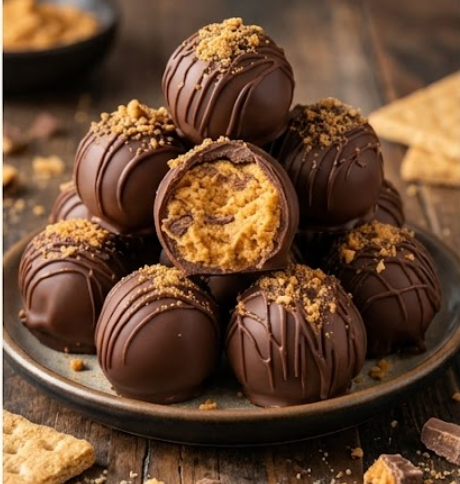
Step 1: Cream the Fat Base
In a large mixing bowl, beat 1 cup creamy peanut butter, ¼ cup softened butter, and 1 teaspoon vanilla extract using an electric hand mixer on medium speed for 1 to 2 minutes until completely smooth, pale, and emulsified.
Step 2: Bind the Dough
Reduce mixer speed to low. Gradually add 1 cup sifted powdered sugar and ¾ cup graham cracker crumbs. Mix until a thick, pliable dough forms that pulls away cleanly from the sides of the bowl. Using a rubber spatula, gently fold in the ½ cup crushed Butterfinger candy by hand.
Step 3: Roll & Flash-Chill
Line a large baking sheet with parchment paper or wax paper. Using a medium cookie scoop or tablespoon, portion out 1-inch pieces of dough. Roll them firmly between your palms into uniform balls and place them on the baking sheet. Transfer the tray to the freezer for 15 to 20 minutes (or refrigerator for 45 minutes).
Crucial Note: Chilling firms up the butter and peanut fats, preventing the balls from losing their shape or leaving loose crumbs in your warm melted chocolate during dipping.
Step 4: Melt & Dip
- Chop the 10 oz chocolate almond bark into small, uniform pieces. Place in a narrow, deep microwave-safe bowl (a deeper bowl makes dipping much easier than a wide shallow dish).
- Microwave in 30-second bursts at 50% power, stirring thoroughly with a rubber spatula between each interval, until completely melted and silky.
- Remove 3 or 4 peanut butter balls from the freezer at a time (keeping the rest cold). Lower a ball into the melted chocolate. Use a dipping fork or regular fork to lift it out, gently tapping the handle against the rim of the bowl so excess chocolate drains through the tines.
- Slide the dipped truffle back onto the parchment paper using a toothpick or second fork.
Step 5: Drizzle & Set
While the chocolate shell is still wet, sprinkle the reserved crushed Butterfinger bits directly over the top. For a professional finish, spoon remaining melted chocolate into a small zip-top bag, snip off a tiny corner, and pipe thin zig-zag drizzles over the truffles before topping. Allow to set at room temperature for 10 minutes.
recipe card
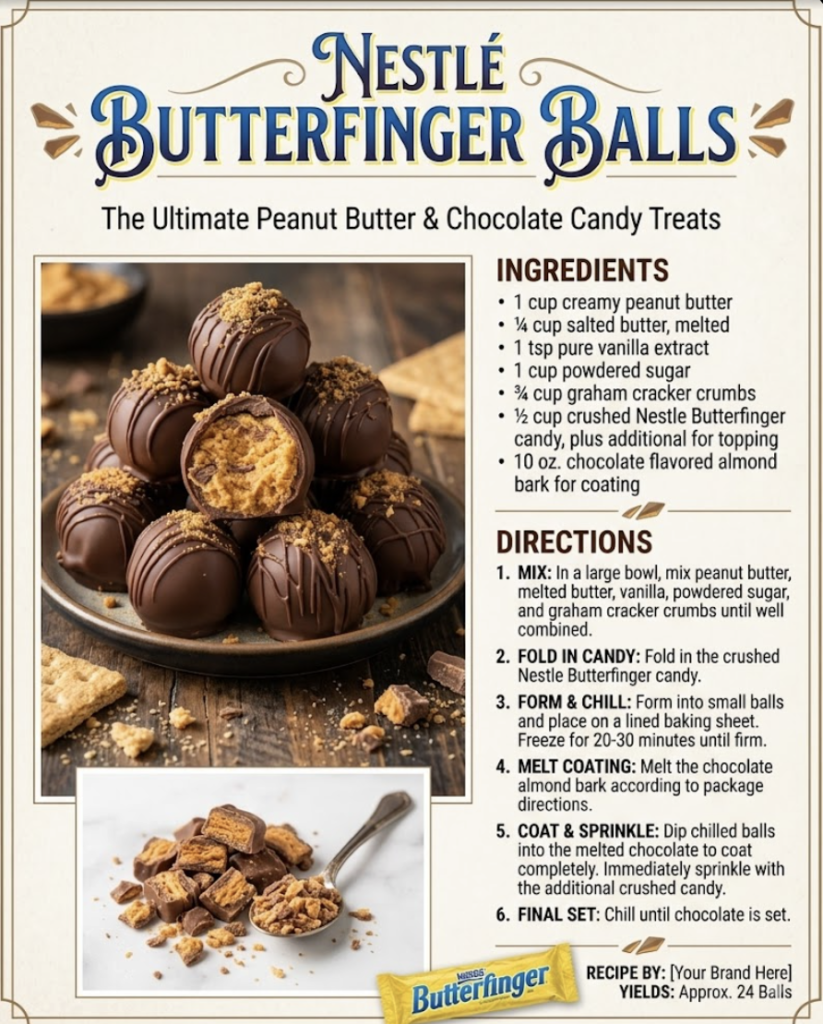
Baker’s Troubleshooting & Pro-Tips
- Chocolate Too Thick? If your chocolate coating feels thick or sludge-like, stir in ½ teaspoon of vegetable shortening or neutral coconut oil. This thins the viscosity for a sleek, thin outer shell.
- Preventing Sweating: Don’t freeze the balls for longer than 30 minutes before dipping. If the peanut butter center is ice-cold, the rapid temperature contrast with hot chocolate will cause condensation beads (sweating) or fine cracks on the outer shell as it warms back up.
Storage & Freezing Guidelines
- Refrigerator Storage: Store in an airtight container lined with parchment paper in the fridge for up to 2 weeks.
- Freezer Storage: Freeze fully set truffles in a single layer, then transfer to a freezer-safe zip-top bag for up to 3 months. Thaw in the refrigerator for 30 minutes before serving.