🍋🍯 Lemon Honey Marmalade
This Lemon Honey Marmalade is bright, fragrant, and beautifully balanced, combining fresh lemons with golden honey and just enough sugar to create a glossy, spreadable preserve.
Thin slices of lemon peel give the marmalade its classic citrus texture, while honey softens the sharpness of the lemons and adds a warm floral sweetness. It’s wonderful spread over toast, biscuits, scones, pancakes, waffles, yogurt, or warm pastries.
Recipe Information
- Prep Time: 20 minutes
- Cooking Time: 50–70 minutes
- Total Time: About 1½ hours
- Yield: Approximately 2½–3 cups
- Difficulty: Easy
- Method: Stovetop
Ingredients
For the Marmalade
- 500 g fresh lemons, preferably unwaxed
- 2 cups (500 ml) water
- 1¼ cups (250 g) granulated sugar
- ½ cup + 1 tablespoon (180 g) honey
- 1 small pinch salt
- 1 teaspoon vanilla extract, optional
Instructions
1. Wash the Lemons Thoroughly
Wash the lemons under cool running water, scrubbing the skins gently to remove any dirt or residue.
Because the peel is used in the marmalade, unwaxed lemons are preferable.
Pat the lemons completely dry.
2. Prepare the Lemons
Trim off the stem and blossom ends.
Cut the lemons in half and remove the seeds.
For a smoother marmalade, finely slice the lemons into thin half-moons.
For a more traditional marmalade with longer strands of peel, cut the lemon halves into very thin strips.
Try to slice the peel evenly so it softens at the same rate.
3. Soften the Lemon Peel
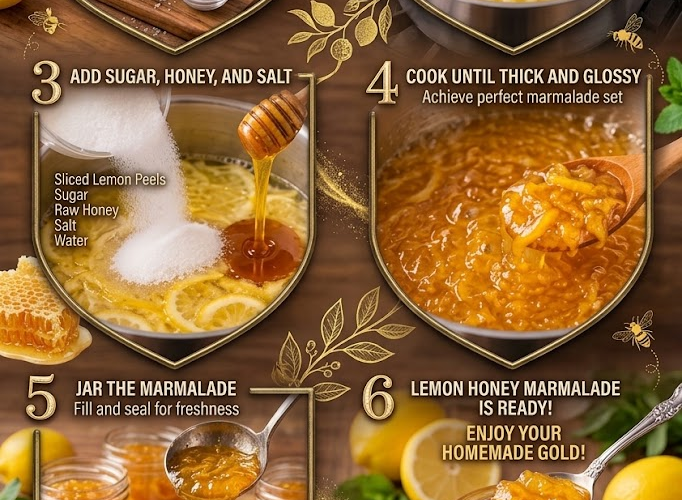
Place the sliced lemons and water into a large heavy-bottomed saucepan.
Bring the mixture to a gentle boil over medium heat.
Reduce the heat and simmer uncovered for 20–30 minutes, stirring occasionally, until the lemon peel becomes noticeably tender.
If the water evaporates too quickly, add a small splash of water as needed.
4. Add the Sugar
Once the lemon peel is tender, add the granulated sugar.
Stir until the sugar is completely dissolved.
Bring the mixture back to a gentle boil.
5. Add the Honey
Reduce the heat slightly and stir in the honey.
Add the pinch of salt.
The salt won’t make the marmalade taste salty; it simply helps balance the sweetness and sharpen the citrus flavor.
6. Simmer Until Thickened
Continue simmering uncovered for approximately 25–40 minutes, stirring frequently toward the end.
The mixture will gradually become thicker and more glossy.
As the water evaporates, the lemon peel should become translucent and suspended in a thick syrup.
Avoid cooking at an aggressive boil, as the sugar can scorch on the bottom.
7. Test the Consistency
To check whether the marmalade is ready, place a small spoonful on a chilled plate.
Let it cool for about 30 seconds, then gently push it with your fingertip.
If the surface wrinkles slightly and the mixture feels thick rather than watery, it’s ready.
You can also place a small plate in the freezer for several minutes before testing for a more reliable result.
8. Add the Vanilla
Remove the saucepan from the heat.
Stir in the vanilla extract, if using.
Mix gently until incorporated.
9. Skim Any Foam
If a layer of foam has formed on the surface, use a spoon to skim it away.
This leaves you with a clearer, glossier marmalade.
10. Cool Slightly
Let the marmalade stand for about 5–10 minutes.
The mixture will continue to thicken as it cools.
11. Fill Clean Jars
Transfer the warm marmalade into clean, dry glass jars.
Leave a little space at the top.
Wipe the rims clean and allow the marmalade to cool before covering and refrigerating.
12. Chill and Set
Once cooled, refrigerate the marmalade.
It will firm up further as it chills and should reach its best spreadable consistency after several hours.
Chef’s Tips
- Slice the lemons thinly: This gives the best texture and allows the peel to become tender.
- Remove all seeds: Lemon seeds can contribute unwanted bitterness.
- Don’t rush the simmer: Gentle cooking produces tender peel and a better flavor.
- Stir frequently near the end: The high sugar concentration makes scorching more likely as the marmalade thickens.
- Don’t overcook: Marmalade can become much firmer after cooling. Stop when it’s slightly looser than your desired final consistency.
- Use fresh lemons: Older lemons can have tougher, drier peel.
- Honey flavor: Choose a mild honey for a delicate citrus-forward marmalade or a stronger floral honey for more pronounced honey flavor.
Optional Flavor Variations
Ginger Lemon Honey Marmalade
Add 1–2 tablespoons finely grated fresh ginger during cooking for a warm, spicy note.
Orange-Lemon Marmalade
Replace 1–2 lemons with oranges for a softer, sweeter citrus flavor.
Lemon Vanilla Marmalade
Use the vanilla extract as written for a mellow dessert-like finish.
Lemon Rosemary Marmalade
Add a small sprig of fresh rosemary during simmering, then remove it before jarring.
Lemon & Cardamom
Add 2–3 lightly crushed cardamom pods during cooking and remove before transferring to jars.
Serving Suggestions
Spread this marmalade over:
- Toast
- Freshly baked bread
- Scones
- Biscuits
- Croissants
- Pancakes
- Waffles
- English muffins
It’s also delicious:
- Swirled into Greek yogurt
- Spoon over cheesecake
- Served with soft cheese and crackers
- Used as a glaze for cakes
- Brushed over roasted chicken or pork
- Mixed into salad dressings
Storage
Store the marmalade in a clean, airtight glass jar in the refrigerator.
For best quality, use within approximately 2–3 weeks.
Always use a clean, dry spoon when serving and refrigerate promptly.
Important Preservation Note
This recipe is intended as a refrigerator marmalade. The ingredient proportions and cooking process have not been presented as a tested shelf-stable home-canning formula, so the finished marmalade should not be stored at room temperature or treated as pantry-safe.
Freezing
For longer storage, transfer cooled marmalade to freezer-safe containers, leaving some room for expansion.
Freeze for up to 3 months.
Thaw overnight in the refrigerator and stir well before using.
Final Result
A gorgeous golden Lemon Honey Marmalade with tender strips of citrus peel, a glossy syrupy texture, bright lemon flavor, and a gentle floral sweetness from honey. It’s the perfect homemade spread for turning everyday toast, pastries, and desserts into something special.