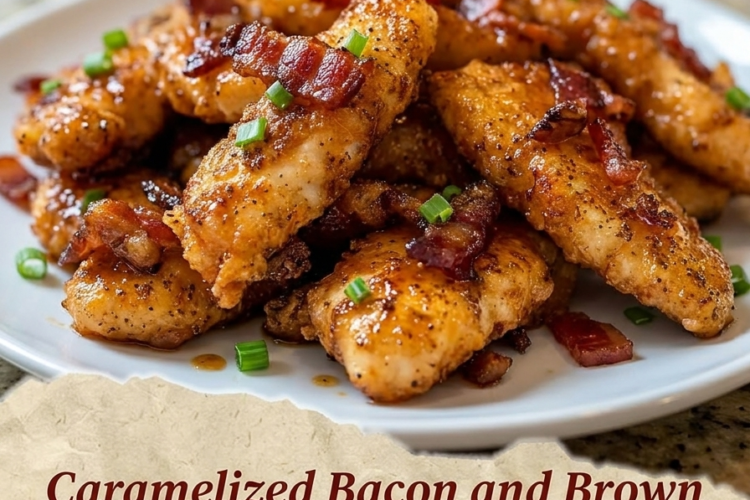
🥓 Caramelized Bacon and Brown Sugar Chicken Tenders
Sweet, Smoky, Sticky, and Irresistibly Delicious!
These Caramelized Bacon and Brown Sugar Chicken Tenders bring together everything you love about a comforting homemade dinner. Tender, juicy chicken is coated in a sweet and tangy brown sugar–Dijon glaze, then baked with smoky bacon until beautifully caramelized and golden.
The brown sugar creates a delicious sticky coating, the Dijon mustard adds a subtle tang, and the bacon delivers a savory crunch that balances every sweet bite. Best of all, this easy recipe uses just six main ingredients and comes together with minimal preparation.
Perfect for busy weeknight dinners, casual family meals, game-day gatherings, or a crowd-pleasing appetizer, these chicken tenders are guaranteed to disappear quickly!
Recipe Details
- Prep Time: 15 minutes
- Cook Time: 20–25 minutes
- Total Time: Approximately 40 minutes
- Servings: 4
- Course: Main Course or Appetizer
- Cuisine: American-inspired
- Difficulty: Easy
- Cooking Method: Oven-baked
Ingredients
- 1 lb (450 g) chicken tenders
- 6 strips bacon, chopped
- ¼ cup (50 g) packed brown sugar
- 1 tablespoon Dijon mustard
- 1 tablespoon olive oil
- Salt and freshly ground black pepper, to taste
Optional Additions
- ½ teaspoon garlic powder for extra savory flavor
- ¼ teaspoon smoked paprika for a smoky kick
- 1 teaspoon apple cider vinegar if you prefer a slightly tangier glaze
- Fresh chopped parsley for garnish
Instructions
Step 1: Preheat the Oven
Preheat your oven to 400°F (200°C).
Line a large baking sheet with foil for easier cleanup, then place a wire rack on top if you have one. Lightly grease the rack or baking sheet to help prevent sticking.
Pat the chicken tenders dry with paper towels. Removing excess moisture helps the glaze cling to the chicken and encourages better browning.
Season lightly with salt and black pepper. Remember that bacon can be salty, so start with a modest amount.
Step 2: Prepare the Brown Sugar Glaze
In a medium bowl, whisk together the brown sugar, Dijon mustard, and olive oil until the ingredients form a thick, glossy paste.
If using garlic powder or smoked paprika, stir them in now.
The brown sugar provides sweetness and caramelization, while the mustard gives the glaze a savory tang that keeps it from tasting overly sweet.
Step 3: Coat the Chicken Tenders
Add the chicken tenders to the bowl and toss until each piece is evenly coated with the brown sugar mixture.
Use clean hands or tongs to spread the glaze over all sides of the chicken.
Arrange the coated tenders in a single layer on the prepared baking sheet, leaving a little space between the pieces to promote even cooking.
Step 4: Prepare the Bacon
Place the chopped bacon in a skillet over medium heat and cook for approximately 4–6 minutes, stirring occasionally, until some of the fat has rendered and the bacon pieces are beginning to brown. They do not need to be completely crisp at this stage.
Transfer the bacon to a paper towel-lined plate to drain briefly.
This quick pre-cooking step helps the bacon brown more evenly while the chicken cooks. Carefully discard excess bacon fat, or reserve a small amount for another use.
Step 5: Add the Bacon
Scatter the partially cooked bacon pieces over and around the chicken tenders, pressing a few gently into the glaze so they adhere.
Spoon any remaining brown sugar mixture from the bowl over the chicken, avoiding any raw-chicken contamination when handling the glaze.
For a more balanced flavor, distribute the bacon evenly so each tender gets a little smoky, savory topping.
Step 6: Bake Until Caramelized
Bake for 18–25 minutes, depending on the thickness of the tenders, turning the chicken halfway through if needed for even browning.
The glaze should become glossy and caramelized, and the chicken should be cooked through. If the bacon needs more color, place the tray under the broiler for 1–2 minutes at the end, watching continuously to prevent the sugar from burning.
Chicken is safe to eat when the thickest part reaches an internal temperature of 165°F (74°C), measured with a food thermometer.
Because brown sugar can darken quickly, do not rely on color alone to determine whether the chicken is done.
Step 7: Rest and Serve
Remove the baking sheet from the oven and allow the chicken to rest for 3–5 minutes. The glaze will thicken slightly as it cools.
Transfer the tenders to a serving platter and spoon any pan glaze over the top. Garnish with chopped parsley if desired.
Serve warm while the chicken is juicy, the bacon is savory, and the brown sugar coating is sticky and delicious.
Tips for Perfect Caramelized Chicken Tenders
Choose tenders of similar thickness. Even-sized pieces cook at roughly the same rate, helping prevent thin pieces from drying out before thicker ones are done.
Pre-cook the bacon. Rendering some of the bacon fat beforehand helps the pieces brown better during the chicken’s relatively short cooking time.
Don’t use too much salt. Bacon contributes plenty of seasoning, so season the chicken lightly before adding the glaze.
Watch the caramelization. Brown sugar can move from beautifully caramelized to burnt very quickly. Keep an eye on the chicken during the final few minutes, especially if using the broiler.
Leave space between the tenders. Crowding the pan creates steam, which can interfere with browning.
Use a thermometer. Check the thickest tender and remove the chicken once it reaches 165°F (74°C). This is the most reliable way to keep the meat safe and juicy.
Delicious Variations
🌶️ Sweet and Spicy Bacon Chicken
Add ¼–½ teaspoon cayenne pepper or a little hot sauce to the glaze. The heat contrasts beautifully with the caramelized brown sugar.
🍯 Honey Brown Sugar Chicken
Replace half the brown sugar with 2 tablespoons of honey for a slightly different sweetness and glossy finish. Watch carefully while baking because honey can brown quickly.
🧄 Garlic Dijon Bacon Chicken
Add 1 teaspoon garlic powder or two finely minced garlic cloves to the glaze for extra savory flavor.
🧀 Cheesy Bacon Chicken Tenders
During the final 2–3 minutes of baking, sprinkle a little shredded cheddar or Monterey Jack over the chicken and let it melt. Keep the cheese away from direct broiler heat if it browns too quickly.
🍗 Brown Sugar Bacon Chicken Bites
Cut the chicken tenders into bite-sized pieces and prepare them using the same glaze. Arrange them in a single layer and begin checking for doneness after about 12–18 minutes, depending on size.
🍋 Tangy Brown Sugar Mustard Chicken
Add 1 teaspoon apple cider vinegar or lemon juice to the glaze to balance the sweetness and brighten the overall flavor.
What to Serve with Bacon and Brown Sugar Chicken Tenders
These sweet-and-savory tenders pair well with a variety of sides:
- Creamy mashed potatoes: A comforting pairing that soaks up the sticky glaze.
- Roasted baby potatoes: Crispy edges and fluffy centers complement the tender chicken.
- Steamed green beans or broccoli: Fresh vegetables balance the richness of the bacon.
- Corn on the cob: Adds a touch of sweetness that works beautifully with the brown sugar glaze.
- Coleslaw: A crunchy, tangy side creates a refreshing contrast.
- Buttered rice: Simple, satisfying, and ideal for catching extra glaze.
- Garden salad: A light option for an easy weeknight dinner.
For an appetizer spread, serve the tenders with toothpicks and a small bowl of Dijon-mayo dip or ranch dressing on the side.
Make-Ahead and Storage Instructions
Make Ahead
You can mix the brown sugar glaze and chop the bacon ahead of time. Store them separately in the refrigerator until ready to cook.
For the best texture and food safety, coat the chicken shortly before baking, or refrigerate the prepared raw chicken in a covered container and cook within 1–2 days. Keep raw chicken separate from ready-to-eat ingredients.
Refrigerator
Allow leftovers to cool slightly, then transfer them to an airtight container and refrigerate within 2 hours of cooking. Store at 40°F (4°C) or below and consume within 3–4 days.
Reheating
For the best texture, reheat in an oven at 350°F (175°C) until the chicken is hot throughout, usually about 10–15 minutes depending on the size and quantity. Cover loosely with foil if the glaze is browning too much.
You can also use an air fryer at 325–350°F (165–175°C), checking frequently so the sugar coating does not burn. Reheat leftovers to an internal temperature of 165°F (74°C).
Freezing
Freeze cooked, cooled tenders in a freezer-safe airtight container for up to 2–3 months for best quality. Thaw in the refrigerator overnight and reheat thoroughly. The bacon may lose some crispness after freezing, but the flavor will still be delicious.
Frequently Asked Questions
Can I use chicken breasts instead of chicken tenders?
Yes. Slice boneless, skinless chicken breasts into evenly sized strips. If the strips are thicker than standard tenders, they may require additional cooking time. Always verify that the thickest piece reaches 165°F (74°C).
Can I cook these chicken tenders in an air fryer?
Yes. Arrange the glazed tenders in a single layer in an air-fryer basket and cook at approximately 375°F (190°C) for 10–15 minutes, turning halfway through. The bacon may benefit from partial pre-cooking first. Cooking time will vary with the thickness of the chicken and the appliance, so check the internal temperature and monitor the sugar coating closely.
Why is my glaze burning?
Brown sugar caramelizes quickly, particularly under direct broiler heat. Use the recommended oven temperature, avoid placing the tray too close to the heating element, and watch closely during the final minutes. If the chicken needs more cooking but the glaze is getting too dark, loosely cover the tray with foil and continue baking until the chicken reaches 165°F (74°C).
Can I make this recipe without Dijon mustard?
Absolutely. Yellow mustard can work as a substitute, although its flavor is slightly different. For a milder taste, use less mustard and add a small squeeze of lemon juice to balance the sweetness.
Can I use turkey bacon?
Yes, but turkey bacon generally renders less fat and may have a different texture. Cook it according to its package instructions, then add it to the chicken before baking. Keep an eye on the tenders to avoid drying them out.
How do I keep the chicken juicy?
Pat the chicken dry before coating it, avoid overcrowding the pan, and use an instant-read thermometer to prevent overcooking. Resting the tenders for a few minutes before serving also helps preserve their juices.
Estimated Nutrition Information
Per serving, assuming 4 servings and using the listed ingredients:
- Calories: 300–400
- Protein: 25–32 g
- Carbohydrates: 20–28 g
- Fat: 12–20 g
These are approximate estimates and will vary depending on the size of the chicken tenders, the bacon used, and how much glaze remains on the pan.
Final Thoughts
Caramelized Bacon and Brown Sugar Chicken Tenders deliver the perfect balance of sweet, smoky, tangy, and savory flavors. The sticky Dijon-brown sugar glaze coats every tender, while the bacon adds a rich, satisfying finish that makes this simple dish feel extra special.
Serve them with your favorite vegetables for an easy family dinner, or arrange them on a platter for parties and game-day gatherings. With minimal prep and familiar ingredients, this is a recipe you’ll want to make again and again.
Sweet glaze, smoky bacon, juicy chicken—an irresistible combination in every bite! 🥓🍗