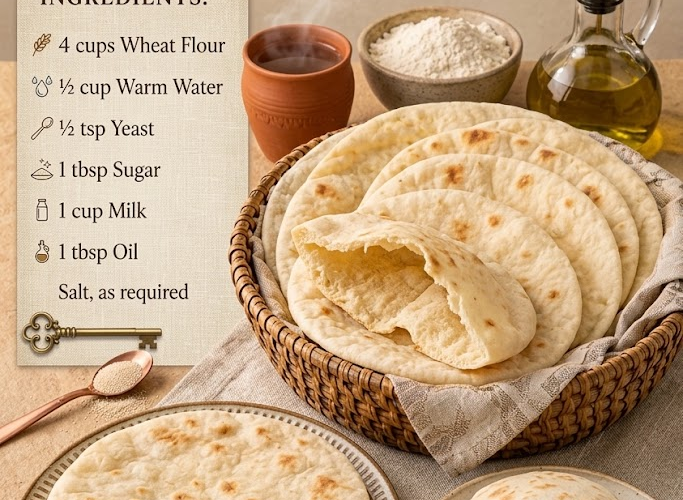
Soft & Puffy Arabic Bread (Kuboos)
Soft, fluffy, and wonderfully pillowy, this homemade Arabic Kuboos is perfect for scooping up curries, wrapping shawarma, or serving alongside hummus and dips. The dough is enriched with milk and a little oil, giving the bread a tender texture while a hot skillet helps it puff beautifully.
Recipe Information
- Prep Time: 25 minutes
- First Rise: 1–1½ hours
- Second Rest: 15–20 minutes
- Cook Time: 15–20 minutes
- Total Time: About 2½ hours
- Yield: 8–10 breads
- Difficulty: Easy
- Method: Stovetop
Ingredients
- 4 cups (about 500 g) wheat flour or whole-wheat flour
- ½ cup (120 ml) warm water
- 1 cup (240 ml) warm milk
- ½ teaspoon instant or active dry yeast
- 1 tablespoon granulated sugar
- 1 tablespoon neutral oil
- 1–1¼ teaspoons salt, or to taste
- Extra flour, for rolling
- A little oil, for the bowl
Instructions
1. Activate the yeast
If using active dry yeast, combine the warm water, sugar, and yeast in a small bowl.
Stir gently and leave for 5–10 minutes, until slightly foamy.
If using instant yeast, you can add it directly to the flour instead.
Important: The water and milk should be warm, not hot. Very hot liquid can damage the yeast.
2. Make the dough
Add the flour and salt to a large mixing bowl.
Make a well in the center and add the yeast mixture, warm milk, and oil.
Mix with a spoon or your hands until a shaggy dough forms.
If the dough feels extremely dry, add warm water 1 tablespoon at a time.
3. Knead
Transfer the dough to a lightly floured work surface.
Knead for approximately 8–10 minutes, until the dough becomes smooth, soft, and elastic.
The dough should feel soft and slightly tacky, but it should not be excessively sticky.
Avoid adding too much flour during kneading, as a stiff dough will produce less fluffy bread.
4. First rise
Lightly oil a clean bowl.
Place the dough inside and turn it once so the surface is lightly coated with oil.
Cover with plastic wrap or a clean kitchen towel.
Place in a warm, draft-free area and let rise for 1–1½ hours, or until approximately doubled in size.
The exact rising time will depend on the temperature of your kitchen.
5. Divide the dough
Once risen, gently press the dough down to release excess air.
Transfer it to a work surface and divide it into 8–10 equal portions.
Roll each portion into a smooth ball.
Cover the dough balls with a clean towel and let them rest for 15–20 minutes.
This relaxation period makes the dough much easier to roll.
6. Roll the Kuboos
Lightly flour your work surface.
Take one dough ball and flatten it gently with your fingers.
Using a rolling pin, roll it into a thin, round disc approximately 6–8 inches (15–20 cm) across.
Aim for an even thickness throughout.
Don’t make the bread paper-thin—the dough needs enough structure to trap steam and puff.
Keep the remaining dough balls covered while you work so they don’t dry out.
7. Heat the skillet
Place a heavy skillet, cast-iron pan, or flat griddle over medium-high heat.
Allow it to become thoroughly hot before cooking.
A properly heated pan is one of the most important factors in getting the bread to puff.
8. Cook the bread
Place one rolled dough disc onto the hot, dry skillet.
Cook for approximately 30–60 seconds, until small bubbles begin appearing on the surface.
Flip it over.
Cook the second side for another 30–60 seconds.
Flip again and continue cooking until the bread begins to puff.
You can gently press around the edges with a spatula to encourage the steam to circulate inside.
Once fully puffed and lightly browned in spots, remove from the pan.
Repeat with the remaining dough.
9. Keep the bread soft
Immediately place each cooked Kuboos inside a clean kitchen towel or covered container.
Stacking the breads while they’re warm allows their own steam to soften the crust.
Keep them covered until ready to serve.
Chef’s Tips
- Use a very hot pan. A lukewarm skillet can dry the bread before it has a chance to puff.
- Don’t use excessive flour when rolling—the extra flour can burn on the skillet and make the bread dry.
- Keep the dough covered throughout shaping and rolling.
- For maximum puffing, roll the dough evenly. Thick spots and thin spots can prevent the steam pocket from forming properly.
- Don’t overcook. Kuboos should have light golden spots but remain soft and pliable.
- If the first bread doesn’t puff, give the pan more time to heat before cooking the next one.
- Immediately covering the cooked bread is essential for keeping it soft.
How to Get Extra-Puffy Kuboos
For the best pocket:
- Make sure the dough is properly kneaded.
- Allow the dough to rise until noticeably doubled.
- Let the dough balls rest before rolling.
- Roll each disc evenly.
- Make sure the skillet is properly hot.
- Don’t poke holes in the dough while cooking.
- Cover the cooked breads immediately.
Serving Suggestions
Fresh Kuboos is delicious with:
- Chicken or beef shawarma
- Hummus
- Baba ganoush
- Falafel
- Chicken tikka
- Grilled meats
- Vegetable curries
- Butter chicken
- Chickpea curry
- Lentil soup
- Garlic sauce
- Tahini sauce
- Fresh salad
Use the bread as a wrap, tear it into pieces for dipping, or slice it open and fill the pocket with your favorite shawarma-style fillings.
Storage
Once completely cool, place the Kuboos in an airtight container or zip-top bag.
Store at room temperature for 1–2 days or refrigerate for up to 4 days.
Freezing
Stack cooled breads with parchment paper between them and place them in a freezer-safe bag.
Freeze for up to 2 months.
Reheating
Warm directly in a dry skillet for 20–30 seconds per side, or microwave for about 10–15 seconds wrapped in a slightly damp paper towel.
Do not overheat, or the bread may become tough.
The Result
The perfect Kuboos should be soft, flexible, lightly chewy, and puffy, with a tender interior and delicate golden-brown spots on the surface. Once you master the hot-pan technique, homemade Arabic bread becomes an easy staple for wraps, curries, dips, and family dinners.