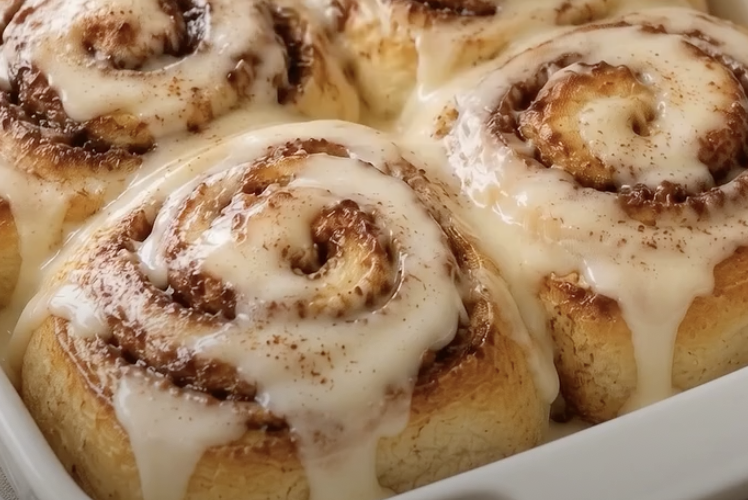
Few aromas match the comfort of a warm pan of homemade cinnamon rolls sliding out of the oven. The soft dough, the caramelized cinnamon-sugar swirl, and the tangy cream cheese icing melting into every crack and crevice make them legendary.
The downside of standard cinnamon roll recipes is the sheer volume. Most recipes churn out 12 to 16 giant rolls in a massive 9×13-inch pan. If you’re baking for one or two people, or just want a cozy weekend breakfast without eating leftover rolls for a week, standard recipes are simply too much.
This Small-Batch Cinnamon Rolls recipe yields exactly 4 to 6 bakery-quality, pillowy-soft rolls baked in an 8-inch round cake pan or pie dish. You get all the buttery, tender brioche-style richness, an oozing spiced center, and a velvety cream cheese glaze—scaled down with zero compromise on texture.
The Culinary Science of Small-Batch Bread Baking
Scaling down yeasted dough is notoriously tricky because small volumes lose heat and moisture rapidly. Understanding the mechanics guarantees fluffy success every time:
- The Egg Dilemma (Use Just the Yolk): A standard full batch uses 1 to 2 whole eggs. In a scaled-down 1-cup flour batch, a whole egg adds too much liquid albumen (water), making the dough wet, sticky, and rubbery from excess protein. Using a single egg yolk gives you the rich fat and natural lecithin (emulsifiers) needed for an enriched, melt-in-your-mouth crumb without drowning the flour in water.
- Warm Milk & Butterfat Softening: Whole milk provides lactose (milk sugar), which aids in rapid browning at moderate temperatures, and butterfat, which tenderizes the gluten strands. This gives you a delicate pull-apart shred rather than a chewy pizza-crust texture.
- Brown Sugar & Butter Melting Kinetics in the Spiral: If you brush melted butter onto the dough before sprinkling cinnamon sugar, the butter leaks out the bottom during baking and leaves hollow, separated spiral gaps. Mixing softened (room temperature) butter directly with the dark brown sugar and cinnamon creates a spreadable paste that stays bonded to the dough as it rises and bakes, creating a rich, molten swirl.
- The “Dental Floss” Clean Cut: Using a knife—even a sharp serrated bread knife—applies downward compressive force that crushes the spiraled layers together, squeezing out the sugar filling and turning round rolls into squashed ovals. Slipping unflavored dental floss or clean sewing thread underneath and crossing the strands over the top cleanly shears through the enriched dough with zero compression.
Ingredients & Precise Small-Batch Proportions
For the Enriched Dough:
- ½ cup (120 ml) whole milk, warmed to $105\text{°F} – 110\text{°F}$ ($40\text{°C} – 43\text{°C}$)
- 1 teaspoon (approx. 3 g) active dry or instant yeast (about ½ a standard packet)
- 2 tablespoons (25 g) granulated white sugar
- 1 large egg yolk, room temperature
- 2 tablespoons (28 g) unsalted butter, melted and cooled to lukewarm
- 1 ½ cups (190 g) all-purpose flour (spooned and leveled; plus 1–2 extra tbsp for dusting)
- ¼ teaspoon fine sea salt
For the Spiced Cinnamon Swirl Paste:
- 2 ½ tablespoons (35 g) unsalted butter, completely softened to room temperature (not melted!)
- ⅓ cup (70 g) dark brown sugar (or light brown sugar), firmly packed
- 1 ½ teaspoons ground cinnamon (Saigon cinnamon offers the boldest aroma)
- Pinch of ground nutmeg or cardamom (optional, adds bakery warmth)
- Pinch of fine salt
For the Vanilla Cream Cheese Icing:
- 2 oz (55 g / ¼ block) brick cream cheese, softened to room temperature
- 1 ½ tablespoons (22 g) unsalted butter, softened
- ½ cup (60 g) powdered sugar, sifted
- ½ teaspoon pure vanilla extract
- 1 to 2 teaspoons warm milk (adjust for your preferred drizzling consistency)
Step-by-Step Master Instructions
1. Wake the Yeast
- In a medium mixing bowl, whisk together the ½ cup warm whole milk, the 1 tsp yeast, and 1 teaspoon of the measured sugar.
- Let sit undisturbed for 5 to 8 minutes.
- Visual Cue: The surface will become frothy and develop small bubbles with a fresh, yeasty aroma. (If it remains flat, your milk was either too hot or the yeast was inactive—start over with fresh yeast).
2. Build the Enriched Base
- To the foamy yeast mixture, add the remaining granulated sugar, the egg yolk, the 2 tbsp melted lukewarm butter, and the ¼ tsp salt.
- Whisk thoroughly until smooth and pale yellow.
3. Mix and Knead the Dough
- Add the 1 ½ cups of all-purpose flour to the liquid.
- Stir with a sturdy wooden spoon or silicone spatula until the flour hydrates and forms a shaggy, soft dough that pulls away from the sides of the bowl.
- Turn the dough out onto a lightly floured countertop.
- Knead by hand for 5 to 7 minutes: push forward with the heel of your hand, fold the dough over itself, rotate 90 degrees, and repeat.
- Texture Cue: The dough should transition from tacky and rough into a pillowy, silky-smooth ball that gently bounces back when poked with a fingertip. If it feels excessively sticky after 3 minutes of kneading, sprinkle on an extra tablespoon of flour.
4. The First Rise (Bulk Fermentation)
- Lightly grease a clean bowl with a few drops of neutral oil or butter.
- Place the dough ball inside, turning it once to coat the top.
- Cover the bowl with a clean damp kitchen towel or plastic wrap.
- Set in a warm, draft-free spot for 60 to 75 minutes, or until doubled in size. (Kitchen pro-tip: place the bowl inside an unheated oven with the interior oven light turned on for ideal proofing warmth).
5. Make the Cinnamon Paste & Roll
- While the dough rises, prepare the filling: in a small bowl, stir together the 2 ½ tbsp softened butter, ⅓ cup packed brown sugar, 1 ½ tsp cinnamon, and a pinch of salt until a uniform, spreadable paste forms.
- Lightly grease an 8-inch round cake pan, pie dish, or an 8×8-inch square baking dish with butter.
- Punch down the risen dough gently and turn it out onto a lightly floured surface.
- Using a rolling pin, roll the dough into an even rectangle roughly 8×12 inches and about ¼-inch thick.
- Using an offset spatula or the back of a spoon, spread the cinnamon-sugar paste evenly across the entire surface of the dough, leaving a narrow ¼-inch clean border along the top long edge.
6. Roll, Thread-Slice, and Proof
- Starting from the long edge closest to you, roll the dough away from you into a snug, 12-inch cylinder. Pinch the outer seam lightly to seal.
- The Floss Cut: Slide a long strand of unflavored dental floss or clean sewing thread underneath the rolled log. Bring the two ends up, cross them over the top of the roll, and pull firmly in opposite directions. The thread will slice cleanly through the dough without squishing the spiral.
- Cut into 4 large rolls (approx. 3 inches wide) or 6 standard rolls (approx. 2 inches wide).
- Place the cut rolls flat-side down into your prepared 8-inch dish, leaving a small gap between each roll so they have room to expand.
- Cover loosely with a dry towel and let rise for 30 to 40 minutes until visibly puffed, pillowy, and gently touching one another.
7. Bake to Golden Perfection
- While the rolls finish their second rise, preheat your oven to 350°F (175°C) with the rack positioned in the center.
- (Optional Cinnabon Bakery Secret: Pour 2 tablespoons of warm heavy cream directly over and between the puffed rolls right before sliding into the oven. The cream absorbs into the bottom of the rolls as they bake, creating an ultra-fudgy, gooey cinnamon bottom).
- Bake for 18 to 22 minutes.
- Doneness Cue: The tops should be a light golden brown, and the brown sugar filling should be bubbling softly around the edges. An instant-read thermometer inserted into the dough of the center roll should read between 190°F and 195°F (88°C–90°C).
8. Whip the Cream Cheese Icing & Crown
- In a small bowl, beat the 2 oz softened cream cheese and 1 ½ tbsp softened butter together with a fork or mini whisk until silky smooth and lump-free.
- Stir in the ½ cup sifted powdered sugar, ½ tsp vanilla, and 1 tsp warm milk. Whisk until glossy and pourable. (Add an extra splash of milk if you prefer a thinner glaze).
- Spread half of the icing over the rolls while they are hot from the oven (about 3 minutes after baking) so it melts down into every warm spiral.
- Let the pan rest for 5 to 10 minutes, then drizzle the remaining icing over top to leave a thick, gorgeous white frosting crown. Serve immediately while warm!
Home Baker Troubleshooting
- Dough isn’t rising during bulk fermentation: Small dough portions cool down fast. Make sure your milk wasn’t cold or scalding hot (aim for $105\text{°F}–110\text{°F}$), and keep the proofing bowl in a truly warm spot, like near a running preheating oven.
- Cinnamon filling leaked all over the pan: This happens when melted butter is brushed on instead of mixing softened butter into a cohesive paste with the brown sugar, or when rolls are baked at too low a temperature.
- Rolls turned dry or dense: Avoid the temptation to add extra flour during kneading. An enriched sweet dough should feel soft, supple, and slightly tacky. Extra flour leads to heavy rolls.
Overnight & Freezing Options
- The Overnight Brunch Prep: Assemble the rolls, place them in your greased baking dish, cover tightly with oiled plastic wrap, and refrigerate overnight (up to 12 hours) right before the second rise. In the morning, set the pan on your counter for 45 to 60 minutes to come to room temperature and finish puffing, then bake as directed.
- Storing & Reheating Leftovers: Cover leftover rolls and store at room temperature for up to 2 days or refrigerated for up to 4 days.
- The Microwave Softening Trick: Always reheat an individual roll in the microwave for 12 to 15 secondsbefore eating. The brief blast of steam instantly revives the butterfat and makes the crumb as soft as the moment it left the oven.