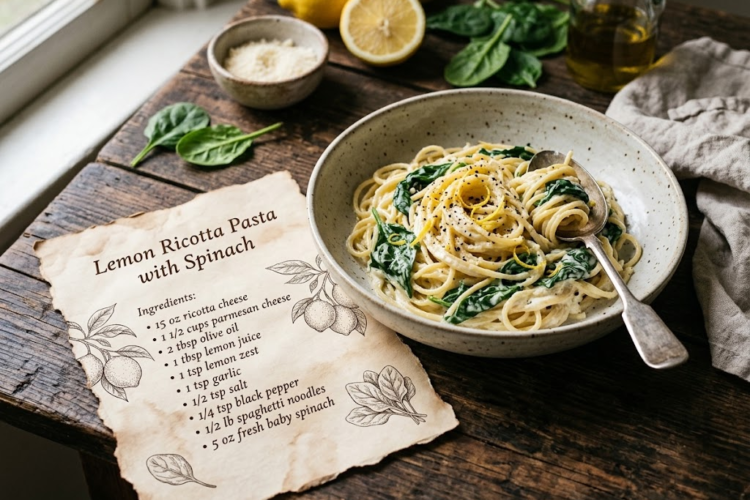
🍋🍝 Lemon Ricotta Pasta – Creamy, Fresh & Full of Flavor
Pasta night just got a delicious fresh twist with this Creamy Lemon Ricotta Pasta! Made with fluffy whole-milk ricotta, finely grated Parmesan, fresh lemon juice, fragrant lemon zest, and a touch of garlic, this simple dish creates a silky, luxurious sauce without heavy cream.
The ricotta gives the pasta a naturally creamy texture, while lemon brightens every bite and Parmesan adds a rich, savory finish. It’s light yet satisfying, wonderfully comforting, and elegant enough for a special dinner while still being easy enough for a busy weeknight.
Serve it with fresh basil, extra Parmesan, and a little lemon zest for a beautiful Italian-inspired meal the whole family will love.
Recipe Information
- Prep Time: 10 minutes
- Cook Time: 15 minutes
- Total Time: 25 minutes
- Servings: 4
- Course: Main Course, Lunch, Dinner
- Cuisine: Italian-inspired
- Difficulty: Easy
Ingredients
For the Lemon Ricotta Sauce
- 15 oz whole-milk ricotta cheese (425 g)
- 1½ cups finely shredded Parmesan cheese (approximately 135–150 g), plus extra for garnish
- 2 tablespoons extra-virgin olive oil (30 ml)
- 1 tablespoon fresh lemon juice (15 ml)
- 1 teaspoon finely grated lemon zest, plus extra for garnish
- 1 teaspoon finely grated garlic
- ½ teaspoon salt, or to taste
- ½ teaspoon freshly ground black pepper, or to taste
For the Pasta
- 12 oz pasta (340 g), such as fettuccine, linguine, penne, or rigatoni
- Water for boiling
- 1–2 teaspoons salt, for the pasta water
Optional Garnishes
- Fresh basil or chopped parsley
- Extra grated Parmesan cheese
- A drizzle of extra-virgin olive oil
- Red pepper flakes
- Thin strips of fresh lemon zest
Instructions
Step 1: Prepare the Lemon Ricotta Mixture
Place the whole-milk ricotta in a large mixing bowl.
Add the finely shredded Parmesan, extra-virgin olive oil, fresh lemon juice, lemon zest, grated garlic, salt, and black pepper.
Whisk everything together until the mixture becomes smooth and creamy. If the ricotta is particularly thick, use a spatula to work the Parmesan evenly into the cheese.
Taste the mixture and adjust the seasoning. Add a little extra lemon juice for a brighter flavor or additional black pepper for a more savory finish.
Tip: Finely grated Parmesan melts more easily than coarsely shredded cheese, helping create a smoother sauce.
Step 2: Boil the Pasta
Bring a large pot of water to a rolling boil. Add the salt, followed by your chosen pasta.
Cook according to the package instructions until the pasta is al dente, meaning tender but still slightly firm in the center.
Before draining, carefully reserve at least 1 cup (240 ml) of the starchy pasta water. This is the key to transforming the ricotta mixture into a silky sauce that clings beautifully to the pasta.
Drain the pasta, but do not rinse it. The starch remaining on the pasta helps the sauce adhere.
Step 3: Loosen the Ricotta Sauce
Transfer the ricotta mixture to a large skillet or keep it in the mixing bowl if it is large enough to accommodate the pasta.
Add approximately ¼ cup (60 ml) of hot pasta water and whisk until the mixture becomes creamy and spoonable.
If warming the sauce in a skillet, use low heat and stir gently. Avoid bringing it to a boil, as excessive heat can make the ricotta grainy or cause the cheese to become clumpy.
Add more pasta water gradually until the sauce reaches a smooth, creamy consistency.
Step 4: Add the Cooked Pasta
Add the drained pasta directly to the ricotta sauce.
Using tongs or a large spoon, toss the pasta thoroughly until every piece is coated in the lemony cheese mixture.
Add another splash of pasta water if the sauce seems too thick or begins to cling in heavy clumps. Continue tossing until it looks glossy and evenly distributed.
The sauce may initially appear loose, but it will thicken slightly as it coats the pasta and begins to cool.
Step 5: Warm Everything Gently
If the pasta has cooled while you were preparing the sauce, place the skillet over low heat for approximately 1–2 minutes, tossing continuously.
Add a little more pasta water if needed to keep the sauce smooth.
Do not allow the mixture to simmer vigorously. Ricotta-based sauces are best warmed gently, rather than boiled like a traditional cream sauce.
Taste again and adjust the lemon juice, salt, and black pepper as needed.
Step 6: Finish with Parmesan and Lemon
Remove the skillet from the heat.
Sprinkle over a little extra Parmesan cheese and freshly grated lemon zest. Add chopped basil or parsley for a fresh herbal finish.
For extra richness, drizzle a small amount of extra-virgin olive oil over the pasta just before serving.
Step 7: Serve Immediately
Divide the creamy Lemon Ricotta Pasta among four warm plates or shallow bowls.
Finish each serving with extra Parmesan, a twist of freshly ground black pepper, and a little lemon zest.
Serve immediately while the pasta is warm, creamy, and fragrant.
Chef’s Tips for Perfect Lemon Ricotta Pasta
- Use whole-milk ricotta: It provides a richer, creamier result than low-fat ricotta.
- Reserve the pasta water: Its starch helps bind the ricotta, Parmesan, and lemon into a smooth sauce.
- Grate the Parmesan finely: Fine shreds incorporate more evenly and reduce the chance of a grainy texture.
- Use fresh lemon juice: Freshly squeezed juice creates a brighter flavor than bottled lemon juice.
- Zest before juicing: It is much easier to grate the peel while the lemon is still whole.
- Warm the sauce gently: High heat can make ricotta grainy, so avoid boiling the sauce.
- Add pasta water gradually: Start with a small amount and add more until the sauce reaches your preferred consistency.
- Season at the end: Parmesan is naturally salty, so taste before adding extra salt.
- Serve promptly: Ricotta sauces thicken as they cool, and the pasta is best enjoyed freshly tossed.
Delicious Variations
🍋 Lemon Spinach Ricotta Pasta
Add 2 cups fresh baby spinach to the warm pasta just before tossing with the sauce. The residual heat will wilt the spinach while keeping its fresh flavor.
🍗 Lemon Ricotta Chicken Pasta
Add 1–2 cups cooked, sliced chicken breast for a heartier main course. Season the chicken with salt, pepper, and garlic before cooking.
🍤 Lemon Ricotta Shrimp Pasta
Sauté 450 g peeled and deveined shrimp in olive oil with garlic until cooked through. Toss them with the prepared pasta and sauce for a bright seafood variation.
🍅 Roasted Tomato Ricotta Pasta
Add 1 cup roasted cherry tomatoes for sweet, juicy bursts of flavor that complement the lemon and Parmesan.
🌶️ Spicy Lemon Ricotta Pasta
Add ¼–½ teaspoon red pepper flakes to the ricotta mixture for a gentle, warming heat.
🌿 Lemon Herb Ricotta Pasta
Fold in fresh basil, parsley, or finely chopped chives for additional fragrance and freshness.
🍄 Creamy Mushroom Ricotta Pasta
Sauté 225 g sliced mushrooms in olive oil until golden, then toss them with the pasta and sauce.
Make-Ahead Instructions
The ricotta sauce can be mixed a few hours ahead and stored in a covered container in the refrigerator.
For the best texture, cook the pasta shortly before serving and loosen the chilled sauce with a little hot pasta water as you combine everything.
Because the sauce thickens as it stands, prepare a little extra pasta water so you can adjust the consistency at the last minute.
Storage Instructions
Refrigerator: Store leftovers in an airtight container and refrigerate within 2 hours of cooking. Consume within 3 days for the best quality.
Reheating: Place the pasta in a skillet over low heat with 1–2 tablespoons of water or milk per serving. Stir gently until warmed through, adding more liquid as needed to restore the creamy consistency. Avoid high heat, which can make the ricotta grainy.
Alternatively, microwave in a covered, microwave-safe container in short intervals, stirring between each interval.
Freezing: Freezing is not recommended for the best texture. Ricotta sauces can become grainy or separate after thawing, and the pasta may soften.
Frequently Asked Questions
Can I make Lemon Ricotta Pasta without heavy cream?
Absolutely. This recipe uses ricotta and Parmesan to create a creamy sauce without heavy cream. Pasta water helps make the mixture smooth and allows it to cling to the pasta.
Why is my ricotta sauce grainy?
Ricotta can become grainy when heated too aggressively, and some brands naturally have a coarser texture. Whisk the ricotta mixture until smooth before adding the pasta, and warm it gently over low heat rather than boiling it.
Can I use low-fat ricotta?
Yes, although the sauce may be less rich and slightly less creamy. You may need a little more pasta water and olive oil to achieve the desired consistency.
Can I use a different type of cheese instead of Parmesan?
Pecorino Romano can provide a sharper, saltier flavor, while finely grated Grana Padano is a milder alternative. Adjust the salt according to the cheese you choose.
Can I use bottled lemon juice?
Fresh lemon juice is preferable because it has a brighter, fresher flavor. Bottled juice can work in a pinch, but add it gradually and taste as you go.
What pasta shape works best?
Fettuccine and linguine work beautifully for a silky coating, while penne and rigatoni catch the sauce inside their tubes. Choose whichever pasta you enjoy most.
How do I stop the pasta from becoming dry?
Reserve the starchy cooking water and toss it into the sauce gradually. If the pasta sits for a few minutes before serving, add another splash of warm water and toss again.
Serving Suggestions
Serve this Lemon Ricotta Pasta with:
- Garlic bread or warm focaccia
- A crisp green salad with lemon vinaigrette
- Roasted asparagus or broccoli
- Grilled chicken or shrimp
- Roasted cherry tomatoes
- Fresh basil and extra Parmesan
For a simple Italian-inspired dinner, pair the pasta with a fresh green salad and warm bread to soak up any remaining sauce.
Final Result
This Creamy Lemon Ricotta Pasta is fresh, velvety, and full of comforting Italian-inspired flavor. Whole-milk ricotta creates a soft, creamy base, Parmesan adds savory richness, and fresh lemon brightens every bite without overpowering the dish.
With just a handful of ingredients and about 25 minutes, you can create an elegant pasta dinner that’s easy enough for weeknights and delicious enough to serve to guests.
The secret to success: use finely grated Parmesan, reserve plenty of starchy pasta water, and warm the ricotta sauce gently. These simple steps help create a smooth, creamy lemon sauce that coats every piece of pasta beautifully.