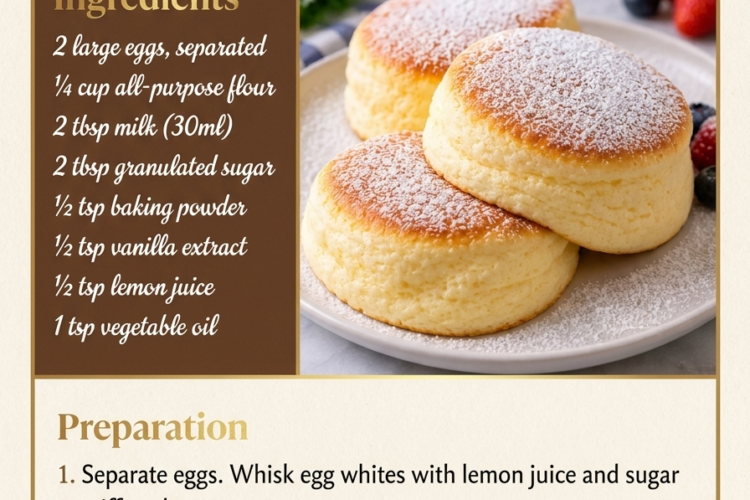
🇯🇵 Japanese Soufflé Pancakes – Tall, Fluffy & Cloud-Soft!
Light as a cloud, delicately sweet, and unbelievably fluffy—these Japanese Soufflé Pancakes are a breakfast dream come true! 🥞☁️
If you’ve ever seen those famous Japanese café pancakes that wobble like little clouds, now you can make them right in your own kitchen! These Japanese Soufflé Pancakes are taller, softer, and airier than traditional pancakes, with a delicate golden exterior and a tender, almost melt-in-your-mouth center.
The secret lies in separating the eggs and whipping the whites into a glossy meringue. That airy mixture is gently folded into the yolk batter, creating the signature height and pillowy texture without needing any complicated ingredients.
Made with just a handful of pantry staples, these pancakes are perfect for a special breakfast, weekend brunch, or an impressive homemade dessert. Serve them with powdered sugar, fresh berries, whipped
cream, or a drizzle of maple syrup for a beautiful café-style treat! 🍓✨
Recipe Details
- Prep Time: 15 minutes
- Cook Time: 12–18 minutes
- Total Time: Approximately 30–35 minutes
- Yield: 2–3 small soufflé pancakes
- Servings: 1–2
- Course: Breakfast, Brunch, Dessert
- Cuisine: Japanese-inspired
- Difficulty: Moderate
- Cooking Method: Stovetop
Ingredients
For the Pancake Batter
- 2 large eggs, separated into yolks and whites
- ¼ cup (30 g) all-purpose flour
- 2 tablespoons (30 ml) milk
- 2 tablespoons (25 g) granulated sugar
- ½ teaspoon baking powder
- ½ teaspoon vanilla extract
For Greasing the Pan
- A little neutral cooking oil or unsalted butter
Optional Toppings
- Powdered sugar, for dusting
- Fresh strawberries, blueberries, or sliced bananas
- Whipped cream
- Maple syrup or honey
- Chocolate sauce
- A small pat of butter
- Strawberry or blueberry sauce
Important ingredient tip: Make sure the egg whites are completely free of yolk and grease. Even a small amount of fat can prevent them from whipping into a stable meringue, which is essential for tall, fluffy pancakes.
Instructions
Step 1: Separate the Eggs
Carefully separate the two eggs, placing the yolks in one mixing bowl and the whites in another.
Use a clean, dry bowl for the egg whites. A metal or glass bowl works particularly well because it’s easier to keep free of grease.
Allow the eggs to sit for a few minutes if they’re very cold. The yolks and milk can blend more easily when they are not refrigerator-cold, while the whites should still whip effectively when cool or at room temperature.
Step 2: Prepare the Egg Yolk Batter
Add the milk and vanilla extract to the bowl containing the egg yolks.
Whisk until smooth and well combined.
Sift the flour and baking powder into the bowl. Whisk gently until you have a smooth, thick batter without large lumps.
Avoid overmixing. The goal is simply to combine the ingredients, not to develop the gluten in the flour.
Set the yolk batter aside while you prepare the meringue.
Step 3: Whip the Egg Whites
Using a clean electric mixer, beat the egg whites on medium speed until they become foamy.
Gradually add the granulated sugar, a little at a time, while continuing to beat.
Increase the speed to medium-high and whip until the egg whites form glossy medium-stiff to stiff peaks.
To check, lift the beaters from the bowl. The meringue should hold a distinct peak, with the tip standing upright or curling only slightly. It should look smooth and shiny rather than dry or clumpy.
This step is the key to achieving the signature soufflé texture. The air incorporated into the egg whites gives the pancakes their height and delicate softness.
Helpful tip: Don’t rush the meringue by using maximum speed from the beginning. Gradually building the foam helps create smaller, more stable air bubbles.
Step 4: Lighten the Yolk Batter
Add approximately one-third of the whipped egg whites to the yolk batter.
Using a spatula, gently stir this first portion into the batter to lighten it. This makes it easier to incorporate the remaining meringue without losing too much air.
The mixture should become lighter and less dense.
Step 5: Fold in the Remaining Meringue
Add the remaining egg whites in two additions.
Use a spatula to gently fold the mixture together, cutting down through the center, sweeping along the bottom of the bowl, and lifting the batter over itself.
Rotate the bowl as you work.
Stop as soon as the mixture is mostly uniform. A few faint streaks are preferable to vigorous mixing that deflates the meringue.
The finished batter should be thick, airy, and fluffy enough to hold its shape when spooned.
Important: Don’t leave the batter standing for too long. Once the meringue is folded in, cook the pancakes promptly to preserve as much air as possible.
Step 6: Prepare the Pan
Place a good-quality nonstick skillet with a lid over low heat.
Lightly grease the cooking surface with a small amount of neutral oil or butter. Wipe away any excess with a paper towel, leaving only a thin coating.
Allow the pan to warm gently.
Low, controlled heat is essential. If the skillet is too hot, the bottoms will brown before the centers have time to cook through.
Step 7: Shape the Soufflé Pancakes
Spoon the batter into two or three tall mounds in the skillet, depending on the amount of space available.
For extra height, add the batter in stages: spoon a small mound into the pan, wait briefly for it to settle, then add another small spoonful on top.
Keep the pancakes spaced apart so they have room to expand.
If the batter is particularly airy and thick, a piping bag or large spoon can help you create neat, tall shapes.
Step 8: Add a Little Steam and Cover
Add approximately 1 teaspoon of water to an empty area of the skillet, away from the pancakes.
Immediately cover the pan with a lid.
The small amount of steam helps the pancakes cook gently and promotes a moist interior. Avoid pouring water directly onto the batter, as this can cause it to collapse.
Keep the heat low throughout cooking.
Step 9: Cook the First Side
Cook the pancakes, covered, for approximately 6–8 minutes.
Check occasionally to make sure the bottoms are browning slowly rather than becoming dark too quickly.
The tops should begin to look less wet, and the pancakes should appear slightly taller and more set around the edges.
If the bottoms brown too quickly, lower the heat further. A thick soufflé pancake needs gentle, sustained heat to cook through.
Step 10: Flip Carefully
Slide a thin spatula underneath each pancake and gently support the side with another spatula if needed.
Turn them over carefully so the airy batter doesn’t collapse.
If the pancakes are too delicate to flip, cover them again and cook for another minute or two until the structure is more stable.
Add another tiny splash of water to the empty part of the pan if the surface has dried out, then cover the skillet again.
Step 11: Cook the Second Side
Continue cooking, covered, for another 4–7 minutes, depending on the height of the pancakes and your stove.
Keep the heat low and avoid repeatedly lifting the lid, which releases the steam and slows cooking.
The pancakes are ready when both sides are lightly golden and the centers are cooked through. A very tall pancake may require a little longer than a shorter one.
Food-safety tip: These pancakes contain eggs and should be cooked completely through, not left with a raw or liquid center. If you have a food thermometer, check that the center reaches 160°F (71°C).
Step 12: Plate and Serve Immediately
Carefully transfer the pancakes to serving plates.
Dust with powdered sugar, add fresh berries, and finish with whipped cream or a small drizzle of maple syrup.
For the classic Japanese café look, stack the pancakes gently and garnish with a little powdered sugar and a few fresh strawberries.
Serve immediately while they are warm and soft.
Soufflé pancakes naturally lose some height as they cool, so enjoy them fresh for the best texture and presentation! 🥞☁️
Expert Tips for Perfect Japanese Soufflé Pancakes
Use a clean bowl for the egg whites. Grease or egg yolk can prevent the whites from whipping properly.
Whip the meringue to the right stage. Underwhipped whites won’t provide enough structure, while dry, overwhipped whites can be difficult to fold into the batter.
Fold gently. Preserving the air in the meringue is the most important technique for achieving a fluffy result.
Keep the heat very low. A gentle cooking temperature allows the center to cook without burning the outside.
Use a lid. Covered cooking traps steam and helps the thick pancakes cook through.
Avoid overmixing the yolk batter. Too much mixing can make the pancakes less tender.
Cook the batter promptly. The longer the batter sits after folding, the more air it can lose.
Don’t make them excessively tall. Very thick pancakes can brown on the outside before the center is cooked. Build moderate-height mounds and cook slowly.
Flip only when the structure is set. Turning too early can cause the pancakes to collapse or spread.
Serve immediately. These pancakes are at their tallest and softest when freshly cooked.
Delicious Variations
🍓 Strawberry Soufflé Pancakes
Top the pancakes with sliced fresh strawberries, whipped cream, and a drizzle of strawberry sauce. The fruit’s freshness beautifully complements the delicate sweetness.
🍫 Chocolate Soufflé Pancakes
Serve with chocolate sauce, chocolate shavings, or a light dusting of cocoa powder. You can also add a small drizzle of melted dark chocolate just before serving.
🍌 Banana Honey Pancakes
Add sliced bananas on top and finish with honey or maple syrup for a naturally sweet breakfast.
🫐 Blueberry Soufflé Pancakes
Garnish with fresh blueberries and blueberry sauce. For the neatest pancakes, keep the fruit on top instead of mixing it into the delicate batter.
🍵 Matcha Soufflé Pancakes
Sift ½–1 teaspoon matcha powder into the flour before mixing it with the yolks. This creates a delicate green tea flavor and a beautiful pale-green color.
🍋 Lemon Vanilla Pancakes
Add ½ teaspoon finely grated lemon zest to the egg yolk mixture. Serve with powdered sugar and fresh berries for a bright, refreshing variation.
🥥 Coconut Soufflé Pancakes
Use a little coconut extract instead of some of the vanilla and finish with toasted shredded coconut. Add coconut cream as a topping if desired.
🍦 Dessert-Style Soufflé Pancakes
Serve the pancakes with a small scoop of vanilla ice cream, chocolate drizzle, and fresh berries. This makes a lovely plated dessert for a special occasion.
What to Serve with Japanese Soufflé Pancakes
These fluffy pancakes are delicious with both simple breakfast toppings and more indulgent dessert accompaniments.
- Fresh strawberries and blueberries: Add color, freshness, and a little tartness.
- Whipped cream: A classic topping that enhances the soft, airy texture.
- Maple syrup: Adds a familiar sweetness without overwhelming the pancakes.
- Honey and banana: A simple combination for breakfast or brunch.
- Chocolate sauce: Perfect for a dessert-inspired serving.
- Vanilla ice cream: A delicious accompaniment for an extra-special treat.
- Coffee or cappuccino: Balances the pancakes’ sweetness.
- Matcha latte or green tea: A lovely Japanese-inspired pairing.
For a café-style breakfast, serve two soufflé pancakes with fresh berries, whipped cream, and a cup of coffee or tea.
Make-Ahead Instructions
Japanese soufflé pancakes are best made just before serving because their airy structure begins to settle after cooking.
Prepare the ingredients ahead: Measure the flour, baking powder, sugar, and vanilla in advance. Keep the egg yolks and whites separate only when you’re ready to begin for the best results.
Make the yolk batter shortly before cooking: The flour mixture can thicken while standing, so prepare it close to the time you plan to whip the egg whites.
Don’t make the complete batter ahead: The whipped meringue gradually loses volume, so folding the batter in advance can result in flatter pancakes.
For brunch gatherings: Prepare the toppings and warm the serving plates in advance, then cook the pancakes just before everyone is ready to eat.
Storage and Reheating
Refrigerator
If you have leftovers, allow the pancakes to cool and refrigerate them in an airtight container within 2 hours.
Keep them at 40°F (4°C) or below and consume within 3 days for best quality.
Keep in mind that refrigerated soufflé pancakes will lose some of their original height and airy texture.
Reheating
Warm gently in a covered skillet over low heat until heated through. Avoid pressing down on the pancakes, as this will make them denser.
You can also microwave a pancake briefly in short intervals, checking that the center is heated through.
The reheated texture will be softer and less lofty than freshly cooked pancakes.
Can You Freeze Soufflé Pancakes?
Freezing is possible, but it is not recommended if you want to preserve the signature airy texture. The delicate structure may become softer or denser after thawing.
For the best results, prepare only the number you plan to serve and make the batter fresh.
Frequently Asked Questions
Why didn’t my Japanese soufflé pancakes rise?
The most common causes are underwhipped egg whites, deflated meringue, or batter that sat too long before cooking. Make sure the meringue forms stable glossy peaks and fold it gently into the yolk batter.
Why did my pancakes collapse after cooking?
Some loss of height is natural with soufflé pancakes. Excessive collapse can happen if the meringue is unstable, the pancakes are undercooked inside, or they are handled too roughly. Cook slowly until the centers are fully set.
Why are my pancakes brown outside but raw inside?
The heat may be too high. Reduce the burner to low, cover the pan, and allow more time for the center to cook.
Can I make these without baking powder?
You can omit it, since the whipped egg whites provide most of the lift. However, the pancakes may be less forgiving and may not rise quite as much. For a first attempt, the suggested ½ teaspoon helps support the texture.
Can I use an electric hand mixer?
Absolutely. A hand mixer works very well for whipping the egg whites. Make sure the beaters and bowl are clean and free of grease.
Can I make the batter in a blender?
A blender is not recommended for the complete batter because vigorous blending can deflate the whipped egg whites. Prepare the yolk mixture separately, whip the whites, and fold them together by hand.
Can I make larger pancakes?
Yes, but very large or tall pancakes need more cooking time and can be harder to flip. Start with moderate-sized mounds until you become familiar with the technique.
Why is my meringue grainy?
The egg whites may have been overwhipped, or the sugar may have been added too quickly. Add the sugar gradually and stop beating when the meringue is glossy and holds stiff peaks.
Are Japanese soufflé pancakes the same as American pancakes?
No. American pancakes are typically thicker than crêpes but still relatively flat. Japanese soufflé pancakes use whipped egg whites to create a much taller, lighter, and more delicate structure.
Can I make these pancakes for children?
Yes. Use age-appropriate toppings and make sure the pancakes are cooked completely through. Serve them warm rather than piping hot.
Estimated Nutrition Information
Approximate nutrition per serving, assuming 2 servings and excluding toppings:
- Calories: 170–210
- Protein: 7–9 g
- Carbohydrates: 20–25 g
- Fat: 6–8 g
- Sugar: 10–13 g
- Sodium: 150–220 mg
These estimates vary according to egg size, ingredient brands, and the amount of butter or oil used to grease the pan. Toppings such as whipped cream, chocolate sauce, and maple syrup will add extra calories and sugar.
Final Thoughts
Japanese Soufflé Pancakes are a delightful way to turn a few everyday ingredients into an elegant, cloud-soft breakfast or dessert. Their signature height comes from carefully whipped egg whites, gentle folding, and slow cooking over low heat.
Although they require a little more care than ordinary pancakes, the technique is simple once you know the secrets: make a stable meringue, preserve as much air as possible, and give the centers enough time to cook.
Serve them fresh with berries, powdered sugar, whipped cream, or your favorite syrup, and enjoy a little Japanese café magic right at home! 🇯🇵🥞💛