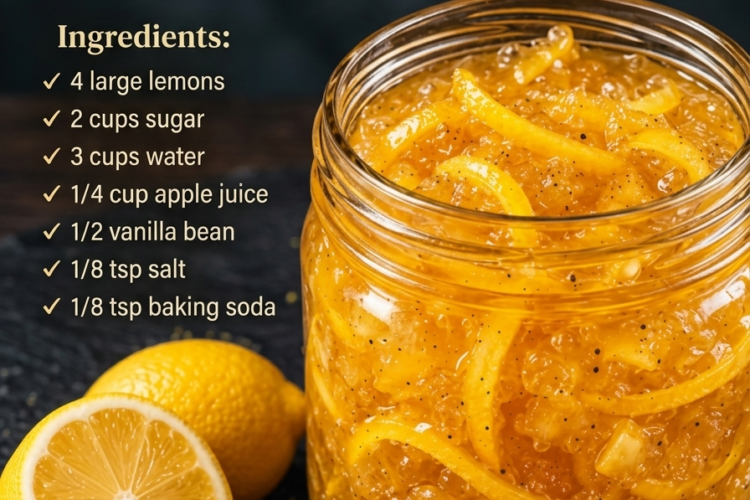
🍋 Italian Lemon Jam (Marmellata di Limoni)
Bright, Citrusy, Gently Sweet, and Beautifully Fragrant!
Bring a little Italian sunshine into your kitchen with this homemade Italian Lemon Jam! Made with fresh lemons, delicate ribbons of citrus peel, sugar, and a hint of vanilla, this golden jam captures the vibrant flavor of lemons in a wonderfully thick, glossy spread.
Unlike ordinary fruit jams, lemon jam has a delightful balance of sweetness and tanginess, with tender pieces of peel that add texture and a lovely citrus aroma. The vanilla rounds out the sharp lemon flavor, creating a sophisticated preserve that tastes delicious on warm toast, croissants, biscuits, pancakes, or freshly baked bread.
Although it looks elegant enough for a gourmet gift, this recipe uses simple ingredients and traditional stovetop cooking. The secret is gently cooking the lemon peel until tender before adding the sugar, allowing the fruit to develop a beautiful texture and flavor.
Recipe Information
- Prep Time: 25 minutes
- Optional Soaking Time: 8–12 hours
- Cook Time: 60–90 minutes
- Total Time: Approximately 1½–2 hours, excluding optional soaking
- Yield: Approximately 3–4 cups
- Course: Breakfast, Spread, Preserve
- Cuisine: Italian-inspired
- Difficulty: Moderate
- Cooking Method: Stovetop
Ingredients
- 1 kg fresh lemons, preferably unwaxed
- 750 g granulated sugar, adjusted to taste
- 1 liter water for the initial cooking
- 500–750 ml additional water, as needed during cooking
- 1 teaspoon vanilla extract, or ½ vanilla bean
- 1 tablespoon fresh lemon juice, optional, if the finished jam needs extra brightness
Choose fragrant, ripe lemons with thin, unblemished skins. Since the peel is included, unwaxed lemons are especially useful. Wash the fruit thoroughly before preparing it.
Instructions
Step 1: Wash and Prepare the Lemons
Wash the lemons thoroughly under running water, rubbing the skins gently to remove dirt or residue. Dry them with a clean towel.
Trim off the stem ends and any damaged areas. Slice the lemons very thinly, approximately 2–3 mm thick, and remove all visible seeds as you work.
Cut the slices into halves or quarters if you prefer smaller pieces in your jam. Reserve all the pulp and juice, as both contribute flavor and natural pectin.
For a more delicate texture, you can cut some of the peel into fine ribbons while leaving the remaining lemon pieces slightly larger.
Step 2: Reduce the Bitterness
Place the sliced lemons in a large saucepan and cover them with the liter of water.
Bring to a boil and simmer for approximately 5 minutes. Drain the lemons, discarding the water.
Repeat once with fresh water if you prefer a milder, less bitter flavor.
This blanching step helps soften the peel and mellow some of the bitterness without removing the characteristic tang of the lemons.
Tip: If you enjoy a stronger, more traditional citrus-marmalade flavor, blanch just once. For a gentler, sweeter jam, blanch twice.
Step 3: Simmer Until the Peel Is Tender
Return the blanched lemons to the saucepan. Add approximately 500–750 ml of fresh water, enough to cover the fruit comfortably.
Bring the mixture to a gentle simmer and cook for 35–60 minutes, stirring occasionally, until the lemon peel is tender enough to cut easily with the side of a spoon.
The exact time depends on the thickness of the peel and the variety of lemons.
If the water level drops too quickly before the peel softens, add a little more hot water and continue simmering.
Important: Cook the peel until tender before adding the sugar. Sugar can slow the softening of citrus peel if added too early.
Step 4: Add the Sugar
Once the lemon peel is tender, add the granulated sugar to the saucepan.
Stir over medium-low heat until the sugar dissolves completely.
Bring the mixture to a steady boil, stirring frequently and scraping the bottom of the pan to prevent sticking. As the water evaporates, the mixture will gradually become thicker and glossier.
Reduce the heat slightly if the mixture bubbles too aggressively. Take extra care near the end of cooking, when thick jam can splatter.
Step 5: Cook Until the Jam Thickens
Continue cooking for approximately 20–35 minutes, stirring frequently as the mixture thickens.
The lemon pulp will begin to break down, while the peel remains as soft, translucent ribbons throughout the jam.
For a smoother preserve, gently mash some of the fruit with a spoon. For a rustic Italian-style texture, leave plenty of the peel and pulp intact.
As the jam approaches its setting point, the bubbles will become slower and thicker, and a spoonful will coat the back of a spoon more heavily.
Step 6: Test for Doneness
Place a small plate in the freezer for several minutes.
Spoon a little hot jam onto the cold plate and let it sit for about 30 seconds. Push the edge of the jam with your fingertip. If the surface wrinkles slightly and the liquid does not immediately rush back into the space, the jam is likely ready.
If the sample is still runny, continue cooking for another 3–5 minutes and test again.
If using a jam thermometer, a temperature around 220°F (104°C) at sea level is a useful guide, though the final setting point varies with altitude and the sugar concentration.
Remember that lemon jam will thicken further as it cools, so avoid cooking it until it becomes very stiff in the saucepan.
Step 7: Add the Vanilla
Remove the saucepan from the heat once the jam reaches the desired consistency.
Stir in the vanilla extract and optional tablespoon of lemon juice, tasting before adding the extra juice.
The vanilla should enhance the citrus aroma without overpowering the fresh lemon flavor.
If using a vanilla bean, scrape the seeds into the jam and add them toward the end of cooking. You may also add the pod while simmering, then remove it before transferring the jam to jars.
Step 8: Transfer to Clean Jars
Carefully spoon the hot jam into clean, heat-safe jars, leaving a little space at the top.
Wipe the rims clean, allow the jam to cool briefly, then cover the jars and refrigerate promptly.
The jam may appear a little loose while hot, but it will thicken further as it cools.
Storage note: This recipe is intended for refrigerator or freezer storage. Filling jars with hot jam and closing the lids does not make the jam shelf-stable. For pantry storage, use a tested lemon marmalade canning recipe and follow its exact acidity, jar preparation, and processing instructions.
Step 9: Chill and Enjoy
Allow the jam to cool, then refrigerate it for several hours, preferably overnight, to develop its final texture and flavor.
Spread it over warm toast, spoon it onto croissants, or serve it alongside cheese and crackers for a delicious sweet-tangy contrast.
Enjoy every spoonful of this sunny, fragrant homemade preserve!
Tips for the Best Italian Lemon Jam
- Use thin-skinned lemons: They generally produce more delicate peel ribbons and a pleasing balance of pulp and skin.
- Remove all visible seeds: Seeds can contribute unwanted bitterness.
- Blanch according to taste: One blanch preserves more intense citrus character, while two give a milder result.
- Cook the peel until tender first: This is essential for a pleasant, soft texture.
- Use a wide saucepan: A wide cooking surface helps water evaporate more efficiently and encourages even thickening.
- Stir more frequently as it thickens: The mixture becomes increasingly prone to sticking near the end of cooking.
- Don’t overcook the jam: It will become thicker as it cools.
- Add vanilla toward the end: This helps preserve its delicate aroma.
- Taste before adding extra lemon juice: The fruit already provides plenty of acidity.
Delicious Ways to Enjoy Italian Lemon Jam
🍞 On Toast and Croissants
Spread a generous spoonful over buttered toast, warm sourdough, brioche, or flaky croissants for a bright, citrusy breakfast.
🥞 With Pancakes and Waffles
Warm a little jam gently and spoon it over pancakes, waffles, or French toast. Its tangy sweetness pairs beautifully with buttery breakfast treats.
🍰 As a Cake Filling
Spread a thin layer between vanilla sponge cake layers or swirl it into a simple loaf cake for a refreshing lemon flavor.
🧀 With Cheese
Serve the jam alongside soft goat cheese, ricotta, or a mild creamy cheese with crackers for an elegant sweet-and-savory snack.
🍪 In Cookies and Pastries
Use a small amount as a filling for thumbprint cookies, sandwich biscuits, or homemade pastries.
🍨 Over Ice Cream and Yogurt
Spoon the jam over vanilla ice cream, Greek yogurt, or panna cotta for a simple dessert with a bright citrus finish.
Delicious Variations
🍊 Lemon Orange Jam
Replace a portion of the lemons with thinly sliced oranges for a sweeter, more mellow citrus flavor.
🌿 Lemon Rosemary Jam
Add a small sprig of fresh rosemary while simmering the fruit, then remove it before transferring the jam to jars.
🫚 Lemon Ginger Jam
Add 1–2 teaspoons of finely grated fresh ginger for a warming, aromatic twist.
🍯 Honey Lemon Jam
Replace a small portion of the sugar with honey for a softer floral sweetness. Because changing the sugar ratio can affect setting and preservation, keep this variation refrigerated.
🌼 Vanilla Bean Lemon Jam
Use the seeds from half a vanilla bean instead of vanilla extract for a more delicate aroma and beautiful vanilla specks.
🍋 Extra-Tangy Lemon Jam
Use less blanching and add a little extra fresh lemon zest for a more pronounced citrus bite. Adjust sweetness only modestly to preserve a good jam texture.
Make-Ahead Instructions
Italian Lemon Jam is ideal for preparing ahead.
You can wash, slice, and seed the lemons the day before cooking. Cover them and refrigerate them if you are not cooking immediately.
The finished jam can be prepared several days before serving, allowing the flavors to settle and the texture to thicken. Refrigerate it in clean, covered jars as soon as it has cooled appropriately.
For homemade food gifts, use small jars, decorate them with labels, and clearly indicate that the jam must be refrigerated.
Storage Instructions
Refrigerator: Keep the jam in clean, airtight jars at 40°F (4°C) or below. Use within approximately 3 weeks for the best quality, always using a clean spoon.
Freezer: Freeze in suitable freezer-safe containers for up to 6 months for best quality. Leave headspace for expansion and thaw in the refrigerator.
Room temperature: Do not store this recipe in the pantry unless it has been prepared and processed using a tested canning procedure.
Signs of spoilage: Discard the jam if you notice mold, bubbling that suggests fermentation, an unusual odor, or other signs of spoilage. Do not taste it to check whether it is safe.
Frequently Asked Questions
Is Italian lemon jam bitter?
It has a characteristic citrus bite, but the sugar balances the bitterness. Blanching the lemons once or twice helps soften the flavor, while tender cooking makes the peel more pleasant to eat.
Do I need to peel the lemons first?
No. The peel is an important part of this jam and provides the tender ribbons that make it special. Slice the lemons thinly and remove the seeds, but retain the zest, peel, and pulp.
Why is my lemon jam runny?
It may need more cooking time, or the mixture may contain too much water. Continue cooking in short intervals and repeat the chilled-plate test. Remember that the jam thickens more after cooling.
Why did my jam become too thick?
It may have cooked too long or lost too much moisture. For serving, gently warm a small portion with a little water if necessary. Next time, stop cooking when the chilled-plate test indicates a good set.
Can I use Meyer lemons?
Yes. Meyer lemons are generally sweeter and less sharply acidic than standard lemons, producing a gentler, more floral jam. The flavor and setting time may differ slightly.
Can I reduce the sugar?
You can make a less-sweet version for refrigerator use, but reducing sugar significantly may change the set and storage life. For predictable results, use a tested reduced-sugar jam recipe if you need to make a major adjustment.
Can I make this jam without vanilla?
Absolutely. Vanilla is optional. The jam will still have a bright, distinctive lemon flavor without it.
Why is the peel still tough?
The peel may not have simmered long enough before the sugar was added. Continue cooking the peel in water until it is tender before adding the sugar in your next batch.
A Little Jar of Italian Sunshine! 🍋❤️
This Italian Lemon Jam transforms fresh citrus into a beautiful homemade preserve filled with bright lemon flavor, tender ribbons of peel, and a delicate touch of vanilla.
It’s a lovely way to enjoy lemons beyond lemonade and lemon desserts, and it brings a sunny, homemade touch to breakfasts, pastries, cheese boards, and afternoon treats.
Slice those lemons, simmer them until tender, add the sugar and vanilla, and enjoy a golden spoonful of citrus sunshine!