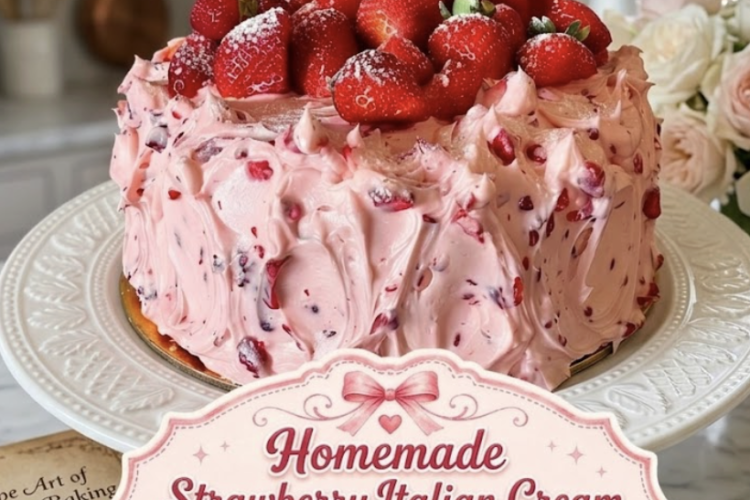
The Italian Cream Cake is an undeniable titan of Southern baking heritage, revered for its signature trifecta of tangy cream cheese, nutty toasted pecans, and aromatic shredded coconut. When fused with the rich, velvety density of a traditional pound cake and illuminated by the bright, jammy sweetness of fresh strawberries, the result is an absolute masterpiece of texture and flavor.
This Homemade Strawberry Italian Cream Pound Cake elevates a classic recipe into a showstopping dessert. It features a fine, melt-in-your-mouth crumb anchored by real butter, cream cheese, and cultured buttermilk. Suspended within this tender, golden matrix are pockets of juicy, tart strawberries, chewy coconut, and buttery, crunchy pecans, all finished under a cascading satin drape of rich cream cheese glaze.
Culinary Science & Structural Integrity
Understanding the science behind this recipe ensures your heavy, fruit-laden pound cake bakes up tall, light, and perfectly cooked without sinking or turning gummy.
- The Starch Coat Trick: Fresh strawberries are packed with water. When subjected to the heat of the oven, their cell walls break down, releasing juice into the surrounding batter. If added wet, this excess liquid breaks the local starch-egg structure, causing the fruit to sink straight to the bottom of the pan and creating soggy spots. Tossing the diced strawberries in a tablespoon or two of the measured dry flour mixture before folding creates a grippy coating. This starch layer absorbs initial surface moisture and helps suspend the fruit evenly throughout the thick batter.
- Cultured Dairy Hydration: Italian cream cakes typically rely on buttermilk to provide a soft, tender crumb. In this recipe, the combination of cream cheese, butter, and buttermilk introduces a balance of lactic acid and milk solids. The lactic acid breaks down the tight gluten strands formed by the flour, keeping the heavy pound cake tender, while the fat from the cream cheese coats the starch molecules, locking in moisture for days after baking.
- Air Emulsification via Eggs: Pound cakes lack substantial chemical leaveners—this recipe uses just half a teaspoon of baking powder for a gentle boost. The vast majority of the cake’s rise comes from micro-bubbles trapped during the creaming of the butter, cream cheese, and sugar, expanded further by the steam generated as the eggs cook. Adding the room-temperature eggs slowly, one by one, preserves this fragile fat-air matrix. Cold eggs would freeze the whipped butter fat, collapsing the trapped air pockets and resulting in a dense, heavy streak at the bottom of the cake pan.
Ingredients Deep-Dive & Prep Notes
For the Pound Cake Batter:
- 3 cups (360 g) all-purpose flour: Bleached or unbleached works well. Spoon and level your flour into measuring cups rather than scooping directly from the bag to avoid packing in extra flour, which leads to a dry cake. Reserve 2 tablespoons of this flour to toss with the strawberries.
- ½ teaspoon baking powder: Provides just enough lifting power to offset the heavy mix-ins (pecans, coconut, and strawberries) without creating large, weak air pockets that could cause the cake to collapse.
- ½ teaspoon fine sea salt: Sharpens the sweet notes of the strawberries and balances the rich dairy base.
- 1 cup (2 sticks / 225 g) unsalted butter: Softened to true room temperature (it should yield to gentle finger pressure without looking greasy or melted).
- 8 ounces (225 g) full-fat brick cream cheese: Softened to room temperature. Avoid tub or spreadable cream cheese, as these contain added water and air.
- 2 ½ cups (500 g) granulated sugar: Creamed with the fats to build the structural foundation of the cake.
- 5 large eggs: Must be at room temperature. If short on time, submerge whole, uncracked eggs in a bowl of warm water for 10 minutes.
- 2 teaspoons pure vanilla extract: Adds warmth and floral sweetness.
- ½ teaspoon pure almond extract: Essential for that authentic Italian Cream Cake profile. The almond flavor heightens the nuttiness of the pecans and complements the sweet profile of the strawberries.
- 1 cup (240 ml) real cultured buttermilk: Room temperature. The natural acidity activates the baking powder and softens the crumb.
- 1 ½ cups fresh strawberries: Diced into uniform, ¼-inch pieces. Avoid frozen strawberries, as they release too much excess liquid as they thaw, which bleeds into the batter and turns it gray.
- 1 cup sweetened shredded coconut: Delivers subtle chew and tropical sweetness throughout the cake.
- 1 cup pecans: Finely chopped. Toasting them in a dry skillet over medium heat for 3 to 5 minutes until fragrant dramatically elevates their nuttiness and keeps them crunchy inside the moist cake.
For the Velvet Cream Cheese Glaze:
- 4 ounces (115 g) full-fat cream cheese: Softened to room temperature.
- 2 cups (240 g) powdered sugar: Sifted to eliminate any lumps for a silky finish.
- 3 to 4 tablespoons whole milk: Adjusted depending on your desired consistency (thick drip versus a lighter glaze).
- 1 teaspoon pure vanilla extract: Enhances the tangy richness of the glaze.
Optional Finishing Garnishes:
- Fresh strawberry slices: Fan them out across the top or center hole for a fresh bakery display.
- Toasted coconut flakes: Lightly browned in a dry pan for a golden, crunchy texture contrast over the soft glaze.
- Extra chopped toasted pecans: Dusted over the shoulders of the cake.
- White chocolate drizzle: Melted premium white chocolate drizzled in fine ribbons over the cake once the glaze sets.
Step-by-Step Master Instructions
Step 1: Pan Preparation and Temperature Setup
Preheat your oven to 325°F (163°C) with an oven rack set in the lower-third position. This ensures the top of the cake doesn’t brown prematurely while the thick center bakes through slowly.
Heavy, detailed Bundt pans are notorious for trapping cake batter in their crevices. To ensure a clean release:
- Brush the interior of a 10-to-12-cup Bundt pan with melted vegetable shortening or softened butter, using a pastry brush to push fat into every flute, angle, and central chimney.
- Dust the pan with all-purpose flour, tilting and tapping it over the sink to coat every surface before tipping out any excess flour. Alternatively, use a high-quality baker’s spray containing flour (such as Baker’s Joy).
- Ensure the butter, cream cheese, eggs, and buttermilk are all resting at room temperature before proceeding.
Step 2: Dry Ingredients and Fruit Preparation
- In a medium mixing bowl, sift together the remaining 3 cups of flour (minus the reserved 2 tablespoons), ½ teaspoon baking powder, and ½ teaspoon salt. Whisk well to evenly disperse the salt and leavening agent. Set aside.
- Wash the fresh strawberries and lay them out on paper towels to dry completely. Dice them into neat ¼-inch pieces. Place the diced strawberries in a small bowl, sprinkle with the 2 tablespoons of reserved flour, and gently toss until every piece of fruit is evenly coated in a thin white haze. Set aside.
Step 3: Aerating the Dairy and Sugar Base
- In the bowl of a stand mixer fitted with the paddle attachment (or a large bowl using a heavy-duty hand mixer), combine the 1 cup softened butter and 8 ounces softened cream cheese. Beat on medium speed for about 2 minutes until completely smooth, uniform, and free of lumps.
- Gradually pour in the 2 ½ cups granulated sugar while the mixer runs on medium speed. Once incorporated, increase speed to medium-high and cream the mixture for 4 to 5 full minutes. The mixture should expand, lightened into a pale, fluffy texture resembling whipped frosting.
- Reduce mixer speed to medium-low. Add the 5 room-temperature eggs one at a time, allowing each egg to disappear into the mixture before adding the next. Scrape down the bottom and sides of the bowl with a flexible spatula halfway through.
- Stir in the 2 teaspoons vanilla extract and ½ teaspoon almond extract.
Step 4: The Alternating Addition Method
To prevent the high volume of liquid buttermilk from breaking the butter-egg emulsion, add the dry and wet ingredients in alternating batches:
- With the mixer on its lowest speed, add ⅓ of the flour mixture, mixing just until the white powder disappears.
- Pour in ½ of the room-temperature buttermilk in a steady stream, mixing on low until incorporated.
- Add another ⅓ of the flour mixture, followed by the remaining ½ of the buttermilk.
- Finish by adding the final ⅓ of the flour mixture. Stop the mixer immediately when a few faint streaks of flour remain visible. Overmixing at this stage activates the gluten in the flour, turning a soft, delicate pound cake rubbery and dense.
- Unhook the bowl from the mixer. Add the flour-coated diced strawberries, 1 cup sweetened shredded coconut, and 1 cup toasted chopped pecans. Using a wide rubber spatula, fold the mix-ins into the batter by hand using broad, gentle bottom-to-top strokes until evenly distributed. The finished batter should be thick, voluminous, and studded with colorful fruit and nuts.
Step 5: Low and Slow Bake
- Spoon the heavy batter into your prepared Bundt pan, working around the central chimney to keep the filling level. Smooth the top with an offset spatula.
- Firmly tap the pan on your kitchen counter two or three times to force trapped air bubbles to rise and pop.
- Place in the preheated oven and bake at 325°F (163°C) for 75 to 90 minutes.
- Check the cake at the 60-minute mark. If the top is getting too dark while the interior remains unbaked, loosely drape a sheet of aluminum foil over the top of the pan to shield it from direct radiant heat.
- The cake is done when the top springs back when lightly pressed, the edges pull away slightly from the sides of the pan, and a long wooden skewer or toothpick inserted deep into the thickest center section comes out clean or with a few moist crumbs (no wet batter).
Step 6: Cooling and Unmolding
- Transfer the hot Bundt pan to a wire cooling rack and let it sit undisturbed for 15 to 20 minutes. As the cake cools slightly, its structure firms up, and steam releases from the sides of the pan, loosening the outer crust.
- Gently tap the outside of the pan to ensure the cake has released. Place your serving platter or wire rack over the top of the Bundt pan, grasp both firmly with oven mitts, and invert them together. The cake should slide smoothly onto the platter.
- Allow the cake to cool completely (about 1.5 to 2 hours) before applying the glaze. Applying glaze to a warm cake will cause the cream cheese to melt and run off onto the plate.
Step 7: Mixing the Glaze and Final Assembly
- In a medium bowl, beat the 4 ounces softened cream cheese on medium speed until smooth and creamy.
- Add the 2 cups sifted powdered sugar, 1 teaspoon vanilla extract, and 2 tablespoons of milk. Beat on low speed until combined, then increase to medium-high until silky and pourable. If the glaze is too thick, add the remaining 1 to 2 tablespoons of milk a splash at a time until it reaches a rich, ribbon-like consistency.
- Generously pour the glaze over the top of the cooled cake, allowing it to naturally drip down the inner chimney and fluted sides.
- While the glaze is still wet, top with fresh strawberry slices, toasted coconut flakes, chopped pecans, or a light drizzle of melted white chocolate. Let the glaze set for 15 minutes before slicing with a long, sharp serrated knife.
Storage, Freezing & Serving Suggestions
- Room Temperature vs. Refrigeration: Because the glaze contains cream cheese, any glazed leftover cake should be stored in an airtight cake keeper in the refrigerator for up to 5 days. If left unglazed, the cake can sit covered at room temperature for up to 3 days without losing its softness.
- Serving Cold vs. Room Temperature: Cream cheese pound cakes firm up considerably when chilled due to the high fat content from the butter and cream cheese. For the absolute best texture, slice the refrigerated cake and allow the pieces to sit at room temperature for 20 to 30 minutes before serving. The fats will soften, restoring that melt-in-your-mouth crumb.
- Freezing Whole or Sliced: Unbaked cake batter cannot be frozen, but the baked, fully cooled cake freezes beautifully! Wrap the unglazed whole cake or individual slices tightly in a double layer of plastic wrap, followed by a layer of heavy-duty aluminum foil. Freeze for up to 3 months. Thaw overnight in the refrigerator, bring to room temperature, and apply fresh glaze right before serving.