🥢 Bibimbap (Korean Mixed Rice & Veggie Bowl)
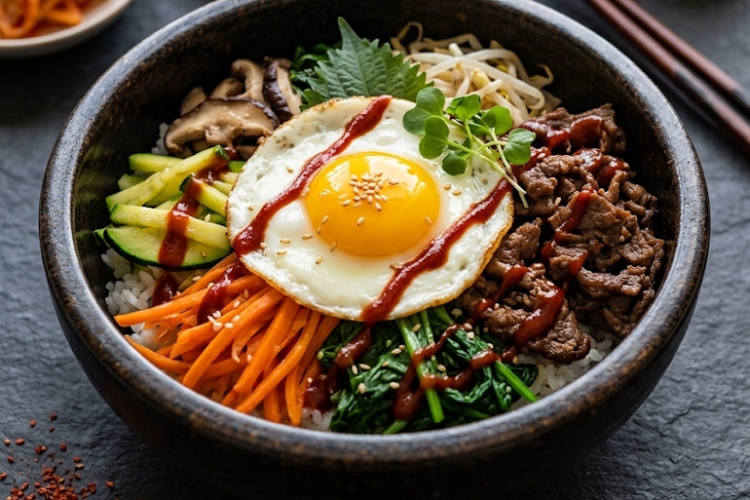
Bibimbap means “mixed rice,” and this beloved Korean dish is all about contrast: warm rice, savory marinated beef, colorful vegetables, a perfectly cooked egg, toasted sesame seeds, and a spicy-sweet sauce. Everything is arranged beautifully in a bowl, then mixed together just before eating.
This version uses thinly sliced beef tenderloin marinated with grated green apple, which naturally tenderizes the beef while adding subtle sweetness.
⏱ Recipe Information
Prep Time: 25 minutes
Marinating Time: 30 minutes
Cook Time: 20 minutes
Total Time: About 1 hour 15 minutes
Servings: 2
Difficulty: Moderate
🛒 Ingredients
🍚 For the Rice & Bowl
- 2 cups cooked white rice
- 1 large egg
- 2 teaspoons sesame seeds
- 1 teaspoon sesame oil, for finishing
🥩 Korean Beef & Marinade
- 8 oz (225 g) beef tenderloin or thick steak, finely sliced
- ¼ green apple, finely grated
- 2 tablespoons soy sauce
- 1 tablespoon brown sugar
- 1 tablespoon sesame oil
- 2 cloves garlic, minced
- 1 teaspoon fresh ginger, grated
- 1 green onion, finely sliced
- ½ teaspoon freshly ground black pepper
🥕 Vegetable Toppings
Use a colorful assortment such as:
- 1 small carrot, julienned
- 1 cup bean sprouts
- 1 small zucchini, julienned
- 1 cup spinach
- ½ cup mushrooms, thinly sliced
- ½ cup cucumber, julienned
🌶️ Bibimbap Sauce
- 2 tablespoons gochujang
- 1 tablespoon sesame oil
- 1 tablespoon rice vinegar
- 1 tablespoon honey or brown sugar
- 1 tablespoon water
- 1 teaspoon toasted sesame seeds
Instructions
🥩 1. Marinate the Beef
Place the thinly sliced beef in a bowl.
Add:
- Grated green apple
- Soy sauce
- Brown sugar
- Sesame oil
- Garlic
- Ginger
- Green onion
- Black pepper
Mix thoroughly until every piece of beef is coated.
Cover and refrigerate for at least 30 minutes, or up to 4 hours.
The grated apple adds natural sweetness and helps tenderize the beef.
🍚 2. Prepare the Rice
Cook the white rice according to your preferred method.
Keep it warm while preparing the remaining ingredients.
For the best bibimbap texture, use rice that’s fluffy and slightly sticky rather than dry.
🌶️ 3. Make the Bibimbap Sauce
In a small bowl, whisk together:
- Gochujang
- Sesame oil
- Rice vinegar
- Honey or brown sugar
- Water
- Sesame seeds
Mix until smooth.
Taste and adjust:
- Add water for a thinner sauce.
- Add more gochujang for heat.
- Add a little more honey for sweetness.
- Add rice vinegar for extra tang.
Set aside.
🥕 4. Prepare the Vegetables
Wash and prepare all of your vegetables.
Keep each variety separate because they’ll be cooked individually.
This preserves their individual flavors, colors, and textures.
🥬 5. Cook the Spinach
Bring a small pot of water to a boil.
Add the spinach and blanch for approximately 30–45 seconds.
Drain and squeeze out excess water.
Season lightly with:
- A pinch of salt
- A few drops of sesame oil
Set aside.
🌱 6. Cook the Bean Sprouts
Blanch the bean sprouts for approximately 1–2 minutes.
Drain thoroughly.
Season with a small pinch of salt and a few drops of sesame oil.
Set aside.
🥕 7. Sauté the Vegetables
Heat a little neutral oil in a skillet over medium-high heat.
Cook each vegetable separately:
Carrots
Sauté for 2–3 minutes, keeping them slightly crisp.
Zucchini
Cook for 2–3 minutes, until tender but not mushy.
Mushrooms
Cook for 3–4 minutes, until browned and tender.
Season each lightly with salt.
🥩 8. Cook the Beef
Heat a large skillet over medium-high to high heat.
Add the marinated beef in a single layer.
Cook for approximately 2–4 minutes, tossing frequently, until browned and cooked through.
Because the slices are thin, they cook very quickly.
Remove from the heat.
🍳 9. Fry the Egg
Heat a little oil in a clean skillet.
Crack in the egg.
Cook until the white is fully set while keeping the yolk soft and runny.
For classic bibimbap, a sunny-side-up egg is ideal.
🥢 10. Assemble the Bibimbap
Divide the warm rice between two large bowls.
Arrange the toppings around the rice in separate sections:
- Korean beef
- Carrots
- Zucchini
- Mushrooms
- Spinach
- Bean sprouts
- Cucumber
Place the fried egg directly in the center.
Sprinkle with sesame seeds.
Drizzle lightly with sesame oil.
🌶️ 11. Add the Sauce
Spoon the gochujang sauce over the bowl.
Start with 1–2 tablespoons per serving and add more to taste.
🥢 12. Mix & Enjoy
The traditional way to eat bibimbap is to break the egg yolk and mix everything together thoroughly.
The warm rice combines with the runny yolk, spicy gochujang, savory beef, sesame oil, and vegetables to create a wonderfully rich and flavorful bite.
Serve immediately.
⭐ Chef’s Tips
Slice the Beef Very Thinly
Thin slices cook quickly and absorb the marinade beautifully.
Freeze the Beef Briefly
For easier slicing, place the steak in the freezer for 20–30 minutes before cutting. It becomes firm enough to slice very thinly.
Don’t Overcook the Vegetables
Bibimbap is best when each vegetable retains its own texture.
Cook Vegetables Separately
This takes a little longer but produces a much more authentic presentation and better flavor.
Don’t Skip Sesame Oil
A small drizzle at the end adds the characteristic nutty aroma.
Customize the Heat
Gochujang varies in spiciness, so add it gradually.
🍳 Optional Crispy Rice Version
For dolsot-style crispy bibimbap without a traditional stone bowl:
- Heat a heavy oven-safe skillet over medium-high heat.
- Add 1 teaspoon sesame oil.
- Spread the warm rice across the bottom.
- Cook undisturbed for 4–6 minutes.
- Add the vegetables, beef, and egg.
- Serve while the bottom rice is crisp and golden.
The crunchy rice adds an incredible contrast to the soft vegetables and creamy egg yolk.
🥬 Easy Variations
Vegetarian Bibimbap
Skip the beef and add extra mushrooms, tofu, or edamame.
Chicken Bibimbap
Use thinly sliced chicken thighs or breast instead of beef.
Spicy Beef Bibimbap
Add extra gochujang and a pinch of Korean chili flakes.
Salmon Bibimbap
Replace the beef with pan-seared salmon flakes.
Avocado Bibimbap
Add sliced avocado just before serving for extra creaminess.
🧊 Storage
For best results, store the components separately.
Refrigerator: 3–4 days for cooked beef, rice, and vegetables.
Reheat the rice, beef, and vegetables before assembling a fresh bowl.
Cook a fresh egg when serving.
❄️ Make-Ahead Meal Prep
Bibimbap is excellent for meal prep.
Prepare the rice, beef, and vegetables ahead of time and store them separately.
When ready to eat:
- Reheat the rice.
- Warm the beef and vegetables.
- Assemble your bowl.
- Fry a fresh egg.
- Add gochujang sauce and sesame seeds.
This keeps the textures much better than storing the fully assembled bowl.
🥢🍚 Recipe Summary
Bibimbap is a colorful, satisfying Korean rice bowl built around warm fluffy rice, sweet-savory apple-marinated beef, sautéed vegetables, sesame, spicy gochujang sauce, and a runny fried egg.
The magic happens when everything gets mixed together—the egg yolk and sesame oil enrich the rice while the gochujang brings heat, sweetness, and depth.
Colorful, nutritious, deeply savory, and incredibly satisfying. 🇰🇷🥢🍳