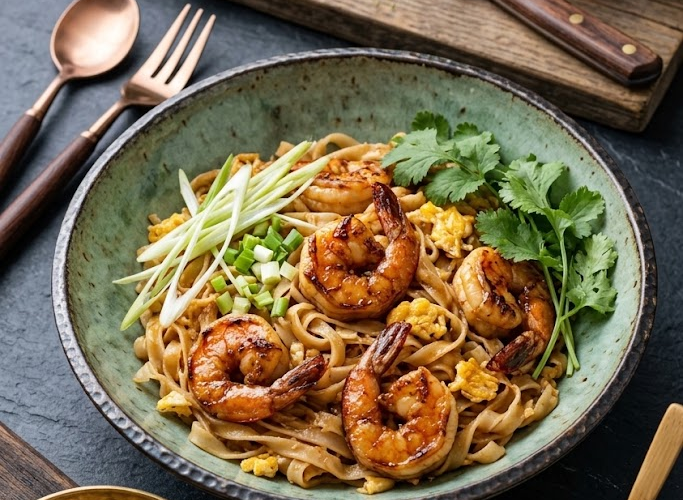
🍤 Shrimp Pad Thai
Chewy rice noodles, juicy shrimp, fluffy egg, crunchy peanuts, and a glossy sweet-tangy sauce come together in this irresistible homemade Shrimp Pad Thai.
This quick Thai-inspired noodle dish is packed with savory, sweet, sour, and slightly spicy flavors. It’s perfect for a weeknight dinner and comes together in one wok or large skillet.
⏱️ Recipe Information
Prep Time: 20 minutes
Cook Time: 15 minutes
Total Time: 35 minutes
Servings: 4
Difficulty: Easy
Method: Stir-Fry
🛒 Ingredients
🍜 For the Pad Thai
- 8 oz (225 g) Pad Thai rice noodles
- 2 tablespoons (30 ml) vegetable oil
- 1 lb (450 g) shrimp, peeled, deveined, and tails removed or left on
- 1 tablespoon (14 g) butter
- 2 large eggs, lightly beaten
- 3 cloves garlic, minced
- 1 cup bean sprouts
- 3 green onions, sliced
- ¼ cup roasted peanuts, roughly chopped
- 2 tablespoons fresh cilantro, chopped
- 1 lime, cut into wedges
🌶️ Optional
- Red pepper flakes
- Thai chili flakes
- Fresh sliced chili
- Extra bean sprouts
- Extra crushed peanuts
🥢 For the Sauce
- 3 tablespoons fish sauce
- 2 tablespoons tamarind paste
- 2 tablespoons brown sugar
- 1 tablespoon soy sauce
- 1 tablespoon fresh lime juice
- 1 teaspoon rice vinegar
- ½–1 teaspoon chili garlic sauce or Sriracha, optional
Whisk everything together in a small bowl until the brown sugar is dissolved.
Tip: Pad Thai sauce should have a balance of sweet, sour, salty, and savory flavors. Taste it before adding it to the noodles and adjust if needed.
👩🍳 Instructions
1. Soak the Rice Noodles
Place the rice noodles in a large bowl and cover them with warm water.
Soak according to the package directions, usually around 20–30 minutes, until the noodles are flexible but still slightly firm in the center.
Do not fully cook them at this stage.
Drain thoroughly and set aside.
The noodles will finish cooking in the wok.
2. Prepare the Sauce
In a small bowl, whisk together the fish sauce, tamarind paste, brown sugar, soy sauce, lime juice, rice vinegar, and chili sauce if using.
Taste and adjust the balance.
If it’s too sour, add a little more sugar.
If it’s too sweet, add a splash of lime juice.
Set aside.
3. Prepare the Shrimp
Pat the shrimp dry with paper towels.
Season lightly with a pinch of salt and black pepper if desired.
Having the shrimp dry helps them sear rather than release excess water into the pan.
4. Cook the Shrimp
Heat a large wok or skillet over medium-high heat.
Add the vegetable oil.
Add the shrimp in a single layer and cook for approximately 1–2 minutes per side, until pink and nearly cooked through.
Transfer the shrimp to a plate.
Don’t overcook them at this stage because they will return to the wok later.
5. Cook the Eggs
Add the butter to the same wok.
Once melted, pour in the beaten eggs.
Let them cook undisturbed for about 20–30 seconds, then gently scramble them into soft curds.
Cook just until set.
Push the eggs toward one side of the wok.
6. Sauté the Garlic
Add the minced garlic to the open side of the wok.
Stir-fry for approximately 20–30 seconds, just until fragrant.
Be careful not to let it burn.
7. Add the Noodles
Add the drained rice noodles to the wok.
Toss gently with the eggs and garlic.
Immediately pour the prepared Pad Thai sauce over the noodles.
Use tongs or two wooden spoons to toss everything together.
Cook for approximately 2–3 minutes, tossing frequently.
The noodles will absorb the sauce and become tender and glossy.
8. Return the Shrimp
Add the cooked shrimp back to the wok.
Toss everything together for another 1–2 minutes, until the shrimp are fully cooked and the noodles are tender.
If the noodles seem dry, add 1–2 tablespoons of water and continue tossing.
9. Add the Vegetables
Add the bean sprouts and most of the sliced green onions.
Toss for approximately 30–60 seconds.
Keep the bean sprouts slightly crisp for the best texture.
10. Garnish and Serve
Transfer the Pad Thai to serving plates.
Top generously with:
- Chopped roasted peanuts
- Fresh cilantro
- Remaining green onions
- Extra bean sprouts
- Lime wedges
Add chili flakes or sliced fresh chili for extra heat.
Squeeze fresh lime juice over the noodles just before eating.
Serve immediately.
⭐ Chef’s Tips
Don’t Over-Soak the Noodles
The noodles should be pliable but still firm when they enter the wok.
Over-soft noodles can turn mushy during stir-frying.
Use a Hot Pan
A hot wok gives the shrimp and noodles better flavor while keeping the vegetables crisp.
Don’t Overcrowd the Wok
If your wok is small, cook the shrimp in batches.
Too much food at once can cause steaming rather than stir-frying.
Keep the Shrimp Juicy
Shrimp cook very quickly. Remove them from the pan as soon as they’re nearly done, then return them at the end.
Taste Before Serving
Pad Thai is all about balance. Adjust with lime juice for sourness, sugar for sweetness, fish sauce for saltiness, or chili for heat.
Serve Immediately
Pad Thai is at its best straight from the wok while the noodles are glossy and the bean sprouts are crisp.
🌶️ Easy Variations
Chicken Pad Thai
Replace the shrimp with 1 lb (450 g) thinly sliced chicken breast or thigh.
Cook the chicken completely before proceeding with the noodles.
Tofu Pad Thai
Use 8 oz (225 g) firm tofu, cut into small cubes and pan-fried until golden.
Vegetable Pad Thai
Add sliced bell peppers, carrots, mushrooms, broccoli, or extra bean sprouts.
Spicy Shrimp Pad Thai
Add additional Sriracha or Thai chili flakes to the sauce.
Peanut-Lover’s Pad Thai
Add extra crushed roasted peanuts and finish with a spoonful of creamy peanut sauce.
🍋 Serving Suggestions
Serve Shrimp Pad Thai with:
- Fresh lime wedges
- Extra crushed peanuts
- Bean sprouts
- Thai chili flakes
- Fresh cilantro
- Sliced green onions
- Thai cucumber salad
- Fresh herbs
A cold Thai iced tea also makes a wonderful accompaniment.
🧊 Storage
Transfer leftovers to an airtight container and refrigerate for up to 3 days.
For the best texture, keep the garnishes and lime wedges separate.
🔥 Reheating
Reheat Pad Thai in a skillet or wok over medium heat.
Add 1–2 tablespoons of water to loosen the noodles.
Toss frequently until heated through.
You can also microwave individual portions, adding a small splash of water before reheating.
Finish with fresh lime juice and peanuts.
❄️ Freezing
Freezing is not recommended for the best noodle texture.
The rice noodles can become soft and break apart after thawing.
For the freshest Pad Thai, make it fresh and enjoy it immediately.
🍤 Final Result
This Shrimp Pad Thai is loaded with juicy shrimp, chewy rice noodles, soft scrambled egg, crisp bean sprouts, crunchy peanuts, and a perfectly balanced sweet, sour, salty, savory sauce.
A squeeze of fresh lime and a sprinkle of peanuts at the end bring everything together.
One wok, bold Thai-inspired flavors, and a delicious homemade dinner in about 35 minutes! 🍤🍜🥢✨