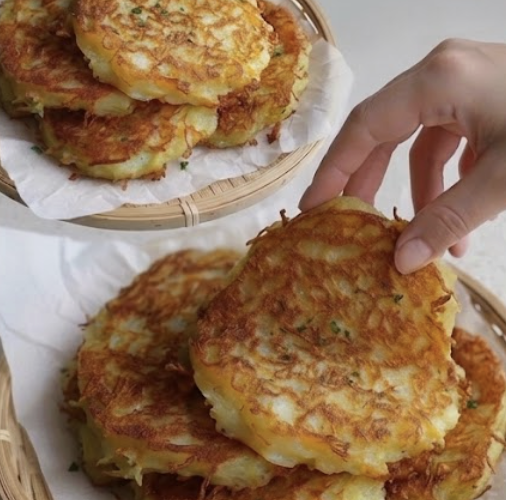
Potato pancakes are one of those humble, deeply satisfying comfort foods that hit the spot every single time. But if you’ve ever ended up with a pan full of limp, greasy hash browns instead of a batch of golden, shatteringly crisp pancakes with a soft, tender center, you know how frustrating it can be.
The good news? Getting that real-deal bakery or deli crispiness isn’t about fancy ingredients—it comes down to managing potato moisture, getting the right starch balance, and keeping your frying pan hot.
Here is the full breakdown of how to make crisp, flavorful potato pancakes from scratch, along with the kitchen secrets that make all the difference.
The Science of a Truly Crispy Potato Pancake
To fix the common “soggy latke” problem, it helps to know what’s happening inside the pan:
- Water is the Enemy of Crispness: Potatoes are roughly 80% water. If you dump freshly grated potatoes straight into hot oil, that internal moisture instantly turns to steam. Steam cooks the potato, but it also soft-cooks the outer layer, making it impossible for a crisp, golden crust to form. Squeezing out every drop of free water before mixing is the single most important step in the recipe.
- The Magic of Native Potato Starch: When you wring out grated potatoes, the liquid you squeeze out contains pure, settled potato starch. Adding that heavy white starch back into the batter alongside a little flour creates a tight, protective shell around the shreds as soon as they hit the hot oil.
- The Onion Barrier: Grating your onion directly into the raw potato shreds does two things: it coats the potato in aromatic onion juice for deep flavor, and the natural acid in the onion helps slow down the oxidation process that turns raw, exposed potatoes gray/brown.
Ingredients
- 4 large starchy potatoes (Russets/Idahos are the absolute gold standard here because of their high starch and low moisture content; Yukon Golds work great too for a buttery flavor)
- 1 small yellow onion
- 2 large eggs, room temperature, lightly beaten
- ¼ cup all-purpose flour (or matzo meal if you prefer a traditional Jewish latke texture)
- ½ teaspoon garlic powder
- 1 teaspoon fine sea salt (plus a little extra for seasoning after frying)
- ½ teaspoon freshly cracked black pepper
- High-heat cooking oil for frying (vegetable, canola, or peanut oil—avoid extra-virgin olive oil, which burns too quickly)
RECIPE CARD
Step-by-Step Instructions
1. Prep and Shred
Peel your potatoes and onion. Using the coarse side of a box grater (or the shredding disc attachment on a food processor), grate the potatoes and the onion together into a large bowl. Alternating between a chunk of potato and a chunk of onion as you grate keeps the potatoes looking fresh and bright.
2. The Great Squeeze (Don’t Skip This!)
Line a large bowl with a clean, lint-free kitchen towel or a double layer of cheesecloth. Dump the grated potato and onion mixture right into the middle of the cloth.
Gather up the corners, twist the top tightly, and stand over the sink. Twist and squeeze with all your strength. Keep wringing it out until literally no more liquid comes dripping through the cloth. Your potato-onion mixture should look dry, pale, and fluffy when you dump it back into a dry bowl.
3. Save the Starch
If you want to take these to the next level, squeeze that liquid into a glass bowl instead of the sink. Let the cloudy liquid sit undisturbed on the counter for 2 to 3 minutes. The liquid will separate, and a thick layer of dense white starch will settle at the bottom. Carefully pour off the watery liquid, leaving that silky starch behind. Scoop that starch right into your potato bowl!
4. Mix the Batter
To your dried potato-onion mixture (and recovered starch), add the 2 beaten eggs, ¼ cup flour, ½ teaspoon garlic powder, 1 teaspoon salt, and ½ teaspoon black pepper.
Toss everything together using a fork or your hands. You want every shred of potato lightly coated in egg and flour so the mixture holds together, but it shouldn’t look like a thick cake batter—it should still feel like a light, bound shredded mixture.
5. Fry to Golden Perfection
Pour your vegetable oil into a large, heavy-bottomed skillet (cast iron works absolute wonders here) until it reaches about ⅛-inch to ¼-inch deep. Heat the oil over medium-high heat until it’s hot and shimmering (around 350°F / 175°C).
Test the heat: Drop a single shred of potato into the oil. If it sizzles vigorously right away, your oil is ready. If it sinks or barely bubbles, give the pan another minute to heat up.
Scoop roughly ¼ cup of the potato mixture into the hot oil for each pancake. Use the back of a spatula or spoon to press the mounds down into flat, even rounds about ⅓-inch thick.
Don’t overcrowd the pan—leave a little space between each pancake so the oil stays hot. Fry in batches of 3 or 4 for 3 to 5 minutes per side. You’re looking for deep golden-brown, lacey edges. Flip carefully just once.
6. Drain and Season Hot
Line a large baking sheet with paper towels (or set a wire cooling rack over a sheet). As the pancakes finish frying, lift them out with a slotted spatula, let the excess oil drip off for a second, and lay them on the towels/rack.
Immediately sprinkle them with a tiny pinch of fresh sea salt while the surface oil is still hot—this lets the salt bond to the crust instead of bouncing off later.
Pro-Tips for Success
- Keeping Them Hot for a Crowd: Never stack hot potato pancakes directly on top of each other while cooking the rest of the batch, or the trapped steam will make the bottom ones soft. Instead, set your oven to 200°F (90°C), place a wire rack over a baking sheet inside, and transfer finished pancakes to the oven to stay piping hot and extra crisp while you finish frying.
- Troubleshooting Falling-Apart Pancakes: If your pancakes are crumbling in the pan when you try to flip them, your batter might be a little too dry or missing binder. Whisk 1 extra egg with 1 tablespoon of flour and fold it into the remaining potato mixture.
- Classic Serving Options: Serve these piping hot! Traditional pairings include a dollop of cold, full-fat sour cream alongside sweet applesauce. A sprinkle of fresh chopped chives or dill over the sour cream adds a bright pop of green and cuts through the rich, savory fry.