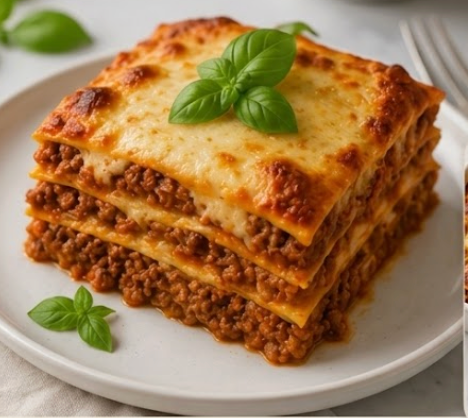
Few baked pasta dishes evoke the same warmth, comfort, and culinary satisfaction as a truly great Classic Beef Lasagna. With its structural layers of tender pasta sheets, rich garlic-infused meat ragù, creamy herb-seasoned ricotta, and a bubbling, golden mozzarella blanket, lasagna is an enduring centerpiece for Sunday family dinners and holiday gatherings alike.
While assembling a homemade lasagna might seem intimidating due to the multiple components involved, understanding how each layer functions makes the entire process seamless. Here is the master breakdown of how to prepare, layer, and bake a restaurant-quality lasagna from scratch.
The Culinary Mechanics of a Great Lasagna
Understanding the structural science of lasagna ensures your slices come out neat, firm, and stratified rather than sliding apart into a soup on the plate:
- The Meat Sauce Consistency: The ragù needs to be thick and reduced, not watery. Liquid is the enemy of structural integrity in lasagna. Simmering the tomato passata down until it clings tightly to the browned ground beef ensures the layers hold their shape when sliced.
- The Ricotta Binder (Egg & Cheese Matrix): Whole-milk ricotta on its own can become grainy and watery when heated. Whisking a large egg into the ricotta creates a protein matrix that sets as it bakes. This turns the cheese layer into a velvety, sliceable filling that doesn’t leak moisture into the pasta layers.
- No-Boil vs. Traditional Pasta Sheets: If using standard dry lasagna noodles, boil them until just al dente(usually 1 to 2 minutes less than package directions) and lay them flat on oiled parchment paper to prevent sticking. If using oven-ready (no-boil) sheets, ensure they are fully submerged in sauce so they absorb liquid and hydrate properly during baking.
Complete Ingredients List
For the Rich Beef Ragù:
- 2 tablespoons extra-virgin olive oil
- 500 g (1.1 lbs) ground beef (80/20 or 85/15 lean ratio for optimal flavor)
- 1 medium yellow onion, finely diced
- 3 cloves garlic, minced
- 700 g (24 oz) tomato passata (strained tomato purée)
- 2 tablespoons tomato paste (concentrates savory umbrella flavor)
- 1 teaspoon dried oregano
- 1 teaspoon dried basil
- Fine sea salt and freshly cracked black pepper, to taste
For the Creamy Cheese Layer:
- 400 g (14 oz) whole-milk ricotta cheese
- 1 large egg, room temperature
- 60 g (½ cup) Parmesan cheese, finely grated
- Pinch of salt and black pepper
For Assembly & Topping:
- 12 lasagna sheets (dried or oven-ready)
- 300 g (10 ½ oz) low-moisture mozzarella cheese, shredded
- Fresh basil leaves, for garnish and serving
RECIPE CARD
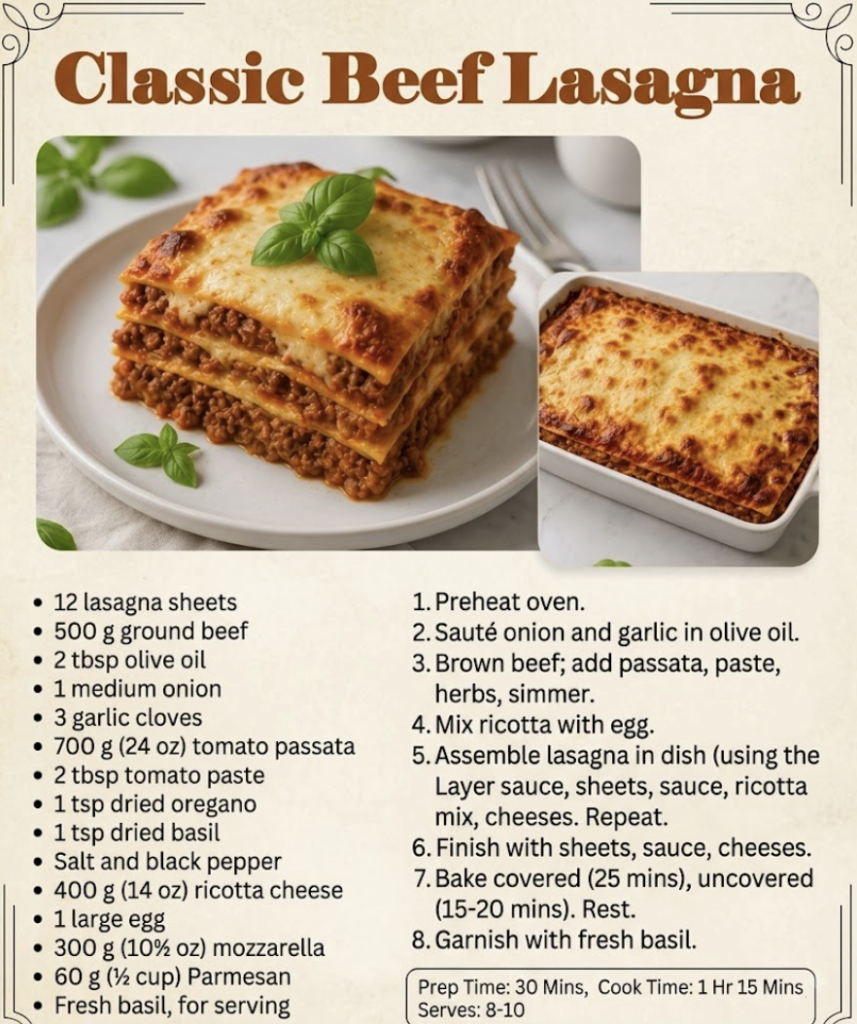
Step-by-Step Instructions
Step 1: Make the Meat Sauce (Ragù)
- Heat the 2 tablespoons olive oil in a large, deep skillet or Dutch oven over medium-high heat.
- Add the 1 medium diced onion and cook for 3 to 4 minutes until translucent and soft. Add the 3 minced garlic cloves and cook for another 60 seconds until fragrant.
- Add the 500 g ground beef, breaking it up with a wooden spoon. Season with salt, pepper, 1 tsp dried oregano, and 1 tsp dried basil. Cook for 6 to 8 minutes until the beef is fully browned.
- Stir in the 2 tbsp tomato paste and cook for 2 minutes to caramelize slightly.
- Pour in the 700 g tomato passata. Bring the sauce to a gentle simmer, then reduce heat to low. Cover partially and let it simmer for 20 to 25 minutes until thick, rich, and aromatic. Taste and adjust salt and pepper if needed. Remove from heat.
Step 2: Prepare the Ricotta Mixture
- In a medium mixing bowl, whisk together the 400 g ricotta cheese, 1 large egg, and half of the grated Parmesan (30 g / ¼ cup).
- Season with a light pinch of salt and freshly cracked black pepper. Mix with a spatula until completely smooth and creamy.
Step 3: Cook the Pasta Sheets (If using standard noodles)
- Bring a large pot of salted water to a rolling boil.
- Cook the 12 lasagna sheets until just al dente (roughly 7 to 8 minutes).
- Drain carefully and lay the sheets flat in a single layer on parchment paper lightly brushed with olive oil to prevent them from sticking together.
Step 4: Layer the Lasagna
Preheat your oven to 375°F (190°C). Lightly grease a standard 9×13-inch deep baking dish.
Follow this exact layering order for structural perfection:
- Sauce Base: Spread roughly ½ cup of the beef ragù thinly across the bottom of the baking dish (this prevents the bottom pasta layer from sticking or burning).
- First Pasta Layer: Lay down 3 to 4 lasagna sheets side by side, slightly overlapping if necessary to cover the bottom.
- Cheese & Meat Layer: Dollop and gently spread one-third of the ricotta mixture over the pasta, followed by a generous layer of beef ragù and a handful of shredded mozzarella.
- Repeat: Lay down a second layer of pasta sheets, followed by another layer of ricotta, beef ragù, and mozzarella. Repeat once more for a total of 3 interior layers.
- Top Crown Layer: Place the final layer of pasta sheets over the top. Cover completely with the remaining beef ragù, scatter the remaining shredded mozzarella evenly across the top, and sprinkle with the remaining 30 g Parmesan cheese.
Plaintext
               LASAGNA STRUCTURAL LAYERING ORDER

       ┌─────────────────────────────────────────┐  ◄── Parmesan & Mozzarella Top
       │ ═══════════════════════════════════════ │  ◄── Final Pasta Sheet Layer
       │ ▒▒▒▒▒▒▒▒▒▒▒▒▒▒▒▒▒▒▒▒▒▒▒▒▒▒▒▒▒▒▒▒▒▒▒▒▒▒▒ │  ◄── Beef Ragù + Ricotta Filling
       │ ═══════════════════════════════════════ │  ◄── Middle Pasta Sheet Layer
       │ ▒▒▒▒▒▒▒▒▒▒▒▒▒▒▒▒▒▒▒▒▒▒▒▒▒▒▒▒▒▒▒▒▒▒▒▒▒▒▒ │  ◄── Beef Ragù + Ricotta Filling
       │ ═══════════════════════════════════════ │  ◄── Bottom Pasta Sheet Layer
       │ ─────────────────────────────────────── │  ◄── Thin Sauce Base
       └─────────────────────────────────────────┘
Step 5: Bake to Golden Perfection
- Tent a piece of aluminum foil over the baking dish, taking care that the foil doesn’t directly touch the cheese on top (you can spray the underside of the foil with non-stick spray).
- Bake covered at 375°F (190°C) for 25 minutes.
- Carefully remove the aluminum foil and bake uncovered for an additional 15 to 20 minutes, or until the cheese on top is completely melted, bubbling vigorously around the edges, and deeply golden brown in spots.
- (Optional) For an extra-crispy, caramelized cheese crust, switch the oven to broil for the last 2 minutes, watching closely so it doesn’t burn!
Step 6: The Essential Rest & Serving
- Remove the lasagna from the oven and place it on a heat-safe wire rack.
- Let it rest undisturbed for at least 15 to 20 minutes before slicing.
Why Resting Matters: Slicing into a boiling-hot lasagna straight out of the oven causes the melted mozzarella and warm ricotta matrix to spill out, destroying your neat layers. Resting gives the starches in the pasta and the proteins in the cheeses time to firm up and solidify.
- Garnish with chopped fresh basil leaves, slice into neat squares, and serve warm with a side salad and garlic bread!
Baker & Chef Pro-Tips
- Low-Moisture Mozzarella is Key: Avoid using fresh mozzarella balls stored in liquid whey for the interior layers. Fresh mozzarella contains a high water content that will turn your lasagna watery as it bakes. Stick to shredded, low-moisture block mozzarella for the perfect cheese pull without excess liquid.
- Making Ahead / Freezing: Lasagna is one of the absolute best make-ahead dishes. You can fully assemble the entire lasagna in your baking dish, cover it tightly with plastic wrap and foil, and refrigerate it unbaked for up to 24 hours before cooking. To freeze, assemble in a freezer-safe pan, wrap tightly in double layers of foil, and freeze for up to 3 months. Bake directly from frozen at 375°F (190°C) covered for 60 minutes, then uncovered for 20 minutes until piping hot and bubbling!