🍕 Perfect Italian Pizza Dough
Soft, elastic, flavorful, and beautifully crisp around the edges, this homemade Italian pizza dough is the perfect foundation for your favorite pizza toppings. Made with simple pantry ingredients, the dough is easy to prepare and develops a deliciously chewy texture when baked in a very hot oven.
Use it for classic Margherita pizza, pepperoni, four cheese, veggie pizza, or any combination of toppings you love.
⏱️ Recipe Information
Prep Time: 20 minutes
Rise Time: 1½–2 hours
Bake Time: 8–15 minutes per pizza
Total Time: About 2 hours 30 minutes
Yield: 2 large pizzas
Difficulty: Easy
Method: Knead & Bake
🛒 Ingredients
- 2 teaspoons active dry yeast
- 1½ cups (360ml) warm water, about 105–110°F (40–43°C), not boiling
- 4 cups (500g) all-purpose flour, plus extra for dusting
- 1 teaspoon sea salt
- ⅓ cup (80ml) extra virgin olive oil
For Shaping
- Extra flour or semolina, as needed
Optional
- 1 teaspoon sugar for slightly faster yeast activation
- 1 teaspoon dried Italian herbs for a lightly seasoned dough
👩🍳 Instructions
1. Activate the Yeast
Pour the warm water into a large mixing bowl.
Sprinkle the active dry yeast over the water and gently stir.
Let it stand for 5–10 minutes, until the yeast becomes slightly foamy.
If using sugar, stir it into the warm water with the yeast.
Do not use very hot water, as excessive heat can kill the yeast.
2. Add the Flour
Add about 3½ cups of the flour to the yeast mixture.
Add the sea salt and stir with a wooden spoon or sturdy spatula until a shaggy dough begins to form.
Add the remaining flour gradually, mixing until the dough starts pulling away from the sides of the bowl.
You may not need every last bit of flour, depending on humidity and the flour you’re using.
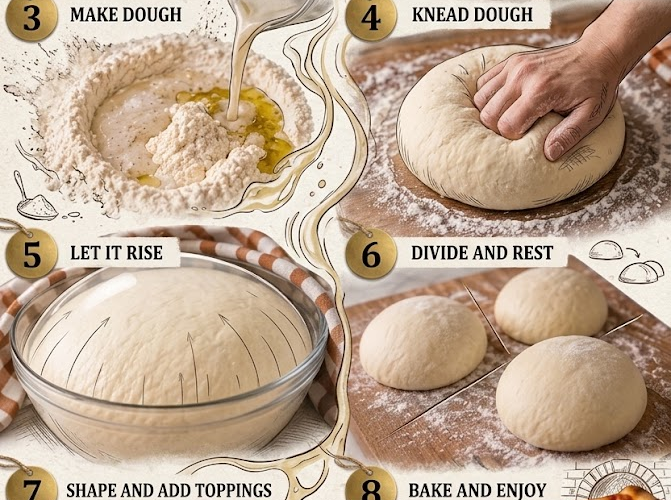
3. Add the Olive Oil
Pour in the extra virgin olive oil.
Mix until the oil is incorporated and the dough becomes soft and slightly sticky.
The dough should feel soft, supple, and elastic, rather than dry or stiff.
If it feels excessively sticky, add flour 1 tablespoon at a time.
4. Knead the Dough
Transfer the dough to a lightly floured work surface.
Knead by pushing the dough away from you with the heel of your hand, folding it back toward you, and turning it slightly.
Continue kneading for approximately 8–10 minutes.
The finished dough should be:
- Smooth
- Elastic
- Soft
- Slightly tacky but not excessively sticky
To test it, gently press a finger into the dough. It should slowly spring back.
5. First Rise
Shape the dough into a smooth ball.
Lightly grease a clean bowl with olive oil and place the dough inside.
Turn the dough once so the surface is lightly coated with oil.
Cover the bowl with plastic wrap or a clean kitchen towel.
Place it somewhere warm and allow it to rise for approximately 1–1½ hours, or until it has roughly doubled in size.
6. Divide the Dough
Once risen, gently press the dough down to release excess air.
Transfer it to a lightly floured surface.
Divide the dough into 2 equal portions.
Shape each portion into a smooth ball by pulling the edges underneath and gently rotating the dough against the work surface.
7. Rest the Dough
Cover the dough balls loosely with a clean towel or plastic wrap.
Allow them to rest for another 20–30 minutes.
This relaxes the gluten and makes the dough much easier to stretch.
8. Shape the Pizza
Preheat your oven to its highest possible temperature, ideally 475–500°F (245–260°C) or higher.
If using a pizza stone or pizza steel, place it in the oven while it preheats for at least 30–45 minutes.
Lightly dust your work surface with flour or semolina.
Place one dough ball on the surface and gently press it outward with your fingertips.
Work from the center toward the edges, leaving a slightly thicker rim for the crust.
Gently stretch the dough into approximately a 12-inch (30cm) round.
Avoid using a rolling pin if you want a lighter, airier crust, as rolling can press out the gas that creates those beautiful bubbles around the edge.
9. Add Your Toppings
Transfer the shaped dough to a lightly floured pizza peel, parchment paper, or preheated pizza pan.
Add your favorite toppings, keeping them relatively light.
A simple combination of:
- Pizza sauce
- Fresh mozzarella
- Fresh basil
- Extra virgin olive oil
makes a fantastic classic pizza.
Don’t overload the dough, as too many toppings can make the center soggy.
10. Bake
Carefully transfer the pizza to the preheated pizza stone, steel, or baking surface.
Bake for approximately 8–15 minutes, depending on your oven temperature and baking surface.
The pizza is ready when:
- The crust is puffed and golden.
- The edges have developed dark golden spots.
- The cheese is bubbling.
- The underside is crisp and browned.
For an especially blistered crust, finish under the broiler for 30–60 seconds, watching carefully.
11. Finish and Serve
Remove the pizza from the oven and let it rest for 1–2 minutes.
Finish with a drizzle of extra virgin olive oil, fresh basil, grated Parmesan, chili flakes, or a little flaky sea salt.
Slice and serve immediately.
⭐ Chef’s Tips
Use warm, not hot, water: Water that is too hot can damage the yeast.
Don’t add too much flour: A slightly tacky dough produces a lighter, more tender crust. Too much flour can make the finished pizza dense.
Knead thoroughly: Proper kneading develops gluten, giving the dough its characteristic stretch and chew.
Give the dough time to rise: The rise is essential for developing both texture and flavor.
Preheat your oven well: Pizza dough needs intense heat to develop a crisp bottom and beautifully blistered crust.
Use a pizza stone or steel: These transfer heat quickly to the dough and help create a pizzeria-style crust.
Keep toppings light: A thin layer of sauce and a moderate amount of cheese help the center bake properly.
Don’t roll the dough: Stretching by hand preserves the air bubbles created during fermentation.
🍕 Easy Pizza Ideas
Classic Margherita
Tomato sauce, fresh mozzarella, basil, and olive oil.
Pepperoni Pizza
Tomato sauce, mozzarella, pepperoni, and a pinch of chili flakes.
Four Cheese
Mozzarella, Parmesan, provolone, and gorgonzola or another blue cheese.
Garlic Mushroom Pizza
Garlic-infused olive oil, mozzarella, sautéed mushrooms, Parmesan, and fresh herbs.
Prosciutto & Arugula
Bake with mozzarella and Parmesan, then finish with prosciutto, fresh arugula, olive oil, and shaved Parmesan.
Spicy Italian
Tomato sauce, mozzarella, spicy salami, chili flakes, and hot honey after baking.
❄️ Make-Ahead & Cold Fermentation
For even better flavor, the dough can be fermented slowly in the refrigerator.
After kneading, place the dough in a lightly oiled airtight container and refrigerate for 24–72 hours.
When ready to use, remove it from the refrigerator and allow it to sit at room temperature for approximately 1–2 hours before shaping.
Cold fermentation develops a deeper flavor and can produce an especially light, chewy crust.
🧊 Storage
Refrigerator
Store prepared dough balls in lightly oiled, airtight containers for up to 3 days.
Freezer
Wrap individual dough balls tightly in plastic wrap, then place them in a freezer-safe bag.
Freeze for up to 3 months.
Thaw overnight in the refrigerator, then bring to room temperature for 1–2 hours before shaping.
🍕✨ Final Result
This Perfect Italian Pizza Dough produces a beautifully soft and chewy center with crisp, golden edges.
It’s simple enough for a weeknight pizza night but versatile enough to become your go-to homemade pizza dough. Once you master the dough, you can turn it into virtually any pizza you crave.
Hot oven + well-rested dough + simple toppings = incredible homemade pizza. 🇮🇹🍕