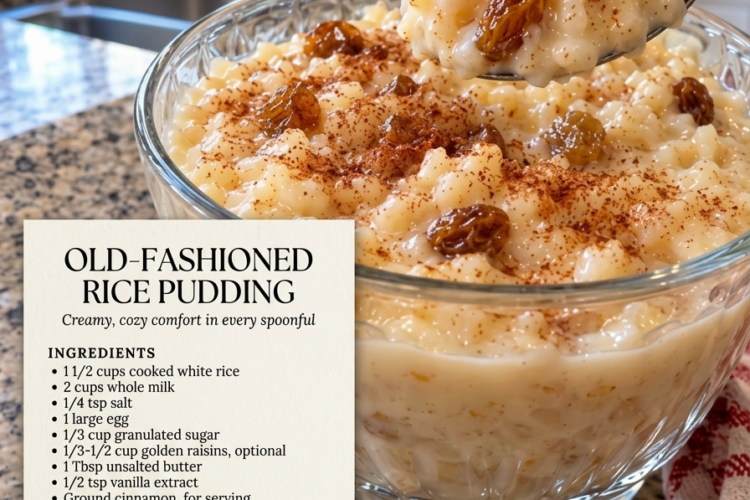
🍚 Old-Fashioned Rice Pudding — Creamy, Sweet & Comforting
There is something wonderfully nostalgic about a bowl of Old-Fashioned Rice Pudding. Made with tender cooked rice, creamy whole milk, sugar, butter, vanilla, and a hint of cinnamon, this classic homemade dessert is simple, comforting, and delicious with every spoonful.
Golden raisins add little bursts of sweetness, while slowly simmering the rice in milk creates a rich, velvety texture just like the rice pudding many of us remember from childhood. Best of all, this recipe uses already-cooked rice and a handful of pantry staples, making it an easy dessert for any day of the week.
Serve it warm for a cozy treat or chilled for a refreshing, creamy dessert. Either way, this timeless favorite is pure comfort in a bowl!
Recipe Information
- Prep Time: 5 minutes
- Cook Time: 25–30 minutes
- Total Time: 30–35 minutes
- Servings: 4
- Course: Dessert
- Cuisine: American, Traditional
- Difficulty: Easy
- Cooking Method: Stovetop
Ingredients
- 1½ cups cooked white rice
- 2 cups (480 ml) whole milk
- ¼ teaspoon salt
- 1 large egg
- ⅓ cup (67 g) granulated sugar
- ⅓–½ cup (50–75 g) golden raisins, optional
- 1 tablespoon (14 g) unsalted butter
- ½ teaspoon vanilla extract
- Ground cinnamon, for serving
Best rice to use: Soft, cooked long-grain or medium-grain white rice works well. The rice should already be cooked and tender before you begin.
Instructions
Step 1: Combine the Rice and Milk
Place the cooked white rice, whole milk, and salt in a medium, heavy-bottomed saucepan.
Stir gently to separate any clumps of rice. Set the saucepan over medium heat and bring the mixture to a gentle simmer, stirring frequently.
Do not let the milk boil vigorously, as it can foam up quickly or scorch on the bottom of the pan.
Step 2: Simmer Until Creamy
Reduce the heat to low and simmer gently for 15–20 minutes, stirring frequently with a wooden spoon or silicone spatula.
As the rice warms, it will release some of its starch into the milk, helping the mixture become thick and creamy. Scrape the bottom and corners of the saucepan regularly to prevent sticking.
If using golden raisins, stir them in during the final 5–10 minutes of simmering so they have time to soften and absorb some of the creamy liquid.
The mixture should look creamy and slightly loose at this stage. It will thicken further when the egg and sugar are added and as the pudding cools.
Step 3: Whisk the Egg and Sugar
While the rice simmers, place the egg and granulated sugar in a small bowl.
Whisk until the mixture is smooth, pale, and evenly combined.
This step helps distribute the sugar throughout the egg, making it easier to incorporate into the hot rice pudding.
Step 4: Temper the Egg
Tempering gently warms the egg before it is added to the hot milk mixture, helping prevent scrambled pieces from forming.
Remove the saucepan from the heat briefly. Slowly ladle about ½ cup of the hot rice-and-milk mixture into the egg and sugar mixture, whisking continuously as you pour.
Add another small ladleful while continuing to whisk. The egg mixture should become warm and fluid.
Step 5: Finish Cooking the Pudding
Slowly pour the tempered egg mixture back into the saucepan, stirring constantly.
Return the saucepan to low heat and continue cooking for approximately 3–5 minutes, stirring continuously, until the pudding thickens and coats the back of a spoon.
For food safety, the egg-containing mixture should reach 160°F (71°C). Use a food thermometer if available, and do not allow the pudding to boil after adding the egg, as excessive heat can cause curdling.
If the pudding seems a little thin, give it another minute or two over low heat, stirring constantly. Remember that it will become thicker as it cools.
Step 6: Add Butter and Vanilla
Remove the saucepan from the heat.
Stir in the unsalted butter and vanilla extract until the butter melts completely and the pudding becomes smooth and glossy.
Taste carefully once the mixture has cooled slightly. Add a little extra sugar or vanilla if desired, keeping in mind that the pudding will taste less sweet once chilled.
Step 7: Rest and Thicken
Let the rice pudding stand for about 5 minutes, stirring occasionally.
If the pudding becomes thicker than you prefer, stir in a splash of warm milk until it reaches your desired consistency.
For an extra-creamy finish, serve it warm in individual bowls. For chilled rice pudding, transfer it to serving dishes or a shallow container, cover, and refrigerate once cooled promptly.
Step 8: Garnish and Serve
Spoon the pudding into small bowls or dessert glasses.
Finish each serving with a light dusting of ground cinnamon. For extra flavor, add a few golden raisins, a small pat of butter, or a sprinkle of freshly grated nutmeg.
Enjoy it warm for a soft, comforting dessert, or refrigerate it for several hours for a cool, thick, creamy treat.
Tips for the Creamiest Rice Pudding
- Use whole milk: Its fat content creates a richer texture than low-fat milk. Reduced-fat milk can be used, but the pudding may be less creamy.
- Stir frequently: Rice pudding thickens as it cooks, so frequent stirring helps prevent scorching and sticking.
- Keep the heat low: A gentle simmer is ideal for softening the rice further and allowing the starch to thicken the milk.
- Temper the egg carefully: Add the hot liquid gradually while whisking continuously to prevent curdling.
- Do not overcook: The pudding should still be slightly loose when you remove it from the heat because it thickens as it stands.
- Adjust the consistency: Stir in a little additional milk before serving if the pudding has become too thick.
- Choose your sweetness: Golden raisins add natural sweetness, so use the smaller amount of sugar if you prefer a less-sweet dessert.
Delicious Variations
Creamy Cinnamon Rice Pudding
Add ½ teaspoon ground cinnamon to the saucepan during the final minutes of cooking for a warm, spiced flavor throughout the pudding.
Old-Fashioned Rice Pudding with Nutmeg
Add a small pinch of freshly grated nutmeg along with the vanilla. Nutmeg complements the creamy milk and gives the dessert an extra nostalgic flavor.
Coconut Rice Pudding
Replace ½ cup of the whole milk with canned coconut milk. This creates a subtle coconut flavor and a richer texture.
Creamy Vanilla Rice Pudding
Increase the vanilla extract to 1 teaspoon, or add the seeds from a small piece of vanilla bean for a more pronounced vanilla flavor.
Rice Pudding with Dried Fruit
Replace the golden raisins with regular raisins, chopped dried apricots, or dried cranberries. If the fruit is especially dry, soak it briefly in warm water and drain before adding.
Extra-Rich Rice Pudding
Replace ¼ cup of the milk with heavy cream for a more decadent dessert. Stir gently and watch the mixture closely as it cooks.
Dairy-Free Rice Pudding
Use an unsweetened, creamy plant-based milk such as oat milk or coconut milk and replace the butter with a suitable dairy-free alternative. The flavor and thickening behavior may differ slightly.
What to Serve with Old-Fashioned Rice Pudding
This pudding is delicious on its own, but a few simple additions make it even more special.
Serve it with fresh berries, sliced bananas, stewed apples, poached pears, or a drizzle of honey. Toasted almonds or chopped pecans add a pleasant crunch, while a dusting of cinnamon or nutmeg brings out its warm, comforting flavor.
For a cozy afternoon treat, pair a small bowl with coffee, tea, or a glass of cold milk.
Make-Ahead and Storage Instructions
Make ahead: Prepare the pudding several hours before serving and refrigerate it in individual containers. It will thicken as it chills, so stir in a little milk before serving if needed.
Refrigerator: Transfer leftovers to shallow, airtight containers and refrigerate within 2 hours of cooking. Store at 40°F (4°C) or below and consume within 3–4 days.
Reheating: Place the desired portion in a saucepan with a splash of milk. Warm gently over low heat, stirring regularly until heated through. You can also reheat individual servings in the microwave in short intervals, stirring between each interval.
Freezing: Freezing is not recommended for the best texture. The milk-based pudding can separate or become grainy after thawing.
Because this recipe contains cooked rice and egg, cool it promptly rather than leaving it at room temperature for an extended period.
Frequently Asked Questions
Can I use leftover rice?
Absolutely! This recipe is an excellent way to use plain, already-cooked white rice. Make sure the leftover rice was cooled and refrigerated promptly after its original cooking. Do not use rice that has been left at room temperature for several hours.
Why is my rice pudding too thick?
Rice continues to absorb liquid as it cooks and cools. Stir in a little warm milk until the pudding reaches your preferred consistency.
Why did my pudding become grainy?
The egg may have cooked too quickly or the mixture may have boiled after the egg was added. Temper the egg gradually and finish cooking over low heat while stirring constantly.
Can I make rice pudding without an egg?
Yes. You can omit the egg, although the pudding will be less custard-like. Simmer the rice and milk for a little longer to allow the starch to thicken the mixture, and adjust the milk as necessary.
Can I serve rice pudding cold?
Definitely! Chilled rice pudding is thick, creamy, and refreshing. Refrigerate it for at least 2–3 hours and stir in a splash of milk before serving if it becomes too firm.
Can I use brown rice?
Yes, provided the brown rice is already cooked and tender. Its nuttier flavor and firmer texture will give the pudding a slightly different character.
Why is my rice pudding still runny?
It may need a little more time to simmer, or the rice may not have released enough starch. Continue cooking gently before adding the egg, stirring regularly. Once the tempered egg has been added, cook carefully to the recommended safe temperature without boiling.
A Sweet Taste of Nostalgia
Old-Fashioned Rice Pudding proves that the simplest ingredients can make the most comforting desserts. Tender rice, creamy milk, sweet raisins, butter, and vanilla come together in a timeless recipe that is easy to prepare and lovely to share.
Serve it warm with cinnamon on a chilly evening, or enjoy it cold straight from the refrigerator on a warm afternoon. Every spoonful brings creamy sweetness and the familiar comfort of a homemade classic.
Simple, creamy, and deliciously nostalgic—this Old-Fashioned Rice Pudding deserves a place in every family’s dessert collection! 🍚🤍