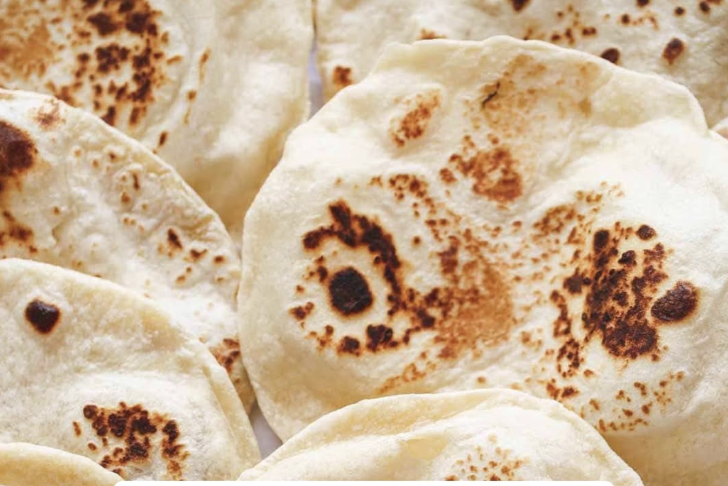
We have all been there: you spend hours marinating and roasting spiced shawarma chicken or slicing seasoned beef, only to reach for a store-bought wrap that cracks in half the second you try to roll it, dumping garlic sauce and meat right onto your plate.
Store-bought flatbreads sit on grocery shelves for weeks, pumped full of preservatives that leave them feeling stiff, rubbery, and chalky.
Making real Middle Eastern street-style flatbread at home is one of the most rewarding small-batch baking projects you can do. You only need a few pantry staples, a bowl, and a hot dry skillet. In less than an hour, you get warm, blistered, leopard-spotted flatbreads that are pillowy soft, intensely fragrant, and so pliable you can roll them tight without a single tear.
The Secret Tricks to Keeping Them Foldable
- A touch of oil in the dough: Plain water, flour, and yeast make traditional pita, which is meant to be stiff enough to slice into a pocket. Adding just a single tablespoon of oil tenderizes the gluten strands. This is the difference between a bread that cracks when bent and one that bends effortlessly around a mountain of filling.
- The 15-minute bench rest: Once you divide your dough into balls, resist the urge to roll them out immediately. If you try to roll them right away, the gluten will fight back and snap like an elastic band. Letting the dough balls rest under a towel for 15 minutes allows the gluten to relax completely, so you can roll them paper-thin with zero effort.
- Cook hot, cook fast: Do not cook these low and slow. A scorching hot dry cast-iron skillet creates sudden steam inside the dough, puffing the bread up in seconds and giving you those beautiful charred brown bubbles while keeping the inside tender and moist.
- The kitchen towel “sauna” (Do not skip this!): The moment a flatbread comes out of the hot pan, slide it straight into a folded clean kitchen towel. Stack each new bread right on top of the last one and keep them covered. The trapped steam softens the blistered crust, keeping the wraps bendable and soft for hours.
What You’ll Need
- 2 cups (250 g) all-purpose flour (keep a little extra nearby for dusting)
- ½ teaspoon fine salt
- ½ tablespoon sugar (helps feed the yeast and gives you quick, caramelized blisters)
- ½ tablespoon instant yeast (about 1 ½ teaspoons)
- 1 tablespoon neutral vegetable oil (or olive oil)
- ⅔ cup (160 ml) warm water (comfortably warm to the touch, around 105°F–110°F / 40°C–43°C)
How to Make Them, Step-by-Step
1. Bring the Dough Together
In a large mixing bowl, whisk together the flour, salt, sugar, and instant yeast.
Make a small well in the center and pour in the oil and warm water. Stir everything together with a wooden spoon (or just use your hands) until a rough, shaggy dough forms and gathers all the loose flour from the bottom of the bowl.
2. Knead Until Silky Smooth
Turn the dough out onto a clean, lightly floured counter.
Knead with the heels of your hands for about 6 to 8 minutes. At first, it might feel a little tacky, but as you work it, it will transform into a smooth, elastic, bouncy ball. If you poke it with a finger, it should spring right back.
3. Let It Rise
Lightly rub a few drops of oil inside your mixing bowl. Place the dough inside, turn it once to coat, and cover the bowl with a damp towel or plastic wrap.
Leave it in a cozy, draft-free spot for 45 to 60 minutes, or until it has doubled in size.
4. Divide and Rest
Gently press down on the dough to release the air.
Divide the dough into 6 equal pieces for nice, generous shawarma wraps (or 8 pieces if you want smaller, taco-sized flatbreads). Roll each piece between your palms into a neat, smooth ball.
Set the balls on your floured counter, cover them with a clean kitchen towel, and let them rest undisturbed for 15 minutes.
5. Roll Them Thin
Set a heavy cast-iron skillet or griddle on the stove over medium-high heat to get screaming hot. Do not add any oil or butter—the pan needs to be completely dry.
Take one dough ball (keep the others covered so they don’t form a dry skin) and dust it lightly with flour. Using a rolling pin, roll from the center outward, rotating as you go, until you have an even round about 7 to 8 inches across and roughly ⅛-inch thick.
Gently pick up the dough and slap it back and forth between your hands once or twice to shake off any loose flour (this keeps excess flour from burning in your hot skillet).
6. The Quick Skillet Blister
Lay the dough flat into the hot, dry pan.
- First side (45 to 60 seconds): Within 20 seconds, you’ll see small bubbles start to swell across the surface. Once the bottom has charred golden-brown freckles, flip it over.
- Second side (45 to 60 seconds): The bread will begin puffing up dramatically like a balloon. You can gently press down on large bubbles with a spatula to push the hot steam through the whole bread.
Once both sides have nice leopard spots and the dough looks set and puffed, lift it out.
7. Wrap in the Towel Sauna
Immediately transfer the hot bread directly into your folded kitchen towel and cover it up completely.
Repeat the rolling and cooking process with the remaining dough balls, stacking each hot bread directly on top of the others inside the towel. By the time you finish the last one, the first ones will be incredibly soft, pliable, and ready to roll!
How to Build the Ultimate Shawarma Wrap
- Lay a flatbread flat on your cutting board.
- Slather a thick ribbon of authentic garlic toum (or tahini sauce) down the middle.
- Pile on your sliced spiced chicken, beef, or lamb.
- Add sliced Lebanese wild cucumber pickles, a few pickled pink turnips, and a handful of fresh parsley and sliced red onion dusted with sumac.
- Fold the bottom edge up over the filling, then roll the sides tightly inward into a snug cylinder.
- The Street-Food Pro Move: Place the rolled wrap seam-side down into your hot, dry skillet for 30 to 45 seconds to toast the seam shut and give the wrap a crisp, toasted exterior!
Storage & Reheating
- Countertop: Keep leftover flatbreads sealed in a zip-top bag at room temperature for up to 3 days. They stay remarkably soft.
- Freezing: Slide a sheet of parchment or wax paper between each flatbread, place them into a freezer bag, and freeze for up to 3 months.
- Reheating: Never eat these cold! Heat a flatbread in a dry skillet over medium heat for 15 to 20 seconds per side, or wrap it in a damp paper towel and microwave for 10 seconds to bring back that bakery-fresh steam and flexibility.