🍕 Homemade Pizza Sauce — Rich, Thick & Full of Italian Flavor
Make every homemade pizza taste like it came straight from your favorite pizzeria with this easy Homemade Pizza Sauce! Made with tomato sauce, fragrant garlic, olive oil, and classic Italian herbs, this rich and flavorful sauce brings the perfect balance of tangy tomatoes, savory spices, and subtle sweetness.
Unlike complicated sauces that require hours of simmering, this recipe comes together in about 20 minutes using simple pantry ingredients. A quick sauté of garlic and a gentle simmer allow the flavors to blend beautifully, creating a thick sauce that spreads easily over pizza dough without making the crust soggy.
Perfect for homemade pepperoni pizza, Margherita pizza, chicken pizza, veggie pizza, and cheesy garlic bread, this versatile sauce is a must-have for your homemade pizza nights!
Recipe Information
- Prep Time: 5 minutes
- Cook Time: 15–20 minutes
- Total Time: Approximately 25 minutes
- Yield: About 2 cups (enough for 3–4 medium pizzas)
- Course: Sauce, Condiment
- Cuisine: Italian-inspired
- Difficulty: Easy
Ingredients
- 2 tablespoons olive oil (30 ml)
- 3 garlic cloves, minced (approximately 9 g)
- 1 can tomato sauce (15 oz / 425 g)
- 2 tablespoons tomato paste (30 g)
- 1 teaspoon dried oregano (1 g)
- 1 teaspoon dried basil (1 g)
- ½ teaspoon garlic powder (approximately 1.5 g)
- ½ teaspoon onion powder (approximately 1 g)
- ½ teaspoon granulated sugar (2 g), optional
- ½ teaspoon salt (approximately 3 g), or to taste
- ¼ teaspoon ground black pepper (approximately 0.5 g)
- ¼ teaspoon red chili flakes, optional
Optional Additions
- 1 tablespoon finely chopped fresh basil
- ½ teaspoon Italian seasoning
- 1 teaspoon balsamic vinegar for extra depth
- A pinch of smoked paprika for a subtle smoky flavor
Instructions
Step 1: Heat the Olive Oil
Place a medium saucepan over medium-low heat and add the olive oil.
Allow the oil to warm for about 30 seconds. It should shimmer slightly without smoking.
Using moderate heat helps the garlic release its aroma without burning, which is important for achieving a smooth, balanced tomato flavor.
Step 2: Sauté the Garlic
Add the minced garlic to the warm olive oil.
Cook for approximately 30–60 seconds, stirring constantly, until fragrant. Do not allow the garlic to turn dark brown, as burnt garlic can make the sauce bitter.
If using red chili flakes, add them now and stir briefly to release their flavor into the oil.
Step 3: Add the Tomato Paste
Stir in the tomato paste and cook for approximately 1–2 minutes.
The paste should darken slightly and become fragrant. Cooking it briefly deepens its flavor and helps give the finished sauce a richer tomato taste.
Step 4: Add the Tomato Sauce and Seasonings
Pour in the canned tomato sauce and stir thoroughly to combine it with the garlic and tomato paste.
Add the dried oregano, dried basil, garlic powder, onion powder, sugar, salt, and black pepper.
Stir until the seasonings are evenly distributed throughout the sauce.
The small amount of sugar helps balance the natural acidity of the tomatoes. You can omit it if your tomato sauce is already naturally sweet.
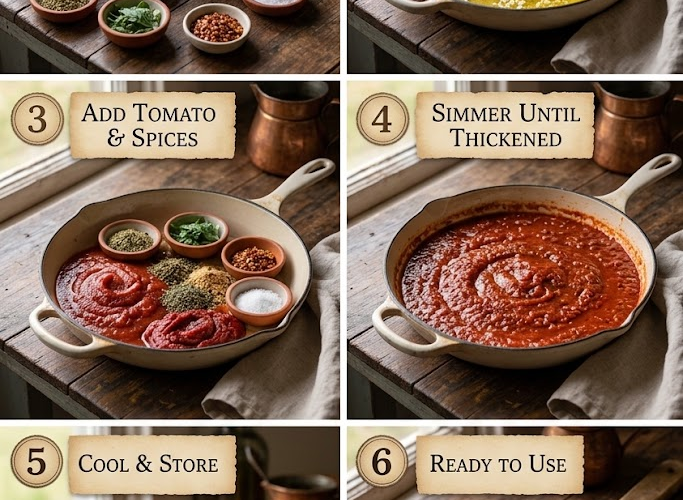
Step 5: Simmer Until Thickened
Bring the sauce to a gentle simmer, then reduce the heat to low.
Cook uncovered for 12–18 minutes, stirring occasionally to prevent sticking.
As the sauce simmers, it will become thicker, darker, and more fragrant. The tomato flavor will deepen as the garlic and herbs infuse the sauce.
For pizza, aim for a thick, spreadable consistency rather than a watery sauce. If it is still too thin, continue simmering for a few additional minutes.
Step 6: Taste and Adjust
Remove the saucepan from the heat and taste the sauce.
Adjust the seasoning according to your preference:
- Add a little more salt if the tomato flavor needs enhancing.
- Add a pinch of sugar if the sauce tastes overly acidic.
- Add extra oregano or basil for a stronger Italian herb flavor.
- Add more chili flakes for a spicier sauce.
- Stir in fresh basil or a little balsamic vinegar for extra freshness and depth.
If you prefer a completely smooth sauce, blend it briefly with an immersion blender once it has cooled slightly.
Step 7: Cool Before Using
Allow the sauce to cool before spreading it over pizza dough.
For the best results, use approximately ¼–½ cup per 12-inch pizza, depending on the thickness of the crust and your desired sauce level.
Spread it in a thin, even layer, leaving a small border around the edges. Avoid using too much sauce, as excess moisture can prevent the crust from becoming crisp.
Your homemade pizza sauce is now ready to use!
Chef’s Tips for the Best Homemade Pizza Sauce
- Use good-quality tomato sauce: Since tomatoes are the main ingredient, their flavor makes a noticeable difference.
- Don’t burn the garlic: Gentle heat keeps the sauce sweet and aromatic rather than bitter.
- Cook the tomato paste briefly: This gives the sauce a deeper, more concentrated tomato flavor.
- Keep the sauce thick: A thick sauce clings to the dough and helps prevent soggy pizza crusts.
- Adjust the herbs to taste: Dried oregano provides classic pizza flavor, while basil adds a sweet, aromatic note.
- Go easy on the sugar: Add only enough to balance the tomatoes rather than making the sauce sweet.
- Let the sauce cool before spreading: Warm sauce can soften raw pizza dough and make it harder to handle.
- Use a light hand when topping: A thin, even coating allows the cheese and other pizza toppings to shine.
Delicious Variations
🍅 Classic Italian Pizza Sauce
Add a tablespoon of chopped fresh basil near the end of cooking and use high-quality tomato sauce for a simple, herb-forward flavor.
🌶️ Spicy Pizza Sauce
Increase the red chili flakes to ½ teaspoon or add a small pinch of cayenne pepper for pizzas topped with spicy sausage or pepperoni.
🧄 Extra Garlic Pizza Sauce
Add one additional minced garlic clove and a pinch of onion powder for a more robust, savory flavor.
🍕 No-Cook Pizza Sauce
For a fresher tomato flavor, mix the tomato sauce, tomato paste, olive oil, garlic, herbs, and seasonings in a bowl without cooking. Let it stand for 15–20 minutes before using. This version works best when the sauce has a naturally thick consistency.
🌿 Fresh Herb Pizza Sauce
Replace some of the dried basil with fresh chopped basil and parsley. Stir the fresh herbs in after removing the sauce from the heat to preserve their aroma.
🧀 Creamy Pizza Sauce
For a creamy white-pizza variation, prepare a separate sauce using cream cheese, milk, garlic, and Parmesan rather than adding dairy directly to this tomato sauce.
🍬 Naturally Sweeter Tomato Sauce
Use sweet, ripe tomatoes or a naturally sweet canned tomato sauce, then omit the added sugar if desired.
Make-Ahead Instructions
This sauce is excellent for preparing ahead of busy pizza nights.
Make the sauce according to the instructions, then allow it to cool completely. Transfer it to a clean, airtight container and refrigerate until needed.
The flavor often becomes even more developed after several hours in the refrigerator, as the herbs and garlic have time to mingle with the tomatoes.
Storage Instructions
Refrigerator: Store the cooled sauce in a clean, airtight container and refrigerate promptly. Use within 4 days for best quality.
Freezer: Divide the cooled sauce into individual portions and freeze in airtight freezer-safe containers or bags for up to 3 months for best quality.
Thawing: Thaw frozen sauce in the refrigerator overnight, or reheat it gently in a saucepan. Stir well before using.
Meal-prep tip: Freeze the sauce in small portions sized for one pizza. This makes it easy to take out only what you need.
Frequently Asked Questions
Can I use crushed tomatoes instead of tomato sauce?
Yes. Crushed tomatoes work well, although they may have a chunkier texture and require a few extra minutes of simmering. Blend the finished sauce if you prefer a smoother consistency.
Can I use fresh tomatoes?
Yes. Peel and chop ripe tomatoes, then cook them until they break down and thicken. Fresh tomatoes may release more water, so allow enough time for the sauce to reduce.
Why is my pizza sauce watery?
It may not have simmered long enough, or the canned tomatoes may contain more liquid. Continue cooking uncovered until the sauce thickens. A small amount of additional tomato paste can also help.
Can I skip the sugar?
Absolutely. Sugar is optional and is mainly used to balance acidic tomatoes. Taste the finished sauce before deciding whether it needs any.
Do I need to blend the sauce?
No. A gentle simmer produces a perfectly usable sauce. Blend it only if you prefer a completely smooth texture.
Can I use this sauce for pasta?
Yes. This sauce also works well with pasta, baked ziti, meatball subs, calzones, and homemade garlic bread. For pasta, you may wish to thin it slightly with a splash of pasta water.
Best Ways to Use Homemade Pizza Sauce
Use this flavorful sauce for:
- Classic pepperoni pizza
- Margherita pizza with fresh mozzarella and basil
- Chicken and mushroom pizza
- Vegetarian pizza with peppers, onions, and olives
- Homemade calzones and pizza pockets
- Garlic bread pizza
- Meatball subs and baked pasta dishes
For a classic homemade pizza, spread the sauce over prepared dough, add mozzarella cheese and your favorite toppings, then bake in a fully preheated oven according to your dough recipe.
Final Result
This Homemade Pizza Sauce is thick, rich, aromatic, and full of tomato flavor, with fragrant garlic, oregano, basil, and a perfectly balanced hint of sweetness. It creates a delicious foundation for homemade pizzas while being easy enough to prepare any day of the week.
The secret to success: gently sauté the garlic, cook the tomato paste briefly, and simmer the sauce until thick and spreadable. Let it cool before using, and you’ll have a flavorful homemade pizza sauce ready for your favorite toppings!