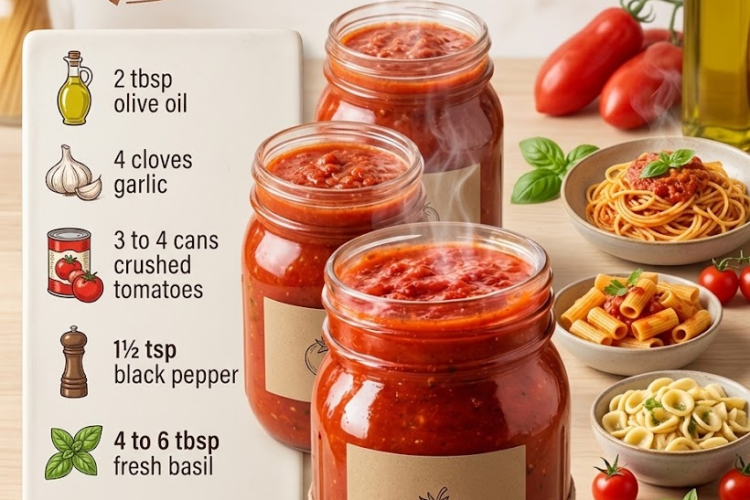
🍅 Homemade Pasta Sauce
Rich, hearty, and packed with fresh tomato flavor, this easy Homemade Pasta Sauce is a versatile kitchen staple you’ll want to make again and again. It’s delicious tossed with spaghetti, layered into lasagna, spooned over meatballs, or spread onto homemade pizza.
⏱ Recipe Information
Prep Time: 10 minutes
Cook Time: 35–45 minutes
Total Time: About 55 minutes
Yield: About 4 cups
Difficulty: Easy
🛒 Ingredients
- 2 cans (28 oz / 800 g each) crushed tomatoes, or about 3½–4 lb (1.6–1.8 kg) fresh ripe tomatoes
- 4 cloves garlic, finely minced
- 2 tablespoons extra-virgin olive oil
- 1 teaspoon dried basil or 2 tablespoons fresh basil, chopped
- ½ teaspoon freshly ground black pepper
- 1 teaspoon granulated sugar, optional
- ½ teaspoon salt, plus more to taste
- ¼ cup (25 g) finely grated Parmesan or Romano cheese
- ¼–½ cup water, as needed
Optional Flavor Additions
- ½ teaspoon dried oregano
- Pinch of red pepper flakes
- 1 small onion, finely diced
- 1 tablespoon tomato paste
- Fresh parsley, for finishing
Instructions
🧄 1. Sauté the Garlic
Heat the olive oil in a large saucepan or Dutch oven over medium-low heat.
Add the minced garlic.
Cook for about 30–60 seconds, stirring constantly, until fragrant.
Be careful not to brown or burn the garlic.
Gentle heat gives the garlic a sweet, mellow flavor without making the sauce bitter.
🍅 2. Add the Tomatoes
Pour in the crushed tomatoes.
If using fresh tomatoes, peel and crush them first, or roughly chop them and allow them to break down naturally as they cook.
Stir well to combine with the garlic and olive oil.
🌿 3. Season the Sauce
Add:
- Basil
- Black pepper
- Salt
- Sugar, if using
- Oregano and red pepper flakes, if desired
Stir everything together.
🔥 4. Simmer
Bring the sauce to a gentle simmer.
Reduce the heat to low and partially cover the saucepan.
Simmer for approximately 35–45 minutes, stirring occasionally.
The sauce will gradually become thicker, richer, and more concentrated.
Don’t rush this step. Gentle simmering is what develops the deep tomato flavor.
🍅 5. Adjust the Consistency
If the sauce becomes too thick, add a little water, 1–2 tablespoons at a time.
If it’s too thin, continue simmering uncovered until it reaches your desired consistency.
For pasta, aim for a sauce that’s thick enough to cling to the noodles.
For pizza, simmer a little longer so the sauce becomes thicker.
🧀 6. Add the Parmesan
Remove the saucepan from the heat.
Stir in the grated Parmesan or Romano cheese.
Taste and adjust the seasoning.
Add more salt, black pepper, basil, or cheese as needed.
Adding the cheese near the end keeps its flavor fresh and prevents it from becoming overly bitter during long cooking.
🌿 7. Finish With Fresh Basil
If using fresh basil, stir most of it into the sauce at the end.
Reserve a few leaves for garnish.
Drizzle with a tiny amount of extra-virgin olive oil if desired.
🍝 8. Serve
Toss the sauce with your favorite pasta, or use it in:
- Spaghetti
- Lasagna
- Baked ziti
- Stuffed shells
- Chicken Parmesan
- Eggplant Parmesan
- Meatballs
- Pizza
- Chicken or vegetable casseroles
⭐ Chef’s Tips
Taste Before Adding Sugar
Some tomatoes are naturally sweet while others are quite acidic. Add sugar only if the finished sauce tastes overly sharp.
Use Good Tomatoes
Since tomatoes are the star ingredient, good-quality canned tomatoes can make a noticeable difference.
Don’t Burn the Garlic
Garlic only needs a short time in the olive oil. Burnt garlic can make the entire sauce taste bitter.
Simmer Gently
A vigorous boil can make the sauce splatter and may give it a harsher flavor. Keep it at a gentle simmer.
Blend for a Smooth Sauce
If you prefer a silky restaurant-style sauce, use an immersion blender after simmering.
Keep It Chunky
For a rustic sauce, simply crush any remaining tomato pieces with the back of a wooden spoon.
🍅 Fresh Tomato Version
If using fresh tomatoes:
- Bring a large pot of water to a boil.
- Score a small X into the bottom of each tomato.
- Blanch for 30–60 seconds.
- Transfer immediately to ice water.
- Peel away the skins.
- Remove the cores and crush or chop the tomatoes.
- Continue with the recipe as written.
Fresh tomatoes may contain more water than canned tomatoes, so allow additional simmering time if necessary.
🌶️ Easy Variations
Spicy Arrabbiata-Style
Add ½–1 teaspoon red pepper flakes.
Creamy Tomato Sauce
Stir in ¼–½ cup heavy cream at the end.
Meat Sauce
Brown 1 lb (450 g) ground beef or Italian sausage before adding the tomatoes.
Vegetable Pasta Sauce
Add sautéed mushrooms, zucchini, bell pepper, or spinach.
Garlic Herb Sauce
Add fresh parsley and oregano along with the basil.
Extra-Cheesy Sauce
Stir in a little additional Parmesan just before serving.
🧊 Storage
Allow the sauce to cool before transferring it to an airtight container.
Refrigerator: Up to 4 days.
Reheat gently on the stovetop or in the microwave.
If the sauce thickens in the refrigerator, add a splash of water while reheating.
❄️ Freezing
Let the sauce cool completely.
Transfer to freezer-safe containers or bags, leaving some room for expansion.
Freezer: Up to 3 months.
Thaw overnight in the refrigerator and reheat gently.
For easy weeknight meals, freeze the sauce in individual portions.
🍅🍝 Recipe Summary
This Homemade Pasta Sauce is a simple, versatile classic made with tomatoes, garlic, basil, olive oil, black pepper, and Parmesan or Romano cheese.
It’s rich enough for pasta, thick enough for pizza, and flavorful enough to become the foundation for lasagna, meatballs, baked pasta, and countless other Italian-inspired dishes.
A simple pot of homemade sauce can turn an ordinary dinner into pure comfort food. 🍅🧄🌿🍝