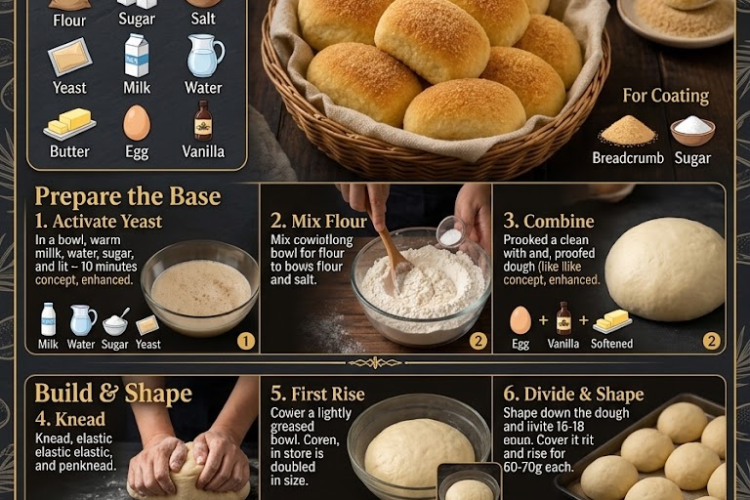
🍞 Homemade Filipino Bread
Soft, fluffy, lightly sweet, and wonderfully buttery, this homemade Filipino bread is perfect for breakfast, merienda, or an afternoon coffee break. The enriched dough gets its tender texture from warm milk, butter, and egg, while a simple buttery sugar coating gives the finished rolls a delicate sweetness.
These are best served warm, when the centers are soft and pillowy.
⏱ Recipe Information
Prep Time: 25 minutes
Rising Time: 1½–2 hours
Bake Time: 18–22 minutes
Total Time: About 2½ hours
Yield: 12–16 rolls
Difficulty: Easy to Intermediate
🛒 Ingredients
For the Dough
- 4 cups (500 g) all-purpose flour
- ¼ cup (50 g) granulated sugar
- 1 teaspoon (5 g) salt
- 1 packet (2¼ teaspoons / 7 g) instant yeast
- ½ cup (120 ml) warm milk
- ½ cup (120 ml) warm water
- ¼ cup (60 g) unsalted butter, softened
- 1 large egg, room temperature
- 1 teaspoon vanilla extract
For the Coating
- 3 tablespoons (42 g) unsalted butter, melted
- ½ cup (100 g) granulated sugar
Optional
- 2 tablespoons fine breadcrumbs for a slightly more traditional bakery-style coating
- 1–2 tablespoons powdered milk for a richer, milky flavor
Instructions
🥛 1. Prepare the Yeast Mixture
Combine the warm milk and warm water in a large mixing bowl.
The liquid should feel warm but not hot.
Add the sugar and instant yeast.
Stir briefly and let it stand for approximately 5 minutes.
With instant yeast, a long proof isn’t necessary, but this gives you a quick opportunity to make sure the yeast is active.
🥚 2. Add the Wet Ingredients
Add the softened butter, egg, and vanilla extract.
Whisk until reasonably well combined.
The softened butter doesn’t need to completely disappear at this stage.
🌾 3. Add the Flour and Salt
Add the flour gradually, followed by the salt.
Mix with a wooden spoon or sturdy spatula until a shaggy dough forms.
Once the dough becomes difficult to stir, transfer it to a lightly floured work surface.
🤲 4. Knead the Dough
Knead the dough for approximately 8–10 minutes until it becomes:
- Smooth
- Soft
- Elastic
- Slightly tacky but not excessively sticky
If the dough is extremely sticky, add flour 1 tablespoon at a time.
Avoid adding too much flour, as this can make the bread dense.
The dough should feel soft and supple. A slightly tacky dough generally produces softer Filipino bread than a stiff dough.
🫒 5. First Rise
Lightly grease a large bowl with a little butter or neutral oil.
Place the dough inside and turn it once so the surface is lightly coated.
Cover with plastic wrap or a clean kitchen towel.
Place somewhere warm and allow the dough to rise for approximately 1–1½ hours, or until roughly doubled in size.
The exact time depends on the temperature of your kitchen.
🔪 6. Divide the Dough
Once doubled, gently punch down the dough to release excess air.
Transfer it to a work surface.
Divide into 12–16 equal portions, depending on your preferred roll size.
For consistently sized bread, use a kitchen scale.
🥖 7. Shape the Rolls
Roll each piece of dough into a smooth ball.
For an oval Filipino bakery-style shape, gently roll each ball between your palms and elongate it slightly.
Place the shaped rolls on a parchment-lined baking sheet, leaving approximately 1–2 inches of space between them.
⏲️ 8. Second Rise
Cover the rolls loosely with a clean kitchen towel.
Let them rise for another 30–45 minutes, or until noticeably puffy.
Don’t let them become dramatically overproofed—the rolls should feel light and airy but still have some structure.
🔥 9. Preheat the Oven
While the rolls are undergoing their final rise, preheat your oven to:
350°F (175°C).
Position a rack in the center of the oven.
🧈 10. Prepare the Coating
Melt the butter in a small bowl.
Place the granulated sugar in a separate shallow bowl.
If using breadcrumbs, combine them with the sugar.
Set aside.
🍞 11. Bake the Bread
Place the risen rolls in the preheated oven.
Bake for approximately 18–22 minutes, or until the tops are lightly golden and the rolls are cooked through.
Avoid overbaking.
You want the bread to remain soft rather than developing a thick, hard crust.
🧈 12. Coat the Warm Bread
Remove the rolls from the oven.
While they’re still warm, brush the tops generously with melted butter.
Dip or sprinkle the buttered tops with granulated sugar.
For a more pronounced coating, brush the entire roll lightly with butter and roll it gently in the sugar mixture.
⏲️ 13. Cool Briefly
Allow the bread to cool for approximately 10 minutes before serving.
They’re especially delicious while still warm and soft.
⭐ Chef’s Tips
Don’t Over-Flour the Dough
The biggest mistake with homemade bread is adding too much flour. A soft, slightly tacky dough produces a much more tender crumb.
Keep the Liquids Warm, Not Hot
Very hot liquid can damage the yeast.
Knead Until Elastic
Proper gluten development gives the rolls their soft, stretchy structure.
Give the Dough Enough Time
The dough should visibly expand during both rises. Don’t rely solely on the clock.
Don’t Overbake
Remove the rolls once they’re lightly golden and cooked through. Overbaking quickly dries enriched bread.
Coat While Warm
The butter and sugar adhere much better when the bread is freshly baked.
🥖 Easy Variations
Cheese-Filled Filipino Bread
Place a small piece of cheddar, quick-melting cheese, or queso de bola in the center of each dough ball before shaping.
Ube Bread
Add a thin layer of ube halaya before rolling the dough.
Sweet Milk Bread
Brush the finished rolls with condensed milk instead of melted butter, then sprinkle lightly with sugar.
Cinnamon Sugar
Add 1 teaspoon ground cinnamon to the coating.
Butter Sugar Rolls
Brush generously with butter and coat completely in sugar for an extra-indulgent version.
☕ Serving Suggestions
Enjoy these soft rolls with:
- Butter
- Cheese
- Peanut butter
- Ube halaya
- Kaya or coconut jam
- Condensed milk
- Ham and cheese
- Hot chocolate
- Coffee
- Filipino-style hot cocoa
They’re also wonderful split open and toasted the following morning.
🧊 Storage
Once completely cool, place the bread in an airtight container or sealed bag.
Room temperature: 2–3 days
Refrigerator: Up to 5 days
For the softest texture, keep them at room temperature if you’re eating them within a couple of days.
❄️ Freezing
Wrap individual rolls tightly in plastic wrap and place them in a freezer-safe bag.
Freeze for up to 2 months.
Thaw at room temperature, then warm briefly in the oven or microwave before serving.
🍞✨ Recipe Summary
This Homemade Filipino Bread is soft, fluffy, buttery, and lightly sweet, with an enriched dough made from milk, water, butter, egg, vanilla, and yeast.
A final brush of melted butter followed by a generous sprinkle of sugar gives these rolls their irresistible bakery-style finish.
Soft enough to pull apart with your hands, sweet enough for merienda, and delicious enough to disappear straight from the baking tray. 🍞🧈✨