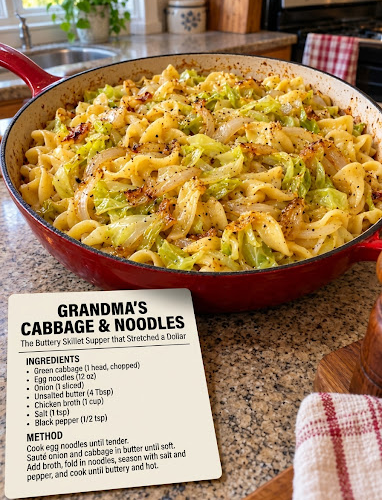
🥬 Grandma’s Cabbage and Noodles — Buttery, Comforting & Old-Fashioned
Some recipes never go out of style, and Grandma’s Cabbage and Noodles is one of those timeless comfort foods that brings everyone back to the family table. Tender egg noodles are tossed with buttery sautéed cabbage, sweet onions, and a touch of savory broth to create a simple, satisfying dish packed with homemade flavor.
This old-fashioned favorite is inspired by traditional Eastern European cabbage-and-noodle dishes, often known as haluski. It uses affordable pantry staples, comes together in one skillet and a pot of boiling water, and makes a wonderful side dish or a comforting meatless-style meal when prepared with vegetable broth.
The secret is cooking the cabbage slowly in butter until it becomes soft, sweet, and lightly caramelized, then combining it with perfectly tender egg noodles. No complicated techniques are needed—just simple ingredients, a little patience, and plenty of cozy flavor. ❤️
Recipe Information
- Prep Time: 15 minutes
- Cook Time: 25–30 minutes
- Total Time: 40–45 minutes
- Servings: 4–6
- Course: Main Course or Side Dish
- Cuisine: Eastern European-inspired, American comfort food
- Difficulty: Easy
- Cooking Method: Stovetop
Ingredients
For the Cabbage and Noodles
- 1 medium head green cabbage, chopped (approximately 2–2½ pounds / 900 g–1.1 kg before trimming)
- 12 oz (340 g) egg noodles
- 1 medium onion, thinly sliced
- 4 tablespoons (56 g) unsalted butter
- 1 cup (240 ml) chicken broth
- 1 teaspoon salt, or to taste
- ½ teaspoon freshly ground black pepper
Optional Additions
- 1 additional tablespoon butter for extra richness
- 1 teaspoon garlic, minced
- ½ teaspoon smoked paprika for a subtle smoky flavor
- 1 tablespoon chopped fresh parsley for garnish
- A pinch of red pepper flakes for gentle heat
- Grated Parmesan cheese for serving
Ingredient note: Chicken broth adds savory depth to the original recipe. For a vegetarian version, substitute vegetable broth.
Instructions
Step 1: Prepare the Vegetables
Remove any damaged outer leaves from the cabbage. Cut the head into quarters, remove the tough core, and chop the cabbage into bite-sized pieces.
Try to keep the pieces roughly similar in size so they cook evenly.
Peel the onion and slice it thinly. If using optional garlic, mince it now.
Set the vegetables aside while you prepare the noodles.
Step 2: Cook the Egg Noodles
Bring a large pot of water to a boil. Add a generous pinch of salt, then add the egg noodles.
Cook according to the package directions until just al dente. The noodles should be tender but still have a slight bite, because they will continue cooking briefly when tossed with the cabbage.
Before draining, reserve about ½ cup of the pasta water in case you need to loosen the finished dish.
Drain the noodles well. Do not rinse them, as the remaining surface starch helps the buttery cabbage mixture cling to the pasta.
Set aside.
Step 3: Melt the Butter and Sauté the Onion
While the noodles cook, melt the 4 tablespoons of butter in a large, deep skillet or Dutch oven over medium heat.
Add the sliced onion and cook for approximately 4–5 minutes, stirring occasionally, until it softens and becomes translucent.
For a deeper, sweeter flavor, continue cooking for another 2–3 minutes until the edges begin to turn lightly golden.
If using garlic, add it during the final 30 seconds and stir until fragrant. Avoid browning the garlic too heavily.
Step 4: Add the Cabbage
Add the chopped cabbage to the skillet. It may seem like a large amount at first, but it will shrink considerably as it cooks.
Sprinkle the cabbage with the salt and black pepper, then toss thoroughly to coat it with the melted butter and onions.
Cook for about 8–10 minutes, stirring every couple of minutes. The cabbage should begin to soften and release some moisture.
If your skillet is crowded, add the cabbage in batches, allowing the first batch to wilt before adding more.
Step 5: Pour in the Chicken Broth
Pour the chicken broth into the skillet and stir to combine.
Bring the mixture to a gentle simmer, then reduce the heat to medium-low.
Cover the skillet and cook for approximately 8–12 minutes, stirring occasionally, until the cabbage is tender.
For a little caramelized flavor, remove the lid during the final few minutes and allow some of the liquid to evaporate. Stir frequently so the cabbage doesn’t stick or burn.
The cabbage should be soft and buttery, with a little savory broth remaining to coat the noodles.
Texture tip: If the cabbage is still firm after the initial cooking time, continue simmering for a few more minutes. Add a small splash of broth or water if the pan becomes too dry.
Step 6: Combine the Noodles and Cabbage
Add the drained egg noodles directly to the skillet with the cabbage and onions.
Using tongs or a large spoon, gently toss everything together until the noodles are evenly coated with the buttery cabbage mixture.
Continue cooking over low heat for about 2–3 minutes, stirring gently to allow the flavors to combine.
If the mixture looks dry, add a little of the reserved pasta water or another splash of broth, one tablespoon at a time.
If it seems too wet, cook uncovered for another minute or two, stirring gently, until the excess liquid evaporates.
Step 7: Taste and Adjust the Seasoning
Taste the cabbage and noodles and adjust the seasoning as needed.
Add more black pepper for a little extra bite, a small pat of butter for richness, or a pinch of salt if the dish needs it.
For an extra layer of flavor, sprinkle in a little smoked paprika or red pepper flakes.
Keep the heat low during this final step to prevent the noodles from becoming overcooked or sticking to the skillet.
Step 8: Garnish and Serve
Remove the skillet from the heat.
Transfer the cabbage and noodles to a warm serving dish, or serve directly from the skillet for a rustic, family-style presentation.
Garnish with chopped fresh parsley or a little grated Parmesan if desired.
Serve hot, while the noodles are tender and the cabbage is buttery and fragrant.
Enjoy this simple, old-fashioned comfort food just the way Grandma might have made it!
Tips for the Best Grandma’s Cabbage and Noodles
- Don’t overcook the noodles. Cooking them just until al dente helps prevent a mushy finished dish.
- Cut the cabbage evenly. Similar-sized pieces soften at roughly the same rate.
- Let the cabbage develop flavor. A little golden color adds natural sweetness and depth.
- Use a large skillet. Cabbage takes up plenty of room before it wilts, so a wide pan makes cooking easier.
- Add broth gradually if needed. The goal is a moist, buttery coating rather than a watery sauce.
- Taste before adding extra salt. Chicken broth can vary significantly in sodium content.
- Use freshly ground black pepper. It adds a lovely savory bite that complements the sweetness of the cabbage.
- Finish with butter if desired. A small pat stirred in just before serving makes the dish extra glossy and rich.
- Serve immediately. The noodles have their best texture when freshly combined with the cabbage.
Delicious Variations
Bacon and Cabbage Noodles
Cook 4–6 strips of chopped bacon in the skillet until crisp. Remove the bacon and use a little of the rendered fat along with the butter to sauté the onion and cabbage. Stir the bacon back in with the noodles.
Garlic Butter Cabbage and Noodles
Add 2–3 minced garlic cloves during the final minute of sautéing the onion. Finish with an extra tablespoon of butter for a richer garlic-butter flavor.
Caramelized Onion Version
Use two medium onions instead of one and cook them slowly in the butter until deeply golden before adding the cabbage. This creates a sweeter, more robust flavor.
Cheesy Cabbage and Noodles
Stir in ½ cup grated Parmesan or sharp cheddar after adding the noodles. Add a splash of pasta water to help the cheese coat the ingredients evenly.
Smoked Paprika Cabbage Noodles
Add ½ teaspoon smoked paprika and a pinch of garlic powder when seasoning the cabbage. This creates a warmer, slightly smoky flavor.
Vegetarian Cabbage and Noodles
Replace the chicken broth with vegetable broth. For additional richness, use a little extra butter or olive oil.
Spicy Cabbage and Noodles
Add a pinch of crushed red pepper flakes when sautéing the onion, adjusting the quantity to your preferred heat level.
Cabbage and Noodles with Sausage
Brown about 8 oz (225 g) sliced smoked sausage in the skillet before cooking the onion. Remove it temporarily, cook the cabbage as directed, then return the sausage to the pan when combining everything with the noodles.
What to Serve with Grandma’s Cabbage and Noodles
This dish is delicious on its own, but it also pairs beautifully with a variety of simple main dishes and sides.
- Roasted chicken: A comforting combination for a family dinner.
- Grilled or pan-seared pork chops: Their savory flavor works wonderfully with buttery cabbage.
- Smoked sausage: An easy pairing that turns the noodles into a heartier meal.
- Roasted kielbasa: Complements the cabbage with smoky, savory flavor.
- Roast beef: Makes a satisfying old-fashioned dinner.
- Crusty bread: Perfect for enjoying any remaining buttery broth.
- Cucumber salad: Adds a cool, refreshing contrast.
- Pickled beets or sauerkraut: Provide a tangy note that balances the richness of the butter.
For a simple weeknight dinner, serve a generous bowl of cabbage and noodles with roasted sausage and a fresh cucumber salad.
Make-Ahead and Storage Instructions
Make ahead: You can chop the cabbage and onion a day in advance and store them separately in airtight containers in the refrigerator. For the best noodle texture, cook and combine the ingredients shortly before serving.
Refrigeration: Allow leftovers to cool slightly, then transfer them to an airtight container and refrigerate within 2 hours. Store at 40°F (4°C) or below and use within 3–4 days.
Reheating on the stovetop: Place the leftovers in a skillet over medium-low heat with a tablespoon or two of broth or water. Stir gently until warmed through, adding a small pat of butter if desired.
Microwave reheating: Place a portion in a microwave-safe dish, cover loosely, and heat in short intervals, stirring between intervals until evenly heated.
Freezing: Freezing is possible, but the cabbage and noodles may become softer after thawing. For the best quality, freeze in an airtight container for up to 2 months. Thaw overnight in the refrigerator and reheat gently.
Best texture: This dish is at its best freshly cooked, when the noodles are tender and the cabbage still has a little texture.
Frequently Asked Questions
What is Grandma’s Cabbage and Noodles?
It is a traditional-style comfort dish made with cooked cabbage, onions, butter, and noodles. Similar dishes appear in several Central and Eastern European culinary traditions and in American family cooking, with many regional variations.
Can I use a different type of noodle?
Yes! Wide egg noodles are traditional for many versions, but egg bows, ribbons, or other medium pasta shapes can work. Cooking times may vary, so follow the package directions.
Why is my cabbage watery?
Cabbage naturally releases moisture during cooking. If the mixture is too wet, remove the lid and simmer uncovered for a few minutes, stirring occasionally, until the excess liquid evaporates.
How can I make the cabbage sweeter?
Cook it a little longer over medium-low heat after it softens, allowing some edges to turn golden. This brings out its natural sweetness without needing to add sugar.
Can I use red cabbage instead of green cabbage?
You can, but red cabbage has a more pronounced flavor and may give the finished dish a purple color. Green cabbage is the best choice for the classic appearance and flavor of this recipe.
Can I make this recipe vegetarian?
Yes. Replace the chicken broth with vegetable broth and make sure any optional additions, such as bacon or sausage, are omitted.
Can I make this dish with less butter?
Absolutely. Reduce the butter to 2 tablespoons and add a little broth or olive oil as needed. The dish will be less rich but will still have plenty of flavor from the cabbage and onions.
Why are my noodles mushy?
They may have been overcooked before being added to the cabbage or simmered too long in the skillet. Cook the noodles just until al dente and combine them with the cabbage near the end.
Can I add meat to make it a complete meal?
Yes. Cooked bacon, browned sausage, diced ham, or shredded cooked chicken can all be added. Stir the meat in with the noodles and heat thoroughly before serving.
Final Thoughts
Grandma’s Cabbage and Noodles is a reminder that simple ingredients can create some of the most comforting meals. Tender egg noodles, sweet cabbage, soft onions, butter, and savory broth come together in a humble dish that’s satisfying, affordable, and full of old-fashioned flavor.
Serve it as a cozy side dish, make it the centerpiece of a simple family meal, or customize it with bacon, sausage, or your favorite seasonings. However you prepare it, this cabbage-and-noodle classic is a wonderful recipe to share around the table.
Buttery noodles, tender cabbage, sweet onions, and cozy homemade flavor—this is old-fashioned comfort food at its best! 🥬🍜❤️