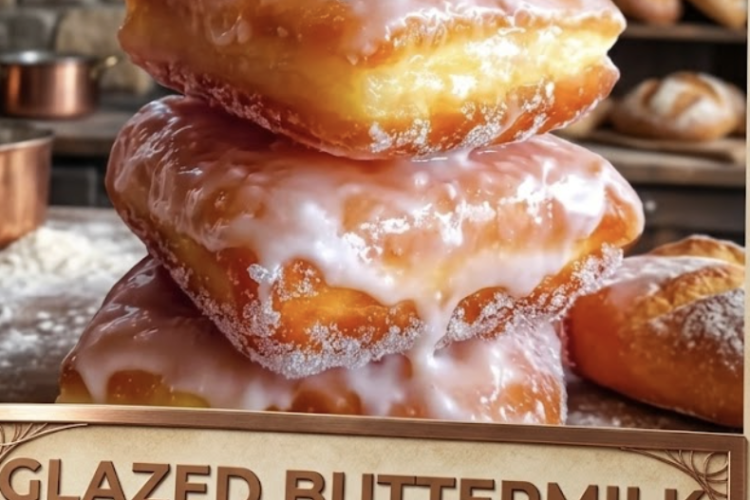
Bring the magic of a New Orleans café straight to your kitchen with these Glazed Buttermilk Beignet Squares! Using warm buttermilk and melted butter in a quick yeast dough guarantees a pillowy, melt-in-your-mouth interior with a perfectly crisp, golden-fried exterior. Coated in a glossy vanilla glaze, these are the ultimate weekend brunch centerpiece or viral social media sensation.
Master Recipe Overview
| Active Prep Time | Rise Time | Cook Time | Yield | Difficulty |
| 20 minutes | 1 hour 15 minutes | 10 minutes | 16–20 squares | Intermediate |
🍩 Printable Recipe Card
Culinary Science & Dough Dynamics
Plaintext
   [ Lactic Acid + Yeast Synergy ]   ──► Buttermilk Tenderizes Gluten While Yeast Creates Airy Pockets
                                                │
                                                ▼
   [ Rapid Steam Expansion ]         ──► High-Heat Oil Flashes Dough Moisture into Steam for Maximum Puff
                                                │
                                                ▼
   [ Capillary Glaze Sealing ]       ──► Warm Dough Absorbs Liquid Glaze, Locking in Moisture
- The Buttermilk Tenderizer: The natural acidity in buttermilk breaks down the long gluten chains in the all-purpose flour. This ensures that even after kneading and frying, the beignets remain delicate and tender inside rather than tough or bready.
- Instant Yeast Efficiency: Using instant yeast (instead of active dry) means you can mix it directly into the dry ingredients without blooming it in water first, streamlining the prep process for a faster, foolproof rise.
Complete Ingredients List
For the Beignet Dough:
- 2 ¼ cups (270 g) all-purpose flour (plus extra for dusting)
- 2 tablespoons granulated sugar
- 2 ¼ teaspoons (1 packet / 7 g) instant yeast
- ½ teaspoon fine salt
- ¾ cup (180 ml) warm buttermilk (heat to 100°F–110°F; do not overheat or it will curdle and kill the yeast)
- 1 large egg, room temperature
- 2 tablespoons unsalted butter, melted
- 1 teaspoon pure vanilla extract
For Frying:
- 4 cups neutral frying oil (vegetable, canola, or peanut oil)
For the Vanilla Glaze:
- 1 ½ cups (180 g) powdered sugar, sifted
- 3 to 4 tablespoons whole milk
- ½ teaspoon pure vanilla extract
Step-by-Step Instructions
Phase 1: Mix & Knead the Dough
- Combine Dry Ingredients: In the bowl of a stand mixer (or a large mixing bowl), whisk together the 2 ¼ cups flour, 2 tbsp sugar, 2 ¼ tsp instant yeast, and ½ tsp salt.
- Add Wet Ingredients: In a separate medium bowl, whisk together the ¾ cup warm buttermilk, 1 egg, 2 tbsp melted butter, and 1 tsp vanilla extract.
- Form the Dough: Pour the wet mixture into the dry ingredients. If using a stand mixer, attach the dough hook and mix on low speed for 5 minutes until a soft, slightly tacky dough forms. If mixing by hand, stir with a wooden spoon until a shaggy dough forms, then knead on a lightly floured surface for 5–7 minutes.
- First Rise: Shape the dough into a ball and place it in a lightly oiled bowl. Cover tightly with plastic wrap and let it rise in a warm, draft-free spot for 1 hour, or until doubled in size.
Phase 2: Roll, Rest & Fry
- Roll & Cut: Punch down the dough and turn it out onto a lightly floured surface. Roll the dough out into a rectangle about ¼-inch thick. Use a pizza cutter or sharp knife to slice the dough into 2-inch squares (you should get about 16 to 20 squares).
- Second Rest: Cover the cut squares loosely with a clean kitchen towel and let them rest for 15 minutesso they puff up slightly.
- Heat Oil: While the squares rest, pour your frying oil into a heavy-bottomed Dutch oven or deep skillet (oil should be about 2 inches deep). Heat the oil to exactly 350°F (175°C). (Use a candy/fry thermometer for accuracy!)
- Fry: Carefully drop 3 to 4 squares into the hot oil at a time. Fry for 1 to 2 minutes per side, flipping once they are puffed and deep golden brown. Remove with a slotted spoon or spider strainer and transfer to a wire rack set over paper towels to drain.
Phase 3: Glaze & Serve
- Whisk Glaze: In a shallow bowl, vigorously whisk together the 1 ½ cups powdered sugar, 3 tbsp milk, and ½ tsp vanilla until completely smooth. (Add a 4th tablespoon of milk if the glaze is too thick).
- Dip & Coat: While the beignets are still warm (but not scalding hot), dip the tops of each square into the glaze, letting the excess drip off. Return them to the wire rack so the glaze can set.
- Serve: Serve immediately! Beignets are best enjoyed warm, fresh, and accompanied by a strong cup of coffee or chicory café au lait.
❓ Frequently Asked Questions (FAQ)
1. How do I warm the buttermilk without making it curdle?
Microwave the buttermilk in short, 10-second bursts, stirring in between, just until it feels lukewarm to the touch (around 105°F). If it gets too hot, the proteins will separate and it will kill your yeast.
2. Why didn’t my beignets puff up in the oil?
Two possible reasons: Either your yeast was expired/killed by liquid that was too hot, or your oil temperature was too low. Oil that is perfectly at 350°F ensures the moisture inside the dough flashes into steam instantly, creating that signature hollow, airy puff.
Storage & Reheating Instructions
- Storage: Like all fried dough, beignets are vastly superior when eaten fresh on the same day. However, you can store leftovers in an airtight container at room temperature for up to 1 day.
- Reheating: To revive leftover glazed beignets, place them in the microwave for exactly 8 to 10 secondsto soften the dough and melt the glaze slightly. Do not over-microwave, or they will become tough!