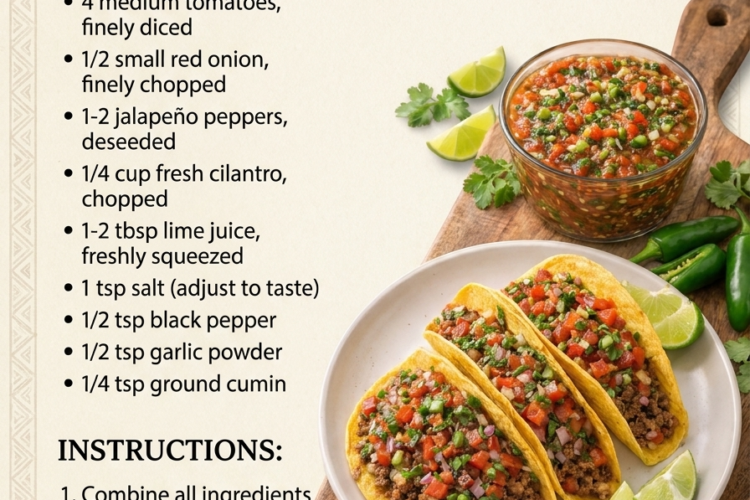
🍅 Best Homemade Salsa Ever – Fresh, Zesty & Bursting with Flavor!
Juicy ripe tomatoes, crisp red onion, spicy jalapeños, fresh cilantro, and a generous squeeze of lime come together in this incredibly fresh homemade salsa! 🌶️🍋
Once you taste homemade salsa, you’ll understand why it’s so much better than store-bought. This easy recipe combines fresh ingredients to create a vibrant, chunky salsa with the perfect balance of sweetness, tanginess, freshness, and heat.
Every spoonful delivers juicy tomatoes, a little crunch from the red onion, the gentle kick of jalapeño, and the refreshing aroma of cilantro. Fresh lime juice ties everything together, creating a bright, zesty flavor that tastes fantastic with tortilla chips, tacos, quesadillas, grilled chicken, and so much more.
The best part? This salsa comes together in just 15 minutes with no cooking required! You can keep it chunky for a rustic, restaurant-style dip or pulse it briefly in a food processor for a smoother consistency.
Whether you’re hosting a party, preparing taco night, or simply craving something fresh and flavorful, this homemade salsa is a recipe you’ll want to make again and again. 🌮❤️
Recipe Details
- Prep Time: 15 minutes
- Cook Time: None
- Chilling Time: 15–30 minutes, optional
- Total Time: 15–45 minutes
- Yield: Approximately 2–3 cups
- Servings: 6–8
- Course: Appetizer, Dip, Condiment
- Cuisine: Mexican-inspired
- Difficulty: Easy
- Cooking Method: No-cook
Ingredients
For the Fresh Homemade Salsa
- 4 medium ripe tomatoes, finely diced
- ½ small red onion, finely chopped
- 1–2 jalapeño peppers, deseeded for less heat and finely chopped
- ¼ cup (about 15 g) fresh cilantro, finely chopped
- 1–2 tablespoons (15–30 ml) freshly squeezed lime juice
- ½ teaspoon salt, or to taste
- 1 small garlic clove, finely minced, optional
- ¼ teaspoon ground cumin, optional, for a deeper savory flavor
- A pinch of freshly ground black pepper, optional
Optional Additions
- 1 small ripe tomato, diced, if you prefer a juicier salsa
- 1 tablespoon finely chopped green onion for extra freshness
- A pinch of cayenne pepper for additional heat
- A small pinch of sugar if the tomatoes are particularly acidic
Ingredient notes:
- Tomatoes: Choose ripe, flavorful tomatoes that are firm enough to dice. Roma tomatoes are especially good for a thicker salsa because they generally contain less liquid.
- Jalapeños: Start with one pepper for mild-to-medium heat and add more to taste. Removing the seeds and pale inner membranes reduces the heat, although some spice may remain.
- Cilantro: Fresh cilantro gives salsa its characteristic herbal flavor. If you don’t enjoy cilantro, substitute fresh parsley.
- Lime juice: Fresh lime juice provides the brightest flavor. Add it gradually so you can control the acidity.
- Salt: Salt helps bring out the natural sweetness of the tomatoes and balance the lime juice.
Instructions
Step 1: Prepare the Tomatoes
Wash the tomatoes thoroughly and pat them dry.
Remove the stems and finely dice the tomatoes into small, even pieces. If your tomatoes contain a large amount of watery pulp and seeds, spoon out some of the excess liquid for a thicker salsa.
Transfer the diced tomatoes to a medium mixing bowl.
Helpful tip: For a chunky, scoopable salsa, use firm, ripe tomatoes and keep the pieces relatively uniform in size.
Step 2: Chop the Red Onion
Peel the red onion and finely chop half of a small onion.
Add it to the bowl with the tomatoes and stir gently.
Red onion contributes a pleasant crunch and a sharp, savory flavor that balances the juicy tomatoes.
If you prefer a milder onion flavor, rinse the chopped onion briefly under cold water, then drain and pat it dry before adding it to the salsa.
Step 3: Prepare the Jalapeños
Put on kitchen gloves if desired, especially when handling multiple peppers.
Remove the stems from the jalapeños, slice them lengthwise, and scrape out the seeds and pale inner membranes for a milder salsa.
Finely chop the peppers and add them to the tomato mixture.
Start with one jalapeño, then add more after tasting. Jalapeño heat varies considerably, so adding gradually helps you achieve the perfect spice level.
Important: Avoid touching your eyes after handling hot peppers. Wash your hands and cutting board thoroughly when finished.
Step 4: Add the Fresh Cilantro
Rinse the cilantro under cool running water and dry it thoroughly.
Finely chop the leaves and tender stems, then add them to the bowl.
Cilantro contributes freshness and a wonderful herbal aroma that complements the tomatoes and lime.
If you’re using parsley instead, chop it finely and add it in the same way.
Step 5: Add the Lime Juice and Seasonings
Squeeze the fresh lime juice into the bowl, starting with 1 tablespoon.
Add the salt, optional minced garlic, ground cumin, and black pepper if using.
Stir everything gently until the vegetables are evenly coated and the seasonings are distributed throughout the mixture.
Taste a small spoonful and adjust as needed:
- Add more lime juice for extra tanginess.
- Add another pinch of salt to bring out the tomato flavor.
- Add more jalapeño for extra heat.
- Add a little more cilantro for a fresher herbal taste.
If the tomatoes are particularly acidic, a tiny pinch of sugar can help balance the flavor without making the salsa noticeably sweet.
Step 6: Let the Flavors Develop
Although you can serve the salsa immediately, allowing it to rest for 15–30 minutes in the refrigerator helps the flavors blend.
The lime juice seasons the vegetables, the onion mellows slightly, and the cilantro becomes more aromatic throughout the mixture.
If liquid accumulates at the bottom, stir the salsa before serving. For a thicker consistency, carefully spoon off some of the excess liquid.
Step 7: Adjust the Texture
Choose the consistency you prefer.
For chunky salsa: Leave the mixture as it is, with clearly visible tomato, onion, and jalapeño pieces.
For a finer salsa: Transfer about half the mixture to a food processor and pulse briefly, then stir it back into the remaining chunky salsa.
For a smoother salsa: Pulse the ingredients a few times in a food processor until the desired consistency is reached. Avoid processing too long, as the tomatoes can quickly turn watery.
For the freshest texture, chop the ingredients by hand and mix them gently.
Step 8: Serve Fresh
Transfer the salsa to a serving bowl.
Garnish with a little extra chopped cilantro or a small lime wedge, if desired.
Serve with tortilla chips, nachos, tacos, burritos, quesadillas, grilled meats, or your favorite Mexican-inspired dishes.
Enjoy the bright, zesty flavor of freshly made salsa in every bite! 🍅🌶️
Expert Tips for the Best Homemade Salsa
Use ripe, flavorful tomatoes. Since this recipe isn’t cooked, the quality of the tomatoes makes a noticeable difference.
Remove excess tomato liquid if needed. Watery tomatoes can make the salsa thin. Roma tomatoes or carefully drained diced tomatoes help create a thicker dip.
Chop everything evenly. Small, consistent pieces distribute the flavors better and make the salsa easier to scoop with tortilla chips.
Add jalapeños gradually. Pepper heat varies, so begin with one and increase the amount after tasting.
Let the salsa rest. A short chill allows the flavors to mingle and creates a more balanced taste.
Season to taste. The right amount of salt and lime depends on the sweetness and acidity of your tomatoes.
Use fresh lime juice. Freshly squeezed lime gives the salsa a brighter flavor than many bottled alternatives.
Don’t over-process. Too much blending releases water from the tomatoes and can turn a chunky salsa into a thin purée.
Drain before serving if necessary. If the vegetables release extra liquid during chilling, spoon off a little before serving or give the mixture a gentle stir.
Delicious Salsa Variations
🌶️ Spicy Restaurant-Style Salsa
Add an extra jalapeño or a small piece of serrano pepper for more heat. For a smoother restaurant-style texture, pulse the finished salsa briefly in a food processor.
🧄 Garlic-Lime Salsa
Add an extra small clove of minced garlic and a little additional lime juice. This version is especially delicious with grilled chicken and steak.
🍋 Extra-Citrusy Salsa
Add a little finely grated lime zest along with the lime juice for a brighter citrus aroma.
🥭 Mango Salsa
Fold in ½ cup diced ripe mango. The sweet fruit creates a delicious contrast with the jalapeño, red onion, and lime.
🍍 Pineapple Salsa
Add ½ cup finely diced fresh pineapple for a sweet, tangy variation that pairs beautifully with grilled chicken, fish, shrimp, or tacos.
🥑 Tomato Avocado Salsa
Fold in one ripe but firm avocado, diced just before serving. This creates a creamier salsa with a rich texture.
Because avocado browns over time, this version is best served immediately.
🌽 Corn Salsa
Add ½ cup cooked, cooled sweet corn. For a deeper flavor, lightly char the corn in a dry skillet before cooling and mixing it into the salsa.
🔥 Roasted Tomato Salsa
For a richer, smokier flavor, roast the tomatoes, jalapeños, onion, and garlic at 425°F (220°C) until softened and lightly charred. Cool them, then blend or chop with cilantro, lime juice, and salt.
This produces a cooked salsa with a deeper flavor rather than the fresh, crunchy texture of the original recipe.
🌿 Mild Family-Friendly Salsa
Use only half a jalapeño or omit it entirely. Finely chop the vegetables and serve with a small bowl of extra chopped chili on the side for anyone who wants more heat.
What to Serve with Homemade Salsa
This fresh salsa is wonderfully versatile and complements many everyday meals.
- Tortilla chips: The classic choice for scooping up the chunky vegetables.
- Nachos: Spoon it over melted cheese, beans, and your favorite toppings.
- Tacos: Adds freshness to beef, chicken, fish, shrimp, or vegetarian tacos.
- Quesadillas: Serve alongside crispy, cheesy tortillas.
- Burritos and burrito bowls: A spoonful brightens rice, beans, and seasoned meat.
- Grilled chicken: Use it as a fresh topping for extra flavor.
- Grilled fish or shrimp: Lime and cilantro complement seafood beautifully.
- Scrambled eggs or breakfast tacos: A spoonful gives a savory breakfast a fresh, zesty finish.
- Baked potatoes: Use it as a bright alternative to heavier toppings.
- Burgers and sandwiches: Add a small spoonful for a fresh, spicy twist.
For a simple party platter, serve the salsa in a colorful bowl surrounded by tortilla chips, guacamole, and a creamy sour cream dip.
Make-Ahead Instructions
Homemade fresh salsa is best enjoyed shortly after preparation, but you can prepare it in stages.
Prepare the vegetables ahead: Dice the tomatoes and onion, and chop the cilantro and jalapeños. Store the ingredients separately in covered containers in the refrigerator and combine them shortly before serving.
Mix ahead: You can prepare the complete salsa several hours before a gathering and refrigerate it. The flavors will develop, although the tomatoes may release additional liquid.
Add avocado later: If making the avocado variation, add the diced avocado just before serving to help maintain its color and texture.
For parties: Make a fresh batch close to serving time and keep it chilled until guests are ready to eat.
Storage and Food Safety
Refrigerator
Transfer leftover salsa to a clean, airtight container and refrigerate promptly at 40°F (4°C) or below.
For the best flavor and texture, enjoy it within 2–3 days. Fresh tomatoes will continue releasing liquid as the salsa sits, and the herbs may lose some of their freshness.
Use a clean spoon each time you serve it.
Can You Freeze Fresh Salsa?
Freezing is not recommended if you want to preserve the original chunky texture. Tomatoes become softer and release more liquid after thawing.
If you have leftover salsa that you don’t mind cooking, you can freeze it for later use in sauces, soups, or cooked dishes, provided it has been handled safely.
Can You Leave Salsa on the Counter During a Party?
Keep the salsa refrigerated until serving and avoid leaving it at room temperature for more than 2 hours, or more than 1 hour when the temperature is above 90°F (32°C).
For longer gatherings, serve smaller portions and replenish the bowl with fresh chilled salsa as needed.
Why Is My Salsa Watery the Next Day?
Salt and lime juice draw liquid from the diced tomatoes as the salsa rests. Stir it before serving and drain a little of the excess liquid if necessary. Using firmer tomatoes also helps.
Frequently Asked Questions
Can I make homemade salsa without cilantro?
Absolutely. Replace the cilantro with fresh parsley or simply leave the herbs out. The salsa will still be delicious, with a slightly different flavor.
Which tomatoes are best for fresh salsa?
Roma tomatoes are ideal when you want a thicker salsa because they generally have less liquid. Ripe vine tomatoes also work beautifully if you prefer a juicier, fresher taste.
How do I make salsa less spicy?
Use only half a jalapeño or omit it. Remove the seeds and pale inner membranes, and add a little extra diced tomato if you have already made the salsa too hot.
How do I make salsa spicier?
Add more finely chopped jalapeño or use a small amount of serrano pepper. Always taste as you go because chili heat varies.
Can I use lemon juice instead of lime juice?
Yes. Fresh lemon juice works as a substitute, although the flavor will be slightly different. Lime usually gives salsa a more traditional citrus character.
Can I use a food processor?
Yes. Add the ingredients and pulse briefly until you reach your preferred texture. For best results, avoid continuous blending, which can turn the tomatoes into a watery purée.
Why does my homemade salsa taste bland?
It may need additional salt, lime juice, or cilantro. Add small amounts gradually, mixing and tasting after each adjustment.
Can I use canned tomatoes?
You can, but the taste and texture will differ from fresh salsa. Drain the tomatoes well before using them, and adjust the lime juice and salt to taste.
Is homemade salsa healthy?
This fresh version is primarily made from vegetables, herbs, and lime juice. It is naturally low in fat, and you control the amount of salt. Exact nutrition varies with tomato size and any additions.
Can I prepare this salsa for a large party?
Yes. Multiply the ingredients as needed, keeping the ratios similar. For the best texture, chop the vegetables evenly, season gradually, and keep the salsa refrigerated until serving.
Estimated Nutrition Information
Approximate nutrition per serving, assuming 8 servings and using the listed ingredients with the suggested salt and optional garlic:
- Calories: 20–35
- Protein: 1 g
- Carbohydrates: 4–7 g
- Fat: 0–1 g
- Fiber: 1–2 g
- Sugar: 2–4 g
- Sodium: 120–220 mg
These are estimates and vary according to tomato size, the amount of salt used, and any optional ingredients.
Final Thoughts
This Best Homemade Salsa Ever is proof that a handful of fresh ingredients can create something incredibly flavorful. Juicy tomatoes, crisp red onion, fresh cilantro, spicy jalapeños, and tangy lime come together in a vibrant salsa that’s delicious, versatile, and wonderfully easy to make.
Keep it chunky for dipping, pulse it for a smoother restaurant-style texture, or customize it with mango, pineapple, corn, or avocado. However you prepare it, this fresh salsa adds a burst of flavor to almost any meal.
Grab your favorite tortilla chips, scoop up a generous helping, and enjoy the fresh, zesty goodness of homemade salsa! 🍅🌶️💚