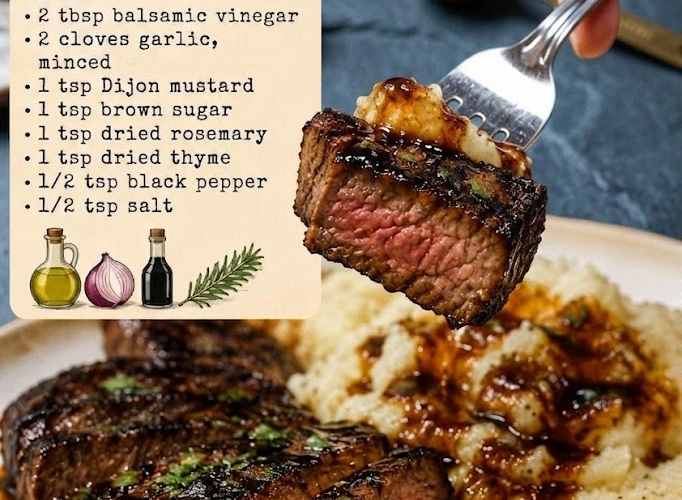
A truly great steak marinade isn’t just about throwing random liquid ingredients together—it’s an engineered flavor deliverer. To get the best out of any cut of beef, a marinade needs five balanced components: salt (for deep tissue penetration), acid (for tenderizing surface proteins), fat (to protect against drying and carry oil-soluble flavors), enzymes/umami (for rich savory depth), and sugar (for rapid Maillard reaction browning).
This formula hits every single one of those notes to elevate everything from high-end Ribeyes to affordable Flank and Skirt steaks.
The Science of the Marinade Components
- The Umami Base (Soy Sauce & Worcestershire): Soy sauce provides natural glutamates and a deep, molecular-level saltiness. Unlike raw table salt, the sodium ions in soy sauce slowly break down muscle proteins (actin and myosin), allowing the meat fibers to hold onto more liquid during cooking. Worcestershire adds fermented anchovy and tamarind notes, multiplying the beefy profile.
- The Acidic Tenderizer (Balsamic Vinegar): Acid weakens the protein bonds on the outer surface of the meat, softening tough outer connective tissue. Balsamic brings a mild pH drop paired with a subtle fruitiness that cuts through heavy beef fat without making the surface mushy.
- The Heat & Flavor Conductor (Olive Oil): Flavor compounds in garlic, thyme, and rosemary are fat-soluble—meaning water or vinegar won’t extract their full flavor. Olive oil absorbs those aromatic compounds and coats the steak, ensuring the seasoning sticks evenly while preventing the outer layers from drying out under high heat.
- The Emulsifier & Crust Booster (Dijon Mustard & Brown Sugar): Dijon mustard contains natural lecithin that emulsifies the oil and vinegar into a smooth sauce rather than a separated layer. Brown sugar provides sucrose that caramelizes fast over high heat, producing those signature dark, smoky steakhouse edge lines.
Ingredients & Precision Ratios
The Liquid Emulsion:
- ½ cup (120 ml) low-sodium soy sauce
- ¼ cup (60 ml) extra-virgin olive oil
- ¼ cup (60 ml) Worcestershire sauce
- 2 tablespoons (30 ml) aged balsamic vinegar
The Aromatic & Flavor Matrix:
- 2 large cloves garlic, finely minced or grated into a paste
- 1 teaspoon Dijon mustard
- 1 teaspoon light brown sugar, packed
- 1 teaspoon dried rosemary (lightly crushed between your palms to release oils)
- 1 teaspoon dried thyme
- ½ teaspoon coarse freshly cracked black pepper
- ½ teaspoon fine sea salt
Step-by-Step Master Instructions
1. Build the Emulsion
In a glass measuring cup or medium bowl, combine the soy sauce, olive oil, Worcestershire sauce, balsamic vinegar, minced garlic, Dijon mustard, and brown sugar.
Whisk vigorously for 45 to 60 seconds. You’ll see the mixture transform from two separate layers of oil and vinegar into a smooth, glossy, emulsified marinade. Whisk in the dried rosemary, thyme, black pepper, and salt.
2. Bag and Marinate
Place your steaks inside a heavy-duty gallon zip-top bag or a shallow glass baking dish. Pour the marinade directly over the beef. Seal the bag almost all the way, squeeze out every pocket of air, and lock it completely. Massage the marinade into the meat for 30 seconds to ensure total coverage.
Ideal Marinating Timings:
- Tender/High-Fat Cuts (Ribeye, New York Strip, Filet Mignon): Marinate for 1 to 3 hours. Longer contact with acid can soften the delicate grain too much.
- Lean/Fibrous Cuts (Flank, Skirt, Sirloin, Hanger, Flat Iron): Marinate for 6 to 12 hours(overnight). The longer soak allows the enzymes to work deeply into the tight, fibrous grain.
3. The Room-Temp Temper & Drying Process (Crucial Step!)
- Pull the steaks out of the fridge 30 to 45 minutes before cooking. Cold meat in a hot pan causes the muscle fibers to tense up instantly, squeezing out juices and dropping the pan temperature.
- Remove the steaks from the bag and discard the remaining liquid.
- Pat the steaks bone-dry on all sides with paper towels.
Why Dryness Equals Crust: Moisture is the absolute enemy of a good sear. If your steak enters the pan or grill dripping wet, the energy from the heat goes into boiling that liquid into steam (212°F) rather than executing the Maillard browning reaction (300°F+). Drying the surface guarantees a dark, crispy crust instead of gray, steamed meat.
4. High-Heat Execution
Option A: Cast-Iron Pan Sear (The Indoor Steakhouse Method)
- Set a heavy cast-iron skillet over high heat until it just begins to wisp smoke.
- Add 1 tablespoon of a high-smoke-point oil (like avocado or canola oil).
- Lay the steaks in the pan away from you to prevent hot oil splatters.
- Sear for 3 to 4 minutes per side, flipping every minute for even heat penetration, until an instant-read thermometer hits your target temp (130°F for medium-rare).
Option B: High-Heat Direct Grilling
- Set up a two-zone fire on your grill (one side hot for searing, one cooler side for indirect heating).
- Place steaks over direct flame for 2 to 3 minutes per side to build charred grill marks.
- Move to the cooler zone, close the lid, and cook until your internal temperature is reached.
5. Rest and Carve
Transfer cooked steaks to a warm platter or wooden board. Let the steak rest undisturbed for 5 to 10 minutes.
During cooking, heat forces internal moisture toward the center of the meat. Resting allows the muscle fibers to relax and cool slightly, drawing those juices evenly back out to the edges so they stay in every bite rather than spilling onto the cutting board.
Pro-Chef Upgrade: The Reduction Pan Sauce
Never waste those rich aromatics! While your steaks are resting:
- Pour the leftover marinade into a small saucepan.
- Add ¼ cup low-sodium beef broth or water.
- Bring to a rapid rolling boil for at least 3 to 4 minutes (this is mandatory to eliminate raw meat bacteria).
- Reduce heat to low, reduce the liquid by half until it looks syrupy, then take it off the heat and swirl in 2 tablespoons of cold butter.
- Spoon this glossy, rich pan sauce directly over your sliced steak or mashed potatoes!