🍰 Soft Sponge Cake
This Soft Sponge Cake is light, tender, fluffy, and wonderfully moist, with a delicate vanilla flavor and a soft crumb that makes it perfect for everyday tea-time treats or layered celebration cakes.
Made with simple pantry ingredients, this reliable cake comes together easily and stays beautifully soft thanks to the combination of eggs, milk, and vegetable oil.
Recipe Information
- Prep Time: 15 minutes
- Bake Time: 35–45 minutes
- Total Time: About 1 hour
- Servings: 10–12
- Difficulty: Easy
- Pan: One 9-inch (23 cm) round cake pan or deep 9-inch square pan
Ingredients
- 3 cups (375 g) all-purpose flour
- 1 cup (200 g) granulated sugar
- 5 large eggs, room temperature
- 1 cup (240 ml) whole milk, room temperature
- ½ cup (120 ml) vegetable oil
- 1 teaspoon vanilla extract
- 2 teaspoons baking powder
- ¼ teaspoon salt
For the Pan
- 1 tablespoon butter or vegetable oil
- 1–2 tablespoons flour, for dusting
Instructions
1. Prepare the Oven and Pan
Preheat your oven to 350°F (175°C).
Grease a 9-inch (23 cm) round cake pan thoroughly with butter or oil.
Lightly dust the pan with flour, tapping out any excess.
For especially easy release, line the bottom with parchment paper.
2. Combine the Dry Ingredients
In a medium bowl, whisk together:
- All-purpose flour
- Baking powder
- Salt
Mix well so the baking powder and salt are evenly distributed throughout the flour.
Set aside.
3. Beat the Eggs and Sugar
Place the eggs and granulated sugar in a large mixing bowl.
Using a hand mixer or stand mixer, beat on medium-high speed for approximately 5–7 minutes, until the mixture becomes pale, thick, and noticeably increased in volume.
This step helps give the cake a lighter texture.
4. Add the Oil and Vanilla
Reduce the mixer speed to low.
Slowly pour in the vegetable oil while mixing.
Add the vanilla extract and mix briefly until incorporated.
Do not overmix at this stage.
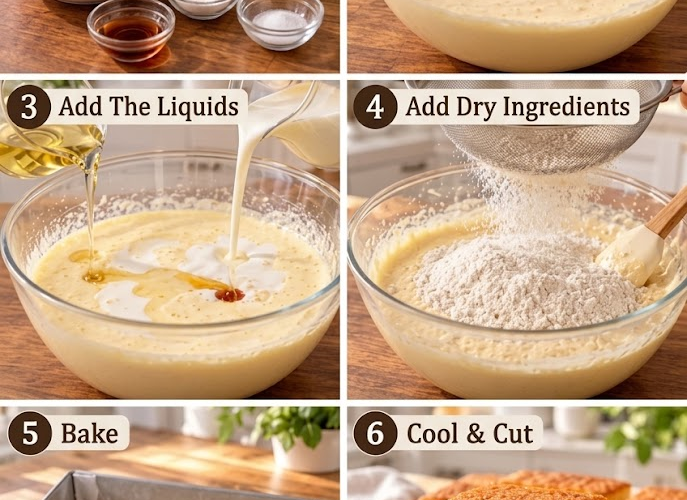
5. Add the Dry Ingredients and Milk
Add about one-third of the flour mixture to the egg mixture.
Mix gently on low speed just until combined.
Add half of the milk and mix briefly.
Continue alternating the remaining flour mixture and milk, finishing with the dry ingredients.
Mix only until the batter is smooth.
Do not overmix, as excessive mixing can make the finished cake dense.
6. Pour into the Pan
Pour the batter into the prepared cake pan.
Gently tap the pan on the countertop once or twice to remove any large air pockets.
Smooth the top with a spatula if necessary.
7. Bake
Place the cake in the center of the preheated oven.
Bake for approximately 35–45 minutes, or until:
- The top is lightly golden.
- The center springs back when gently pressed.
- A toothpick inserted into the center comes out clean or with a few moist crumbs.
Avoid opening the oven during the first 25–30 minutes, as a sudden temperature change can cause the cake to sink.
8. Cool the Cake
Remove the cake from the oven and allow it to cool in the pan for 10–15 minutes.
Run a thin knife around the edges to loosen it.
Carefully turn the cake onto a cooling rack and remove the parchment paper if used.
Allow it to cool completely before slicing, frosting, or decorating.
9. Serve
Once completely cool, dust the cake with powdered sugar or serve it plain with tea or coffee.
For a celebration cake, slice it horizontally into layers and fill with whipped cream, buttercream, custard, jam, or fresh fruit.
Chef’s Tips
- Use room-temperature eggs and milk: They incorporate more easily and help create a smoother batter.
- Beat the eggs and sugar well: This adds air and contributes to the cake’s soft texture.
- Measure flour correctly: Spoon the flour into your measuring cup and level it rather than packing it down.
- Don’t overmix: Once the flour disappears, stop mixing.
- Don’t overbake: Excessive baking is one of the easiest ways to lose moisture and softness.
- Use a light-colored pan if possible: Dark pans can cause the edges to brown more quickly.
- Cool before frosting: A warm cake can melt frosting and become difficult to handle.
Delicious Variations
Lemon Sponge Cake
Add 1 tablespoon finely grated lemon zest and replace 1 teaspoon of the vanilla with fresh lemon juice.
Chocolate Sponge Cake
Replace ¼ cup (30 g) of the flour with ¼ cup (25 g) unsweetened cocoa powder.
Coconut Sponge Cake
Replace ¼ cup of the flour with finely shredded unsweetened coconut and add ½ teaspoon coconut extract.
Orange Sponge Cake
Add the finely grated zest of 1 orange and replace half of the milk with fresh orange juice.
Layered Birthday Cake
Bake the cake, cool completely, then slice it into 2 layers. Fill with whipped cream and strawberry or raspberry jam and cover with your favorite frosting.
Simple Decorating Ideas
For an effortless finish, try:
- Powdered sugar
- Fresh berries
- Whipped cream
- Chocolate ganache
- Vanilla buttercream
- Strawberry jam
- Fresh sliced fruit
- Toasted coconut
Storage
Store the completely cooled cake in an airtight container at room temperature for up to 3 days.
For longer storage, refrigerate for up to 5 days. Allow the cake to come closer to room temperature before serving for the softest texture.
Freezing
Wrap the unfrosted cake tightly in plastic wrap, followed by aluminum foil.
Freeze for up to 2 months.
Thaw overnight in the refrigerator or for several hours at room temperature before decorating and serving.
Serving Suggestions
This soft sponge cake pairs beautifully with:
- Tea or coffee
- Fresh berries and whipped cream
- Vanilla custard
- Strawberry jam
- Chocolate sauce
- Caramel sauce
- Ice cream
- Fresh fruit
Final Result
A beautifully soft, fluffy, moist vanilla sponge cake with a delicate crumb and simple homemade flavor. It’s delicious on its own and makes an excellent base for layered cakes, birthday cakes, or an easy afternoon dessert.