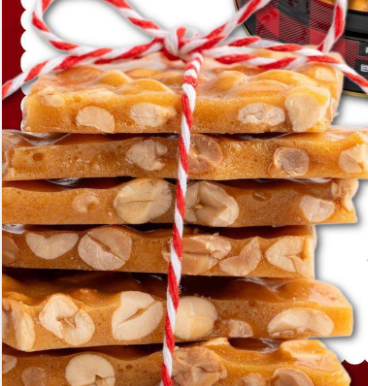
Glistening with an amber sheen and packed with crunchy, roasted nuts, Classic Old-Fashioned Peanut Brittle is one of the most iconic holiday confections. Delivering a clean, satisfying snap that melts into buttery, caramelized richness, this traditional candy balances sweet, cooked syrup with salted peanuts for an irresistible treat.
Unlike hard toffees that stick to your teeth, authentic peanut brittle is light, porous, and delicate. The secret lies in a quick chemical reaction right before pouring: whisking in baking soda releases thousands of microscopic carbon dioxide bubbles into the hot caramel, creating an airy honeycomb structure that shatters cleanly on the first bite.
Recipe Overview
- Prep Time: 10 minutes
- Cook Time: 20 to 25 minutes
- Cooling Time: 30 to 45 minutes
- Total Time: ~1 hour 15 minutes
- Yield: Approx. 2 pounds of candy (about 30 to 35 bite-sized shards)
- Estimated Calories: ~140 kcal per 1 oz (28g) serving
- Skill Level: Intermediate (Candy thermometer recommended)
The Confectionery Science: Why the Baking Soda Step Matters
Candy making is pure kitchen chemistry, and understanding how brittle works guarantees success every time:
- Invert Sugars Prevent Recrystallization: Combining sucrose (granulated white sugar) with glucose-rich light corn syrup disrupts crystal formation as the water boils off. This keeps the boiling candy clear, smooth, and fluid.
- The Hard-Crack Stage (300°F / 149°C): Boiling the syrup until nearly all water has evaporated leaves a concentration of almost 99% sugar. Once cooled, this high concentration hardens into a glass-like, non-sticky candy that snaps cleanly rather than remaining chewy.
- The Baking Soda Aeration Reaction: When sodium bicarbonate (baking soda) hits the hot, acidic, caramelized sugar mixture, it instantly reacts by releasing carbon dioxide gas ($CO_2$). The mixture will foam up, lighten in color, and double in volume. These trapped micro-bubbles stay suspended as the candy cools, giving the brittle its characteristic light, crunchy, melt-away texture.
- Salted Dry-Roasted Peanuts: Using pre-roasted, salted peanuts saves time while providing the necessary salt to cut through the rich butter and caramelized sugar.
Equipment Checklist
- Heavy-bottomed 3- to 4-quart saucepan or Dutch oven (tall sides are essential, as the candy foams high when soda is added)
- Calibrated candy thermometer (clip-on or instant-read digital)
- Heat-resistant silicone spatula or wooden spoon
- 2 large rimmed baking sheets (18×13 inches)
- Silicone baking mats (Silpat) or heavy parchment paper
- Heatproof silicone pastry brush (for washing down pan walls)
- Measuring cups and spoons
Detailed Ingredient Breakdown
- ¾ cup (180ml) Cold Water: Dissolves the sugar and corn syrup evenly before the boil begins.
- 2 cups (400g) Granulated White Sugar: Forms the foundational crystalline structure of the caramel syrup.
- 1 cup (240ml / 325g) Light Corn Syrup: Controls crystallization and adds a glossy finish.
- 6 tbsp (85g) Unsalted Butter (cubed and softened): Enriches the hot syrup with milk fat, giving the brittle a rich, buttery flavor and golden color.
- 2 ½ cups (approx. 360g) Salted Dry-Roasted Peanuts: Whole or split peanuts. The salt on the nuts balances the sweet candy base.
- 2 tsp Pure Vanilla Extract: Adds warm aroma and complements the toasted nut flavors.
- 1 tsp Baking Soda (fresh): The critical aerating agent responsible for the light, shattering bite.
Step-by-Step Instructions
1. Prep Your Surfaces and Tools (Crucial Step)
Candy making moves fast during the final stages. Line two large rimmed baking sheets with silicone baking mats or heavy-duty parchment paper. Lightly grease the mats with a tiny dab of neutral oil or butter.
Have your 6 tbsp of cubed butter, 2 ½ cups of peanuts, 2 tsp vanilla extract, and 1 tsp baking soda pre-measured and set right beside your stove.
2. Dissolve the Sugar Base
In a heavy-bottomed 3-to-4-quart saucepan, combine the ¾ cup water, 2 cups granulated sugar, and 1 cup light corn syrup.
Place the saucepan over medium-high heat. Stir gently with a wooden spoon until the sugar completely dissolves and the mixture begins to bubble.
(Pro-Tip: Dip a clean pastry brush in warm water and gently wash down the inside walls of the pot once boiling starts. This dissolves any stray sugar crystals and prevents the batch from seizing).
3. Cook to Soft-Ball Stage
Clip your candy thermometer to the side of the pot, making sure the bulb is submerged in the boiling syrup without touching the bottom of the pan.
Cook without stirring until the thermometer registers 235°F to 240°F (113°C to 115°C)—the soft-ball stage(approx. 8 to 10 minutes).
4. Add Butter and Peanuts
Once the syrup reaches 240°F, add the 6 tbsp of cubed butter and the 2 ½ cups of salted dry-roasted peanuts directly into the pot.
Stir constantly and gently from this point forward. As the peanuts cook in the boiling sugar, they will toast further, release natural oils, and turn fragrant.
5. Reach the Hard-Crack Stage
Continue cooking and stirring continuously over medium heat. The mixture will darken from pale yellow to a warm, rich amber color.
Cook until the candy thermometer reaches 300°F (149°C)—the hard-crack stage.
(Visual & Scent Cues: The caramel will smell like toasted nuts and butter, and the bubbles will become thick and slow).
6. The Aeration Stage (Work Quickly!)
Immediately remove the saucepan from the heat source and set it on a heatproof trivet.
Quickly pour in the 2 tsp vanilla extract and 1 tsp baking soda. Stir vigorously with your heatproof spatula for 10 to 15 seconds.
The mixture will bubble up, foam dramatically, lighten to a golden butterscotch hue, and double in size.
7. Pour and Spread Thin
Immediately pour the foaming, hot candy onto the prepared baking sheets, dividing it evenly between the two pans.
Using your spatula (or a lightly buttered offset spatula), gently spread the hot brittle outward toward the edges into an even layer about ¼-inch thick. Do not press down hard, as you want to preserve the airy micro-bubbles trapped inside.
8. Cool and Set Completely
Allow the peanut brittle to cool completely undisturbed at room temperature for 30 to 45 minutes. Do not move the pans or place them in the refrigerator, as ambient room cooling allows the candy structure to set into a hard, non-sticky glass state.
9. Crack into Shards
Once the brittle is 100% cold and rigid to the touch, lift the slab off the silicone mat.
Use your hands to snap the candy into irregular, rustic, bite-sized shards. (Alternatively, tap the slab gently with the handle of a butter knife to crack it cleanly).
Master Confectioner Tips for Success
- Watch the Weather: Sugar is hygroscopic and pulls moisture from humid air. Avoid making peanut brittle on rainy or humid days, as the candy can absorb airborne moisture and turn sticky or chewy rather than crisp and snappy.
- Calibrate Your Thermometer: To test your candy thermometer, place it in a pot of rolling boiling water. It should read exactly 212°F (100°C) at sea level. If it reads 210°F, subtract 2 degrees from your target recipe temperature.
- Use Raw Peanuts Variation: If using raw Spanish peanuts instead of dry-roasted, add them earlier at 250°F (121°C) so they have ample time to roast through in the hot syrup without burning before the candy hits 300°F.
- Quick Cleanup: Hardened caramel in your saucepan can feel impossible to scrub. Simply fill the dirty pot with water, place it back on the stove, and bring it to a boil; the hot water will dissolve the sugar residue in minutes.
Delicious Flavor Variations
- Spicy Sweet Heat: Stir ½ teaspoon of cayenne pepper or smoked chili flakes into the baking soda before adding it to the hot caramel for a sweet-heat kick.
- Mixed Nut Holiday Brittle: Swap the peanuts for equal parts roasted cashews, whole pecans, and slivered almonds.
- Chocolate-Drizzled Brittle: Melt 4 oz of dark semi-sweet chocolate and drizzle over the cooled, cracked brittle shards; let set before packing.
- Sea Salt Finish: Sprinkle coarse flaky sea salt (such as Maldon) over the top of the hot brittle within 30 seconds of pouring it onto the baking sheet.
Storage, Shelf Life, and Holiday Gifting
- Airtight Storage (Essential): Store peanut brittle in an airtight container or vintage metal cookie tin with sheets of wax paper or parchment paper between layers. Keep in a cool, dry pantry for up to 4 to 6 weeks.
- Do Not Refrigerate: Storing brittle in the refrigerator introduces condensation, which dissolves the surface sugars and makes the candy sticky and soft.
- Holiday Packaging: Package shards in decorative holiday tins lined with checkered wax paper, or fill clear cellophane treat bags tied with festive twine and cinnamon sticks for gifting to family, neighbors, and coworkers.