🥐 Mini Brioche Croissants — Soft, Buttery & Golden
These Mini Brioche Croissants are soft, fluffy, buttery, and beautifully golden, with a delicate sweetness that makes them perfect for breakfast, brunch, or an afternoon treat. Made with a rich yeast dough using milk, egg, and melted butter, these adorable bite-sized pastries bring bakery-style comfort straight to your kitchen.
Unlike traditional French croissants, which are made by laminating dough with layers of cold butter, these mini brioche croissants use an enriched bread dough. The result is a tender, pillowy texture with a lovely golden crust. Fill them with chocolate, brush them with egg wash, and finish with a dusting of powdered sugar for an irresistible homemade treat!
Recipe Information
- Prep Time: 30 minutes
- First Rise: 1–1½ hours
- Second Rise: 30–45 minutes
- Bake Time: 15–20 minutes
- Total Time: Approximately 2½–3 hours
- Yield: 16–20 mini croissants
- Course: Breakfast, Brunch, Snack, Dessert
- Cuisine: French-inspired
- Difficulty: Intermediate
- Cooking Method: Oven-baked
Ingredients
For the Brioche Dough
- 480 g bread flour
- 260 ml milk, lukewarm
- 1 large egg
- 7 g instant yeast
- 85 g salted butter, melted and cooled slightly
- 20 g granulated sugar
For the Filling — Choose Your Favorite
- 100–150 g chocolate chips or chopped chocolate
- Or: 100–150 g chocolate-hazelnut spread
- Or: 100–150 g thick fruit jam
Filling is optional. These mini brioche croissants are delicious plain, too.
For the Egg Wash
- 1 large egg
- 1 tablespoon milk
For the Topping
- Powdered sugar, for dusting after baking, optional
- Extra chocolate chips, optional
- Sesame seeds, optional, for a less-sweet finish
Instructions
Step 1: Prepare the Dough
In a large mixing bowl, combine the lukewarm milk, instant yeast, and granulated sugar. Stir gently to distribute the yeast.
Add the egg and melted butter, making sure the butter is warm rather than hot. Whisk until the wet ingredients are combined.
Add the bread flour gradually, mixing with a wooden spoon or dough hook until a rough dough forms.
Because the butter is salted, additional salt is generally unnecessary.
Step 2: Knead Until Smooth
Knead the dough for approximately 8–10 minutes by hand, or 6–8 minutes in a stand mixer fitted with a dough hook.
At first, the dough may feel slightly sticky, but it should become smoother, softer, and more elastic as you knead.
Avoid adding too much extra flour. A soft dough produces more tender brioche, while excessive flour can make the finished croissants dense.
The dough should be supple and slightly tacky, but manageable.
Step 3: Let the Dough Rise
Shape the dough into a ball and place it in a lightly greased bowl.
Cover with plastic wrap or a clean kitchen towel and leave it in a warm, draft-free place for approximately 1–1½ hours, or until doubled in size.
The exact rising time depends on your kitchen temperature. Look for a visibly expanded dough rather than relying only on the clock.
Step 4: Divide the Dough
Gently press the risen dough to release excess air.
Transfer it to a lightly floured work surface and divide it into two equal portions. This makes the dough easier to roll and shape.
Keep one portion covered while working with the other to prevent it from drying out.
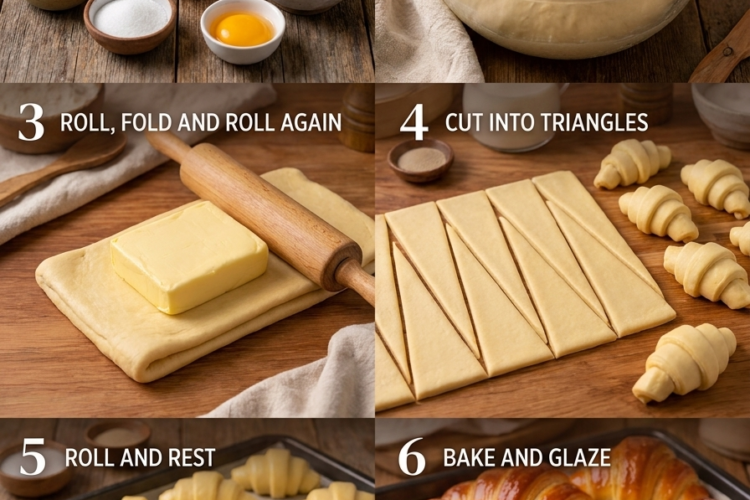
Step 5: Roll and Cut the Croissant Shapes
Roll the first portion into a large circle approximately 3–4 mm thick.
Using a sharp knife or pizza cutter, divide the circle into 8–10 long triangular wedges, similar to cutting a pizza.
For evenly sized mini croissants, keep the triangles approximately the same width at the base.
Repeat with the second portion of dough.
Step 6: Add the Filling
Place a small amount of your chosen filling near the wider end of each triangle.
For chocolate chips, use a small spoonful. For chocolate spread or jam, use approximately ½ teaspoon per croissant.
Avoid overfilling, as too much filling can leak out during baking.
If using chocolate spread or jam, keep the filling away from the edges so the dough can seal properly.
Step 7: Roll into Mini Croissants
Starting at the wide end of each triangle, roll the dough toward the pointed tip.
Roll gently but firmly enough to keep the shape together. Avoid stretching the dough excessively.
Place each croissant seam-side down on a baking tray lined with parchment paper. Curve the ends slightly inward if you prefer the classic crescent shape.
Leave space between each piece to allow for expansion.
Step 8: Let the Shaped Croissants Rise
Cover the tray loosely with a clean kitchen towel and let the croissants rise for another 30–45 minutes, until puffy and slightly expanded.
Do not let them become overly inflated, as this can make them fragile during baking.
Meanwhile, preheat the oven to 180°C (350°F).
Step 9: Prepare the Egg Wash
In a small bowl, whisk together the egg and 1 tablespoon of milk until smooth.
Gently brush a thin layer over the tops of the risen croissants.
The egg wash helps create a glossy, golden-brown finish. Apply it lightly so it doesn’t pool around the bases of the pastries.
If desired, sprinkle a few extra chocolate chips on top, or add sesame seeds for a savory-style presentation.
Step 10: Bake Until Golden
Place the tray in the preheated oven and bake for 15–20 minutes, or until the mini croissants are puffed and golden brown.
Start checking at around 15 minutes because smaller pastries can brown quickly. If the tops are browning too fast, loosely cover them with foil for the remaining baking time.
The pastries should feel light and sound slightly hollow when tapped underneath.
Step 11: Cool and Finish
Remove the tray from the oven and let the mini brioche croissants rest for 5 minutes.
Transfer them to a wire rack to cool slightly.
For a bakery-style finish, dust with powdered sugar just before serving. Chocolate-filled versions are especially delicious while the centers are still slightly warm.
Serve fresh with coffee, tea, hot chocolate, or a glass of milk.
Tips for the Best Mini Brioche Croissants
- Use lukewarm milk. Milk that is too hot can damage the yeast and prevent the dough from rising properly.
- Let the melted butter cool slightly. Hot butter can affect the yeast and the texture of the dough.
- Knead thoroughly. Well-developed dough gives the pastries a softer, more elastic crumb.
- Avoid adding excess flour. A slightly tacky dough is preferable to a stiff one.
- Keep the triangles consistent. Even sizing helps the pastries bake at the same rate.
- Use filling sparingly. Overfilled croissants may open during baking.
- Seal the dough well. Place the seam underneath to help each croissant keep its shape.
- Don’t skip the second rise. It helps create a lighter, fluffier interior.
- Watch the oven closely. Mini pastries can turn from golden to overbrowned quickly.
Delicious Variations
Chocolate Brioche Croissants
Fill each triangle with chocolate chips or a little chocolate-hazelnut spread. Finish with powdered sugar or a drizzle of melted chocolate.
Cinnamon Sugar Brioche Croissants
Mix 2 tablespoons sugar with 1 teaspoon ground cinnamon. Sprinkle lightly over the dough before rolling, then brush the baked pastries with a little melted butter and add more cinnamon sugar.
Raspberry or Strawberry Brioche Croissants
Use a small amount of thick raspberry or strawberry jam. Avoid runny preserves, which can leak during baking.
Almond Brioche Croissants
Add a thin layer of almond paste to each triangle before rolling. After baking, drizzle with a little icing and sprinkle with sliced almonds.
Vanilla Brioche Croissants
Add 1 teaspoon vanilla extract to the wet ingredients for a gentle vanilla aroma.
Savory Cheese Brioche Croissants
Skip the sugar coating and fill with a small amount of grated cheese and finely chopped herbs. Because the dough contains sugar and butter, it will still have a lightly enriched flavor that pairs well with savory fillings.
What to Serve with Mini Brioche Croissants
These little pastries work beautifully as part of a breakfast spread or dessert table.
- Coffee or cappuccino: Complements the buttery dough and chocolate filling.
- Hot chocolate: A cozy pairing for chocolate-filled pastries.
- Fresh berries: Add freshness and a light tart contrast.
- Greek yogurt and fruit: Makes a balanced breakfast alongside the pastries.
- Honey or fruit preserves: Perfect for dipping plain brioche croissants.
- Cheese and fresh fruit: A lovely option if you make a savory version.
For brunch, arrange the croissants in a basket lined with a clean napkin and serve them slightly warm.
Make-Ahead and Storage Instructions
Make ahead: Prepare the dough, cover it, and refrigerate overnight after the first rise. The next day, let it become workable, shape the croissants, and allow them to rise until puffy before baking.
Room temperature: Store completely cooled pastries in an airtight container for up to 2 days.
Reheating: Warm in a preheated oven at 150°C (300°F) for 4–6 minutes, until soft and fragrant. Avoid overheating chocolate-filled pastries.
Freezing: Freeze the baked and cooled croissants in a freezer-safe bag or airtight container for up to 2 months for the best quality. Thaw at room temperature and warm briefly before serving.
Best texture: These pastries are at their softest on the day they are baked.
Frequently Asked Questions
Are these traditional French croissants?
No. Traditional French croissants are laminated with butter to create distinct flaky layers. This recipe uses enriched brioche dough and a croissant-inspired shape, producing softer, bread-like pastries.
Can I use all-purpose flour instead of bread flour?
Yes. All-purpose flour works well, although the finished pastries may be slightly less chewy and structured. Keep the liquid quantities the same initially, then adjust only if the dough is unusually dry or wet.
Why didn’t my dough rise?
The milk may have been too hot, the yeast may be inactive, or the room may have been too cold. Move the covered dough to a comfortably warm place and allow additional time if necessary.
Why are my mini croissants dense?
Common causes include insufficient kneading, inadequate rising time, or too much added flour. Allow both rises and keep the dough soft.
Can I prepare them without filling?
Absolutely! Roll and shape the dough triangles without adding anything inside. After baking, enjoy them plain, dusted with powdered sugar, or served with jam and butter.
Can I use salted butter?
Yes. The recipe already specifies salted butter, so additional salt is not necessary unless your butter is only mildly salted and you prefer a more seasoned dough.
Can I make larger croissants?
Yes. Cut fewer, larger triangles and increase the baking time as necessary. Watch the color and check that the pastries are fully baked in the center.
Final Thoughts
These Mini Brioche Croissants are a wonderful homemade treat for anyone who loves soft, buttery pastries. The enriched yeast dough creates a tender crumb, while the simple triangular shaping gives each pastry an elegant croissant-inspired appearance.
Fill them with chocolate, fruit jam, or almond paste—or leave them plain for a delicious breakfast roll. With their golden tops and fluffy centers, these little pastries are perfect for sharing at breakfast, brunch, or your next family gathering.
Soft, buttery, golden, and wonderfully versatile—these Mini Brioche Croissants bring homemade bakery magic to every bite! 🥐✨