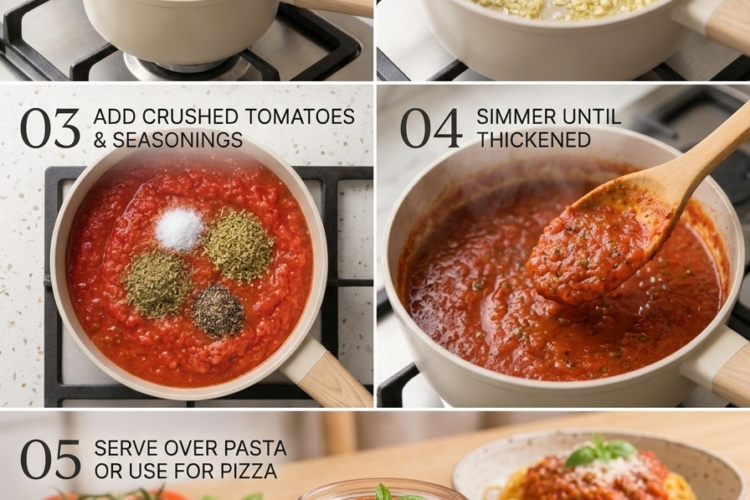
🍅 Homemade Marinara Sauce – Rich, Fresh & Bursting with Italian Flavor!
There’s nothing quite like a delicious homemade Marinara Sauce! This classic Italian-inspired tomato sauce is made with crushed tomatoes, fragrant garlic, olive oil, and aromatic herbs to create a rich, flavorful sauce that’s perfect for countless meals.
Slowly simmered until thick and beautifully seasoned, this simple marinara has a wonderful balance of sweet tomato flavor, savory garlic, and fragrant oregano and basil.
Best of all, it requires just a handful of ingredients and is incredibly easy to prepare. No complicated steps, no store-bought sauce, and no unnecessary additives!
Use it for spaghetti, lasagna, homemade pizza, chicken Parmesan, meatballs, dipping breadsticks, or any dish that needs a delicious homemade tomato sauce.
Recipe Details
- Prep Time: 10 minutes
- Cook Time: 25–35 minutes
- Total Time: Approximately 45 minutes
- Servings: 6
- Yield: Approximately 3–3½ cups
- Difficulty: Very Easy
- Category: Sauces, Condiments, Italian-Inspired Recipes
- Method: Stovetop
Ingredients
For the Homemade Marinara Sauce
- 2 tablespoons (30 ml) olive oil
- 3 garlic cloves, minced
- 1 can (28 oz / 800 g) crushed tomatoes
- 1 teaspoon salt
- 1 teaspoon dried oregano
- ½ teaspoon dried basil
- ¼ teaspoon black pepper
Optional Flavor Enhancements
- ½ small onion, finely diced
- 1 teaspoon granulated sugar, optional, to balance acidity
- ¼ teaspoon red pepper flakes, for a little heat
- 1 tablespoon tomato paste, for a richer flavor
- 1 tablespoon chopped fresh basil
- 1 tablespoon chopped fresh parsley
Note: All seven main ingredients are from your supplied recipe. The additional ingredients are optional suggestions for customizing the sauce.
Instructions
1. Prepare the Garlic
Peel and finely mince the three garlic cloves.
If using onion, peel it and dice it into small pieces.
Preparing everything before cooking makes the process easier and helps prevent the garlic from burning.
2. Heat the Olive Oil
Place a medium-sized saucepan over medium-low heat.
Add the olive oil and allow it to warm gently.
Once the oil is warm, add the diced onion if using.
Cook for approximately 3–4 minutes, stirring occasionally, until softened and translucent.
3. Add the Garlic
Add the minced garlic to the warm olive oil.
Cook for approximately 30–60 seconds, stirring continuously, until fragrant.
Be careful not to brown or burn the garlic, as burnt garlic can give the marinara an unpleasant bitter taste.
If using tomato paste, stir it in now and cook for another minute to deepen its flavor.
4. Add the Crushed Tomatoes
Pour the entire can of crushed tomatoes into the saucepan.
Stir gently to combine the tomatoes with the garlic-infused olive oil.
The mixture may bubble slightly as the tomatoes meet the hot oil. This is perfectly normal.
5. Season the Sauce
Add the salt, dried oregano, dried basil, and black pepper.
Stir thoroughly until the seasonings are evenly distributed throughout the tomatoes.
If the tomatoes taste particularly acidic, add the optional teaspoon of sugar to balance the flavor.
For a spicy version, add a pinch of red pepper flakes.
6. Bring to a Gentle Simmer
Increase the heat slightly and allow the sauce to reach a gentle simmer.
Once small bubbles begin appearing, reduce the heat to low.
Stir gently to prevent the sauce from sticking to the bottom of the saucepan.
Avoid bringing it to a vigorous boil, as this can cause splattering and uneven reduction.
7. Simmer Until Thick and Flavorful
Allow the marinara sauce to simmer uncovered for approximately 20–30 minutes.
Stir every few minutes, especially as the sauce begins to thicken.
As it cooks, the tomatoes will develop a deeper flavor, and the garlic and herbs will blend beautifully.
For a thinner sauce, simmer for a shorter time.
For a thicker, more concentrated marinara, continue cooking for a few additional minutes until it reaches your preferred consistency.
8. Taste and Adjust the Seasoning
Taste a small spoonful of the sauce.
Adjust the flavors according to your preference:
- Add a little more salt for enhanced flavor.
- Add extra oregano or basil for a stronger herbal taste.
- Add a pinch of sugar if the tomatoes are too acidic.
- Add red pepper flakes for extra heat.
- Add a splash of water if the sauce becomes too thick.
If using fresh basil or parsley, stir it in during the final 2–3 minutes of cooking.
9. Blend for a Smoother Texture (Optional)
For a traditional chunky marinara sauce, leave it as it is.
For a smoother consistency, carefully use an immersion blender directly in the saucepan.
Alternatively, allow the sauce to cool slightly before transferring it to a blender in small batches.
Never fill a blender with hot liquid to the top, and follow the manufacturer’s instructions for blending warm foods.
10. Serve and Enjoy!
Remove the saucepan from the heat.
Spoon the warm marinara sauce over freshly cooked pasta, use it as a pizza base, or serve it in a small bowl with crispy garlic breadsticks.
Finish with fresh basil, a drizzle of olive oil, or a sprinkle of grated Parmesan cheese.
Enjoy your delicious homemade Marinara Sauce!
Expert Tips for the Best Homemade Marinara Sauce
- Choose good-quality tomatoes: The flavor of your marinara depends heavily on the quality of the canned tomatoes. Choose a good-quality brand with a rich tomato flavor.
- Use fresh garlic: Freshly minced garlic gives the sauce a wonderful aroma and authentic homemade flavor.
- Don’t burn the garlic: Garlic cooks quickly, so use medium-low heat and stir continuously.
- Use extra virgin olive oil: It adds richness and gives the sauce a beautiful Mediterranean flavor.
- Don’t rush the simmering: Allowing the sauce to cook gently gives the flavors time to develop.
- Avoid excessive boiling: A gentle simmer helps maintain a smooth texture and prevents splattering.
- Season gradually: Taste the sauce before adding extra salt, especially if your canned tomatoes are already seasoned.
- Add fresh herbs near the end: Fresh basil and parsley retain more of their fragrance when added toward the end of cooking.
- Adjust the thickness: Simmer uncovered to reduce excess moisture or add a little water if the sauce becomes too concentrated.
- Use a heavy-bottomed saucepan: It distributes heat evenly and helps prevent the tomatoes from scorching.
- Let it rest briefly: Allowing the sauce to sit for 5–10 minutes before serving helps the flavors settle.
- Make extra: This sauce freezes beautifully, making it convenient to have homemade marinara ready whenever you need it.
Delicious Variations
Classic Italian Marinara: Keep the sauce simple with olive oil, garlic, tomatoes, oregano, and basil for a traditional, versatile flavor.
Spicy Arrabbiata Sauce: Add ½–1 teaspoon red pepper flakes while cooking the garlic for a delicious spicy tomato sauce.
Roasted Garlic Marinara: Replace the fresh garlic with roasted garlic cloves for a sweeter, deeper flavor.
Chunky Vegetable Marinara: Add finely diced zucchini, carrots, bell peppers, and onions for a hearty vegetable-packed sauce.
Mushroom Marinara: Sauté 1 cup sliced mushrooms with the garlic and onion before adding the tomatoes.
Fresh Basil Marinara: Add a generous handful of fresh basil leaves near the end of cooking for a bright, aromatic finish.
Creamy Marinara Sauce: Stir in ¼ cup heavy cream after simmering for a richer, velvety tomato sauce. This creates a creamy variation rather than a traditional marinara.
Tomato Parmesan Marinara: Add ¼ cup freshly grated Parmesan cheese near the end of cooking for a delicious savory flavor.
Olive and Caper Marinara: Add chopped olives and a tablespoon of capers for a Mediterranean-inspired variation.
Sweet Tomato Marinara: Add a small grated carrot or a little sugar to balance naturally acidic tomatoes.
Herb Garden Marinara: Combine oregano, basil, thyme, and a little rosemary for a deeply aromatic sauce.
What to Serve with Homemade Marinara Sauce
This versatile sauce pairs wonderfully with:
- Spaghetti and linguine
- Penne and rigatoni
- Lasagna
- Chicken Parmesan
- Eggplant Parmesan
- Homemade meatballs
- Baked ziti
- Stuffed pasta shells
- Pizza and flatbread
- Mozzarella sticks
- Garlic bread
- Breadsticks
- Calzones
- Stuffed peppers
- Baked pasta casseroles
Favorite serving idea: Toss freshly cooked spaghetti with warm marinara sauce, add a generous sprinkle of Parmesan cheese, and finish with fresh basil and a drizzle of olive oil. Serve with garlic bread for a delicious homemade Italian-inspired dinner!
Make-Ahead and Storage Instructions
Make Ahead: Prepare the marinara sauce up to 2–3 days before using it. Store it in the refrigerator in an airtight container. The flavors will blend beautifully as it rests.
Refrigerator: Allow the sauce to cool and transfer it to a clean, airtight food-safe container. Refrigerate at 40°F (4°C) or below and use within 3–4 days.
Freezing: Marinara sauce freezes exceptionally well. Divide the completely cooled sauce into freezer-safe containers or portion it into ice cube trays. Freeze for up to 3 months for best quality.
Thawing: Transfer the frozen sauce to the refrigerator and allow it to thaw overnight. You can also add frozen portions directly to a saucepan over low heat.
Reheating: Warm the desired amount in a saucepan over medium-low heat, stirring occasionally until steaming hot. Add a splash of water if the sauce becomes too thick.
Serving: Use a clean spoon each time you remove sauce from the storage container.
Important Food Safety Note: This recipe is intended for refrigerated or frozen storage. It is not a tested home-canning recipe, so do not seal it in jars for pantry storage or assume that the acidity of the tomatoes makes it shelf-stable.
Frequently Asked Questions
Can I use fresh tomatoes instead of canned crushed tomatoes?
Absolutely! Use approximately 2–2½ lbs of ripe fresh tomatoes. Peel and chop them, then cook them until softened before crushing or blending. You may need additional simmering time to achieve the desired consistency.
Do I need to add sugar to marinara sauce?
No. Sugar is optional. Good-quality ripe tomatoes often provide enough natural sweetness. Add a little sugar only if the finished sauce tastes too acidic for your preference.
Why does my marinara sauce taste acidic?
Some tomato varieties are naturally more acidic than others. Simmering the sauce helps develop its flavor. A small pinch of sugar or a finely grated carrot can help balance the acidity.
Can I make marinara sauce without onion?
Yes! Onion is not required for this recipe. The original version uses garlic, olive oil, tomatoes, and herbs for a simple, delicious sauce.
Can I make marinara sauce without garlic?
Yes, although garlic provides much of the sauce’s characteristic savory flavor. Simply omit it or replace it with a little extra onion and herbs.
Can I use fresh herbs instead of dried herbs?
Absolutely! Fresh oregano and basil work wonderfully. As a general guide, use approximately three times as much fresh herb as dried, adjusting to taste. Add delicate fresh basil near the end.
How do I make my marinara sauce thicker?
Simmer it uncovered over low heat until excess moisture evaporates. You can also add a tablespoon of tomato paste for a richer, more concentrated flavor.
Why is my marinara sauce watery?
The tomatoes may contain more liquid than expected, or the sauce may not have simmered long enough. Continue cooking uncovered, stirring occasionally, until it reaches your preferred consistency.
Can I use tomato sauce instead of crushed tomatoes?
Yes, but tomato sauce usually has a smoother consistency. You may need to adjust the simmering time and seasonings depending on the brand.
Can I use this marinara sauce for pizza?
Definitely! Simmer it a little longer until thick and concentrated, then spread a thin layer over your pizza dough before adding cheese and toppings.
Can I use marinara sauce as a dipping sauce?
Yes! It makes a wonderful dip for mozzarella sticks, garlic bread, breadsticks, fried ravioli, and homemade appetizers.
Can I prepare this sauce in advance for a party?
Absolutely! Make it a day or two ahead and refrigerate it. Reheat gently just before serving for an easy, flavorful sauce without last-minute preparation.
Approximate Nutrition Information
Per serving, assuming 6 servings and no optional additions:
- Calories: 85 kcal
- Carbohydrates: 9 g
- Protein: 2 g
- Fat: 5 g
- Saturated Fat: 1 g
- Sugar: 5 g
- Fiber: 2 g
- Sodium: 430 mg
Nutrition values are estimates and will vary depending on the canned tomato brand, olive oil, and exact serving size.
Simple Ingredients, Incredible Homemade Flavor! 🍅❤️
This Homemade Marinara Sauce proves that the best recipes don’t need complicated ingredients. With crushed tomatoes, fragrant garlic, extra virgin olive oil, and classic Italian herbs, you can create a rich and delicious sauce right in your own kitchen.
It’s easy to prepare, incredibly versatile, and perfect for everything from simple spaghetti dinners to homemade pizza and comforting pasta casseroles.
Make a batch, let it simmer slowly, and enjoy the wonderful aroma of homemade tomato sauce filling your kitchen!