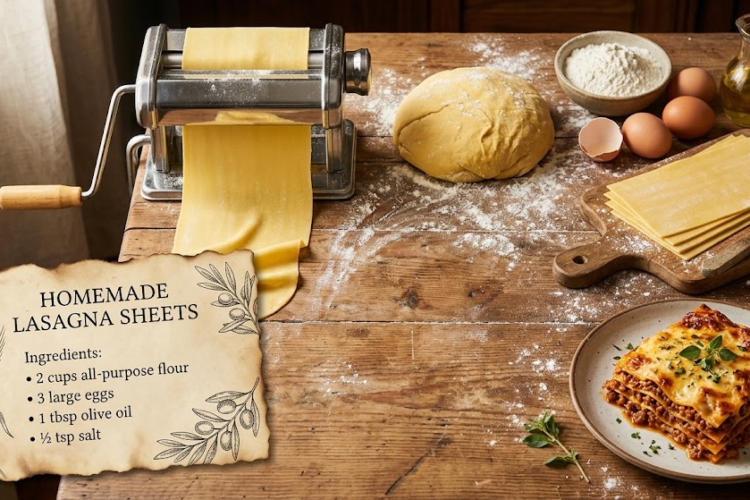
🍝 Homemade Lasagna Sheets
There’s nothing quite like homemade pasta! These Homemade Lasagna Sheets are tender, silky, and made with just four simple ingredients: flour, eggs, olive oil, and salt. They’re easy to prepare from scratch and bring a wonderfully fresh texture to classic lasagna, whether you’re layering them with rich meat sauce, creamy béchamel, or roasted vegetables.
No special ingredients are required, and you can roll the dough by hand or use a pasta machine for perfectly even sheets.
Recipe Information
- Prep Time: 25 minutes
- Resting Time: 30 minutes
- Rolling and Cutting Time: 15–25 minutes
- Total Time: Approximately 1 hour 15 minutes
- Yield: Enough sheets for one medium lasagna, approximately 6–8 servings
- Course: Pasta, Main Dish
- Cuisine: Italian
- Difficulty: Moderate
Ingredients
- 2 cups all-purpose flour (250 g), plus extra for dusting
- 3 large eggs, at room temperature
- 1 tablespoon olive oil (15 ml)
- ½ teaspoon salt (3 g)
Instructions
Step 1: Prepare the Dough
Place the flour on a clean work surface and make a wide well in the center. Crack the eggs into the well, then add the olive oil and salt.
Using a fork, gently beat the eggs and oil together, gradually drawing flour in from the sides. Continue mixing until a rough, shaggy dough begins to form.
Once the mixture becomes too thick to stir with a fork, use your hands to bring the remaining flour into the dough.
Tip: If you prefer, combine the ingredients in a large mixing bowl instead of working directly on the counter.
Step 2: Knead Until Smooth
Knead the dough by pressing it forward with the heel of your hand, folding it back over itself, and turning it slightly. Continue for about 8–10 minutes, until the dough becomes smooth, firm, and elastic.
The dough should feel slightly firm but should not crumble or crack excessively.
- If it is too dry to come together, add water a few drops at a time.
- If it feels very sticky, dust your hands and work surface with a small amount of flour.
- Avoid adding too much extra flour, as this can make the finished pasta tough.
Shape the dough into a ball.
Step 3: Rest the Dough
Wrap the dough tightly in plastic wrap or cover it with an overturned bowl. Let it rest at room temperature for 30 minutes.
Resting allows the flour to hydrate and the gluten to relax, making the dough much easier to roll into thin sheets without springing back.
Step 4: Divide the Dough
Unwrap the rested dough and cut it into 4 equal portions. Keep the portions you are not currently using covered so they do not dry out.
Lightly flour your work surface and take one portion of dough. Flatten it with your palm into a small rectangle.
Step 5: Roll the Dough by Hand or Machine
Using a pasta machine:
- Set the machine to its widest setting.
- Feed the dough through once.
- Fold the dough into thirds, flatten it gently, and pass it through again.
- Repeat this process once or twice until the dough becomes smooth.
- Gradually reduce the machine setting, passing the dough through each setting until it is thin enough for lasagna.
Using a rolling pin:
- Roll the dough from the center outward, turning it regularly to maintain an even shape.
- Dust lightly with flour if it begins sticking.
- Continue rolling until the sheet is approximately 1–2 mm thick, or thin enough that it is nearly translucent but still easy to handle.
Repeat with the remaining portions.
Step 6: Cut the Lasagna Sheets
Trim the rolled dough into neat rectangles that fit your baking dish. Cut them into your preferred length and width, depending on the shape of your lasagna pan.
Lay the sheets on a lightly floured surface or clean kitchen towels. Dust them lightly with flour and keep them separated to prevent sticking.
If the dough is difficult to cut because it is too soft, leave it uncovered for a few minutes until the surface becomes slightly less tacky. Do not let it dry until brittle.
Step 7: Choose How to Use the Sheets
For fresh lasagna: If the sheets are thin, layer them directly into your lasagna with sufficient sauce and moisture. Follow your lasagna recipe’s baking instructions, ensuring the pasta cooks fully.
For more consistent results: Briefly blanch the sheets in a large pot of gently boiling salted water for about 30–60 seconds, working in small batches. Transfer them to a clean kitchen towel and separate them carefully before layering.
Thicker sheets may need a little longer to soften. Fresh pasta can become fragile quickly, so avoid overcrowding the pot or overcooking.
Step 8: Assemble Your Lasagna
Spread a thin layer of sauce in the bottom of your baking dish. Add a layer of pasta sheets, then cover with your preferred sauce, cheese, and other fillings.
Repeat the layers until the ingredients are used, finishing with sauce and cheese on top. Bake according to your chosen lasagna recipe, checking that the pasta is tender throughout.
Chef’s Tips for Perfect Homemade Lasagna Sheets
- Weigh the flour when possible. Measuring by weight gives more consistent results than measuring by cups.
- Rest the dough. Skipping the resting period can make the dough resistant to rolling.
- Keep unused dough covered. Exposed pasta dough dries quickly and may crack as you work.
- Roll evenly. Sheets that are too thick may remain chewy in the finished lasagna.
- Use flour sparingly. Too much flour can create a dry dough and leave excess flour between the layers.
- Keep the sauce moist enough. Fresh pasta needs moisture to cook properly when baked without pre-boiling.
- Avoid stacking damp sheets. If storing or preparing them ahead, separate them with parchment paper to prevent sticking.
Variations
Traditional Italian Egg Pasta: Replace the all-purpose flour with finely milled Italian “00” flour for a smoother texture, keeping the other ingredients the same and adjusting the dough as needed.
Semolina Blend: Replace up to half the all-purpose flour with fine semolina flour for a slightly firmer bite.
Herb Pasta Sheets: Knead in a small amount of finely chopped fresh herbs for a subtle herbal flavor.
Spinach Lasagna Sheets: For a green variation, use well-drained cooked spinach purée, but reduce other liquid as needed and adjust the flour to achieve a firm, workable dough.
Make-Ahead Instructions
The dough can be prepared several hours ahead and refrigerated, tightly wrapped, for up to 24 hours. Allow it to sit at room temperature for about 15–20 minutes before rolling if it feels too firm.
Freshly rolled sheets can also be made a few hours ahead. Keep them lightly floured and covered with a clean, dry towel, or refrigerate them in a well-sealed container with parchment between layers.
Storage Instructions
Refrigerator: Store fresh pasta sheets in an airtight container with parchment separating the layers and use within 1–2 days. Keep refrigerated at 4°C (40°F) or below.
Freezer: Lay the sheets flat with parchment between them, place them in a freezer-safe container, and freeze for up to 2 months for best quality. Thaw in the refrigerator before separating and using.
Drying: These sheets can be dried for longer storage only if they dry completely and evenly. Thick or uneven homemade pasta can retain moisture, so freezing is the easier option for most home cooks.
Frequently Asked Questions
Do I need to boil homemade lasagna sheets before baking?
Not always. Thin fresh sheets can often go directly into the lasagna when the sauce provides enough moisture and the baking time is sufficient. Brief blanching can help when the sheets are thicker or when you prefer more control over their texture.
How thin should lasagna sheets be?
Aim for approximately 1–2 mm thick. They should be thin enough to cook evenly while remaining sturdy enough to handle without tearing.
Why is my pasta dough too hard?
It may need more kneading or a few drops of water. Knead first, then add water gradually only if the dough remains crumbly and will not come together.
Why does my dough keep shrinking when I roll it?
The gluten may be too tight. Cover the dough and let it rest for another 10–15 minutes before rolling again.
Can I use these sheets for other pasta dishes?
Yes. Cut the rolled dough into ribbons for fettuccine or tagliatelle, or use it for filled pasta if rolled to the appropriate thinness.
Serving Suggestions
These homemade sheets are ideal for classic beef lasagna, chicken and mushroom lasagna, spinach and ricotta lasagna, or a rich vegetable lasagna with béchamel sauce.
For an Italian-inspired meal, serve your lasagna with garlic bread, a crisp green salad, and roasted vegetables.
Final Result
Expect fresh, tender pasta sheets with a delicate egg flavor and a smooth texture that holds beautifully between layers of sauce, cheese, and filling. With just four basic ingredients and a little hands-on preparation, you can make homemade lasagna sheets that take a comforting baked pasta dish to the next level.