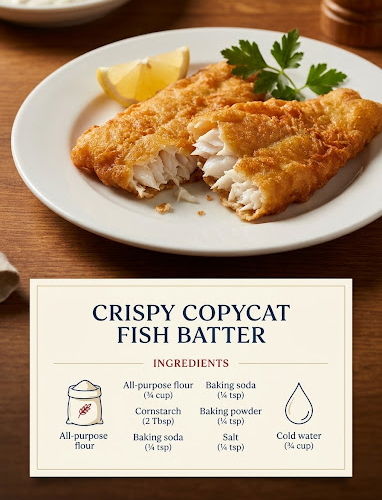
🐟 Crispy Copycat Fish Batter — Thin, Golden & Extra Crunchy!
That Light, Crackly Crust That Shatters with Every Bite!
Some fried fish gets a thick breading. This is the kind where you tap the crust with a fork and hear it crack!
This Crispy Copycat Fish Batter creates a light, golden, wonderfully crunchy coating around tender, flaky fish. Inspired by classic fast-food-style battered fish, this homemade version uses a simple seasoned flour mixture, cornstarch for extra crispness, and ice-cold sparkling water to help create a delicate, airy crust.
Forget thick, heavy breading that overwhelms the fish. This batter fries into a thin, crisp shell that crunches beautifully while keeping the fish moist and tender inside.
Serve it with golden fries, creamy coleslaw, lemon wedges, and tartar sauce for an irresistible homemade fish-and-chips dinner!
Recipe Details
- Prep Time: 15 minutes
- Cook Time: 15–20 minutes, depending on batch size
- Total Time: Approximately 30–35 minutes
- Yield: Enough batter for 1–1½ lb (450–680 g) fish
- Servings: 4
- Course: Main Course, Seafood
- Cuisine: American-inspired
- Difficulty: Easy
- Cooking Method: Deep-frying
Ingredients
For the Crispy Fish Batter
- 1 cup (125 g) all-purpose flour
- ½ cup (60 g) cornstarch
- 1 teaspoon baking powder
- ½ teaspoon baking soda
- 1 teaspoon salt
- ½ teaspoon granulated sugar
- ½ teaspoon paprika
- ½ teaspoon garlic powder
- ¼ teaspoon ground black pepper
- ¾–1 cup (180–240 ml) ice-cold sparkling water, added gradually
For the Fish
- 1–1½ lb (450–680 g) boneless, skinless white fish fillets, such as cod, haddock, pollock, or tilapia
- ¼ cup (30 g) additional all-purpose flour, for a light dusting
- Neutral oil for deep-frying, such as canola, sunflower, or vegetable oil
- Lemon wedges, for serving
Optional Seasonings
- ¼ teaspoon onion powder
- ¼ teaspoon cayenne pepper for a little heat
- ½ teaspoon dried mustard powder for extra savory flavor
Recipe note: These are suggested quantities for a homemade copycat-style batter. They recreate the thin, crunchy texture described, rather than claiming to be the exact proprietary recipe of any restaurant.
Instructions
Step 1: Prepare the Fish
Pat the fish fillets thoroughly dry with paper towels. Removing excess moisture is essential because water on the surface can cause the batter to slide off or become patchy during frying.
Cut the fish into evenly sized portions, approximately 4–6 inches (10–15 cm) long, depending on your preferred serving size.
For classic fish-and-chips, use long strips. For fish sandwiches, cut the fillets into portions that fit your buns.
Season the fish lightly with a little salt and black pepper, if desired.
Place the fish in the refrigerator while preparing the batter, keeping it chilled until you’re ready to fry.
Step 2: Mix the Dry Ingredients
In a medium mixing bowl, whisk together the flour, cornstarch, baking powder, baking soda, salt, sugar, paprika, garlic powder, and black pepper.
If using onion powder, mustard powder, or cayenne pepper, add them now.
Whisk thoroughly to distribute the seasonings and raising agents evenly throughout the flour mixture.
Why this works: All-purpose flour provides structure, while cornstarch reduces gluten development and helps create a lighter, crispier crust. Baking powder and baking soda contribute a delicate, airy texture.
Step 3: Add the Ice-Cold Sparkling Water
Pour approximately ¾ cup (180 ml) of ice-cold sparkling water into the dry ingredients.
Whisk gently until a smooth batter forms, adding more sparkling water a little at a time until the consistency is right.
The finished batter should be similar to thin pancake batter: thick enough to cling to the fish, but loose enough to flow off in a thin, even layer.
A few small lumps are perfectly acceptable. Avoid vigorous or prolonged whisking, which can develop gluten and make the coating heavier.
The secret to a light crust: Keep the sparkling water very cold and prepare the batter shortly before frying. The cold liquid and carbonation help produce a delicate coating.
Step 4: Heat the Frying Oil
Pour oil into a heavy-bottomed pot or deep fryer, following the equipment manufacturer’s fill limits. If using a pot, never fill it more than halfway.
Heat the oil to 350°F (175°C), checking with a reliable cooking thermometer.
Maintaining the correct temperature helps the batter set quickly, turn golden, and develop its crisp texture without absorbing excessive oil.
If the oil is too cool, the fish may become greasy. If it is too hot, the coating may brown before the fish cooks through.
Keep the oil temperature steady throughout frying and allow it to recover between batches.
Step 5: Lightly Dust the Fish
Place the additional flour in a shallow dish.
Remove one fish portion from the refrigerator and lightly dust it with flour, shaking off any excess.
Repeat with the remaining portions.
This thin dusting gives the batter a slightly textured surface to grip, helping it adhere more reliably to the fish.
Avoid coating the fish heavily with dry flour. The goal is a very light layer, not a thick breading.
Step 6: Dip the Fish into the Batter
Working with one piece at a time, dip the floured fish into the cold batter.
Turn it gently to coat all sides, then lift it out and allow the excess batter to drip back into the bowl for a few seconds.
The fish should have a thin, even coating without thick clumps around the edges.
Carefully lower the battered fish into the hot oil, moving it away from yourself to reduce the risk of splashing.
Fry only a few portions at a time. Overcrowding the pot will lower the oil temperature and prevent the crust from becoming crisp.
Important: Keep raw fish, used utensils, and the batter that has been in contact with raw fish separate from ready-to-eat foods. Discard any leftover batter that has contacted raw fish.
Step 7: Fry Until Golden and Crispy
Fry the fish for approximately 4–7 minutes per batch, depending on the thickness of the pieces.
Allow the coating to set before turning the fish, then turn as needed for even browning.
The batter should become light golden to deep golden brown, with a thin, crisp shell and a delicate, bubbled surface.
Avoid moving the fish excessively during the first minute, as the coating needs time to set.
When cooked, the fish should flake easily with a fork and reach an internal temperature of 145°F (63°C) at the thickest part.
Thicker pieces may need additional cooking time, so use the temperature and texture as your guide rather than relying on the clock alone.
Step 8: Drain Without Losing the Crunch
Use a slotted metal utensil or tongs to lift the fish carefully from the oil.
Transfer the portions to a wire rack set over a baking sheet and allow excess oil to drain.
Avoid stacking the pieces or covering them tightly while hot. Trapped steam softens the crust and takes away that wonderful crackly texture.
If frying in several batches, keep the finished fish warm in a 200°F (95°C) oven on a wire rack while you cook the remaining portions.
Step 9: Season and Serve Immediately
While the fish is still hot, add a very light sprinkle of salt if needed.
Serve immediately with lemon wedges, tartar sauce, French fries, and coleslaw.
For the best experience, eat the fish while the batter is freshly fried and crisp. That first bite should give you the delicate crunch you’re looking for, followed by tender, flaky fish inside!
Expert Tips for an Extra-Crispy Batter
Keep the water ice-cold. Cold sparkling water helps maintain a light batter and delays excessive gluten development.
Mix the batter just before frying. Letting it sit too long can reduce some of the carbonation and may affect the coating’s lightness.
Use cornstarch. It helps create a thinner, crispier crust than an all-flour batter.
Dry the fish thoroughly. Surface moisture is one of the biggest reasons batter slips off.
Dust with flour first. A very light coating helps the wet batter adhere to the fish.
Maintain the oil temperature. Aim for 350°F (175°C), allowing for small fluctuations as each batch enters the oil.
Fry in small batches. Crowded fish releases moisture and lowers the oil temperature, making the crust less crisp.
Drain on a wire rack. This allows air to circulate around the coating and prevents the underside from becoming soggy.
Avoid covering the cooked fish. Steam trapped beneath a lid or foil will soften even a beautifully fried crust.
Serve promptly. The coating is at its crispiest right after frying, before moisture from the fish gradually migrates into the crust.
Delicious Batter Variations
🐟 Classic Fast-Food-Style Fish Batter
Keep the seasonings simple with flour, cornstarch, salt, paprika, and ice-cold sparkling water. This produces a light, neutral coating that works with almost any white fish.
🌶️ Spicy Crispy Fish Batter
Add ¼–½ teaspoon cayenne pepper and a pinch of chili powder for a gentle kick. Serve with spicy mayonnaise or hot sauce.
🧄 Garlic Pepper Fish Batter
Increase the garlic powder slightly and add extra black pepper for a more savory coating.
🍺 Beer-Battered Fish
Replace the sparkling water with very cold beer, adding it gradually until the batter reaches the desired consistency. A pale lager works well for a light, crisp coating, while darker beers will create a more pronounced flavor.
🍋 Lemon Pepper Fish Batter
Add a little lemon zest and extra black pepper to the dry mixture. Serve with fresh lemon wedges to brighten the flavor.
🌽 Extra-Crispy Cornstarch Batter
For a particularly delicate crust, replace a few tablespoons of flour with additional cornstarch while keeping enough flour for the batter to cling to the fish. Add the liquid gradually and avoid making the batter so thin that it slides off.
What to Serve with Crispy Fried Fish
This crackly battered fish pairs beautifully with classic sides and dipping sauces.
- French fries: The classic fish-and-chips combination.
- Creamy coleslaw: Adds freshness and a slight tang.
- Tartar sauce: A creamy, pickle-filled dip that complements the fish.
- Malt vinegar or lemon wedges: Provide sharp acidity that balances the fried coating.
- Hush puppies: A delicious Southern-inspired accompaniment.
- Corn on the cob: Adds sweetness and color to the plate.
- Potato wedges: A hearty alternative to traditional fries.
- Pickles: Their tangy crunch pairs perfectly with crispy fish.
For an easy fish-and-chips dinner, serve the fish in a paper-lined basket with golden fries, lemon wedges, tartar sauce, and a side of coleslaw.
Make-Ahead and Storage Instructions
Can You Prepare the Batter Ahead?
For the best texture, mix the batter immediately before frying. The sparkling water loses carbonation over time, and the batter can become less light.
You can measure the dry ingredients ahead and store them in an airtight container. Add the cold sparkling water only when you’re ready to cook.
Refrigerating Leftover Fried Fish
Allow leftovers to cool slightly, then refrigerate them in an airtight container within 2 hours of cooking. Store at 40°F (4°C) or below and consume within 3–4 days.
The coating will soften during storage, but you can restore some of its crispness when reheating.
Reheating for the Best Crunch
Place leftover fish on a wire rack over a baking sheet and reheat in an oven at 375°F (190°C) for approximately 8–12 minutes, depending on the size of the portions.
An air fryer can also help restore the crispy coating. Reheat at approximately 350°F (175°C), checking regularly until hot throughout.
Avoid covering the fish while reheating, because trapped steam softens the crust.
Reheat leftovers to an internal temperature of 165°F (74°C).
Can You Freeze Fried Fish?
You can freeze cooked fish, though the batter may not be quite as crisp after thawing. Cool the fish, freeze the pieces in a single layer until firm, then transfer them to an airtight freezer-safe container.
For the best quality, use within 1–2 months. Reheat from thawed or frozen using an oven or air fryer, checking that the center reaches 165°F (74°C).
Frequently Asked Questions
Why is my fish batter not crispy?
The oil may be too cool, the batter may be too thick, or the fish may have been overcrowded in the pot. Use ice-cold liquid, keep the batter relatively thin, fry in small batches, and drain the cooked fish on a wire rack.
Why does the batter fall off the fish?
Excess moisture on the fish can prevent the batter from adhering. Pat the fillets thoroughly dry and dust them lightly with flour before dipping them into the batter.
Can I use still water instead of sparkling water?
Yes. Ice-cold still water will work, although sparkling water can help produce a lighter coating. The key is to keep the batter cold, avoid overmixing, and fry at the correct temperature.
Can I use this batter for other seafood?
Absolutely! This batter works well with shrimp, small pieces of haddock, pollock, or other suitable fish. Adjust the frying time according to the thickness and size of each piece, and cook seafood thoroughly.
Which fish is best for crispy batter?
Cod, haddock, pollock, and tilapia are popular choices. Look for firm, boneless fillets that hold together during frying. Pat them dry and cut them into similarly sized portions for even cooking.
Why is my crust dark but the fish still undercooked?
The frying oil may be too hot or the fish pieces may be too thick. Lower the temperature and allow thicker pieces to cook longer. If necessary, finish them in an oven until the fish reaches 145°F (63°C).
Can I make the batter without baking powder or baking soda?
You can, but the crust may be denser and less airy. These raising agents help create a delicate texture, so they’re recommended for this style of batter.
How do I keep the coating crispy while frying multiple batches?
Place the cooked fish on a wire rack over a baking sheet in a 200°F (95°C) oven. Avoid covering it, and allow the oil to return to approximately 350°F (175°C) before adding the next batch.
Estimated Nutrition Information
Approximate nutrition per serving, assuming 4 servings and moderate oil absorption:
- Calories: 350–500
- Protein: 25–35 g
- Carbohydrates: 30–45 g
- Fat: 12–25 g
Actual values vary with the type of fish, amount of batter that adheres, cooking method, and oil absorbed during frying. These estimates do not include fries or dipping sauces.
Final Thoughts
This Crispy Copycat Fish Batter is all about the contrast between a thin, crackly golden crust and tender, flaky fish. Cornstarch helps keep the coating light, sparkling water gives it an airy texture, and a simple blend of seasonings adds just enough flavor without overpowering the fish.
With properly heated oil, thoroughly dried fillets, and a wire rack for draining, you can recreate that wonderfully crunchy fish at home.
Serve it fresh with fries, coleslaw, lemon, and tartar sauce for a classic meal that’s hard to beat.
Thin, golden, shatteringly crisp batter and tender fish inside—exactly the kind of fried fish worth making at home! 🐟🍋